




FMCSA Proposes Details of Mexico Trucking Pilot Program
The Federal Motor Carrier Safety Administration proposed its plan for a three-year pilot program in which Mexican and U.S. carriers could offer long-distance service into each country. The program is the result of an agreement between President Obama and President Calderón of Mexico to resolve the long-standing dispute over cross-border trucking. FMCSA will publish the details of the program in the Federal Register on Thursday and will take comments for 30 days
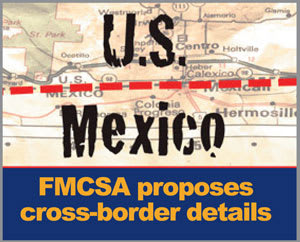
The Federal Motor Carrier Safety Administration proposed its plan for a three-year pilot program in which Mexican and U.S. carriers could offer long-distance service into each country.
The program is the result of an agreement between President Obama and President Calderón of Mexico to resolve the long-standing dispute over cross-border trucking. FMCSA will publish the details of the program in the Federal Register on Thursday and will take comments for 30 days.
The pilot sets up a vetting and enforcement program to ensure the safety of Mexican trucks, with the goal of evaluating their safety performance, based on inspections at the roadside, ports of entry and weigh stations, and on traffic enforcement. Hazardous materials and passenger carriers will not be included in the program.
The agency intends to compare the performance of the Mexican carriers over three years against the performance of U.S. carriers. In an earlier cross-border demonstration program, which ended when Congress cut off funding in 2009, the agency found that the Mexican carriers had no accidents and much lower out-of-service rates than U.S. trucks and drivers. There were not enough Mexican carriers in the program to create a statistically valid sample, however, a shortcoming the agency hopes to correct with this program.
Once the program is in place, Mexico will start to suspend the tariffs it levied when the Congress killed the earlier version of the pilot. In 2009 Mexico imposed import tariffs on about 89 U.S. agricultural and industrial products, and in 2010 it revised and expanded the list to 99 products.
In general, the program will set up a three-stage process for Mexican carriers that wish to participate. FMCSA said it does not know how many Mexican carriers will join. The last program attracted 775 applications, but only 29 of those carriers completed the paperwork and were vetted.
The Process
The process will start with the Mexican carrier filling out a 28-page application covering details of its operations, including affiliations, insurance, safety program and compliance with U.S. laws.
The application will be followed by a pre-authorization safety audit, in which FMCSA reviews the carrier's safety management system and inspects the specific trucks that will cross the border.
The safety management system would have to include such elements as a drug and alcohol testing program and a way to verify hours of service, insurance and driver qualifications, among numerous other requirements. Trucks that pass the inspection will get a CVSA decal.
If the carrier passes the audit, it would get provisional operating authority and could commence cross-border operations. Provisional authority will last for 18 months. After that period, if the carrier has no pending enforcement or safety improvement actions and has cleared a compliance review, it is eligible for permanent authority in the pilot program.
Mexican carriers that have permanent authority in the pilot program would be eligible to convert that to standard permanent authority after the three-year pilot program is done.
For the first three months of the provisional authority stage, Mexican trucks and drivers will be inspected each time they enter the U.S. That period will be extended if the carrier does not get at least three inspections.
After three months and clearing the audit, the carrier will get the same inspection rate as the rest of the trucks now engaged in cross-border, commercial zone trucking. To be eligible for this status, the carrier must have an out-of-service rate at or below the U.S. average and its Safety Management System scores must be below the FMCSA threshold.
The pilot would run for three years from the first grant of provisional authority, unless FMCSA gathers enough data to make a decision about the program before then. The agency said it could stop the program earlier if continuation is not consistent with the pilot's goals.
FMCSA will publish on its website and in the Federal Register comprehensive data on the Mexican carriers in the program, including their names, their audit performance, the trucks that have been cleared, the results of roadside inspections and the number of trips. The agency will track each carrier's data to gauge compliance.
The U.S. and Mexican departments of transportation will establish a monitoring group to supervise the administration of the program. In addition, FMCSA is establishing its own advisory committee, a subcommittee of the Motor Carrier Safety Advisory Committee, for suggestions. And the agency will make annual reports to Congress.
More details
* FMCSA said it is training state and local enforcement officials for the pilot program requirements.
* Previous demonstration program participants would get credit for time they operated, in calculating the 18-month provisional operating authority.
* Mexican carriers will not be permitted to provide point-to-point transportation of domestic cargo in the U.S. - also known as cabotage. The safety agency said its training program includes enforcement of this requirement.
* Mexican carriers and drivers would be screened by the U.S. Department of Homeland Security before they are admitted to the program. Those who do not pass the screening would not be allowed to participate.
* Mexican carriers would have to have insurance or surety bond from a U.S. company.
* Mexican trucks would have to comply with post-1998 U.S. EPA emissions rules.
* Mexican trucks would have to meet U.S. or Canadian vehicle safety standards.
* FMCSA will equip each truck with a global positioning system or an electronic onboard recorder. Administrator Anne Ferro has explained that under the North American Free Trade Agreement, the agency cannot require Mexican carriers to buy their own EOBRs unless U.S. carriers are required to do so as well - which they are not at this time - but still the agency must provide a way to monitor those carriers for compliance with both the hours of service rules and the cabotage rules that restrict freight hauling between points in the U.S.
* Mexican drivers will have to read and speak English well enough to understand traffic signs and signals, to respond to questions from officials and to make entries on required reports.
* FMCSA will prepare an environmental assessment. This has been a point of contention in the past. In 2003 the Teamsters, environmental groups and the California Trucking Association successfully sued the agency for not completing the required environmental analysis in its rules for Mexican entry.
* Mexican trucks and drivers will have to comply with all U.S. safety rules, size and weight restrictions, environmental requirements and vehicle registration requirements.
* The U.S. will accept three areas of Mexican regulations as equivalent to U.S. regulations: their CDL rules, their medical exams and their drug testing procedures.
FMCSA said it has found that Mexico has rigorous requirements for driver knowledge and skill that are similar to U.S. requirements. Also, Mexico requires all new drivers to receive training before they are tested, and retraining each time the license is renewed - requirements that the U.S. does not have. Mexican drivers in the pilot will have to supply their federal and state driving records to FMCSA, and their violations in Mexico will be combined with violations in the U.S. for an analysis of their performance.
On drug testing, which was a political issue during the last pilot program, Mexico has agreed to collect specimens using U.S. chain of custody requirements and collection forms. Most Mexican carriers in the earlier pilot used U.S. collection facilities, but FMCSA will accept specimens col
More Drivers
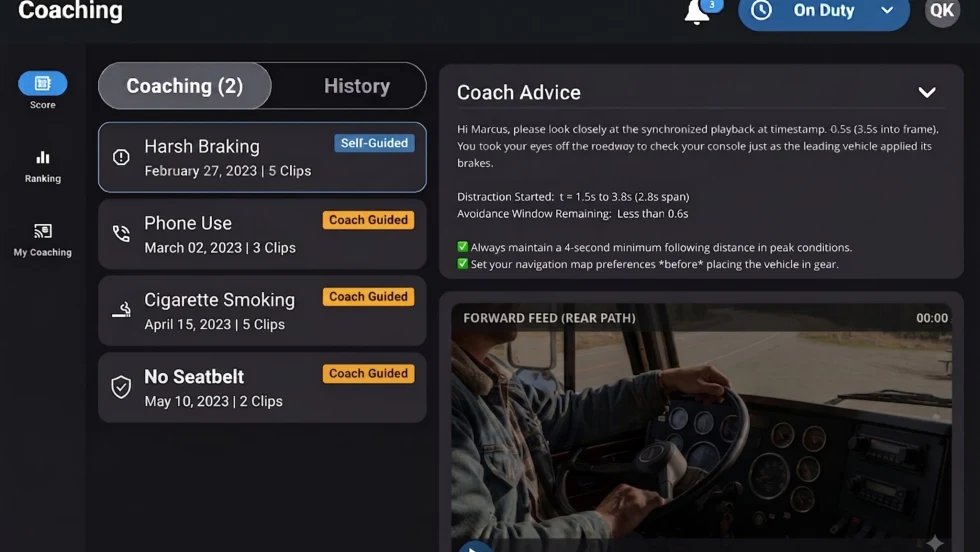
Platform Science Adds Dispatch and Safety Tools
Four additions to PS Fleet help fleets monitor loads, manage driver coaching, share truck locations and adjust video system settings.
Read More →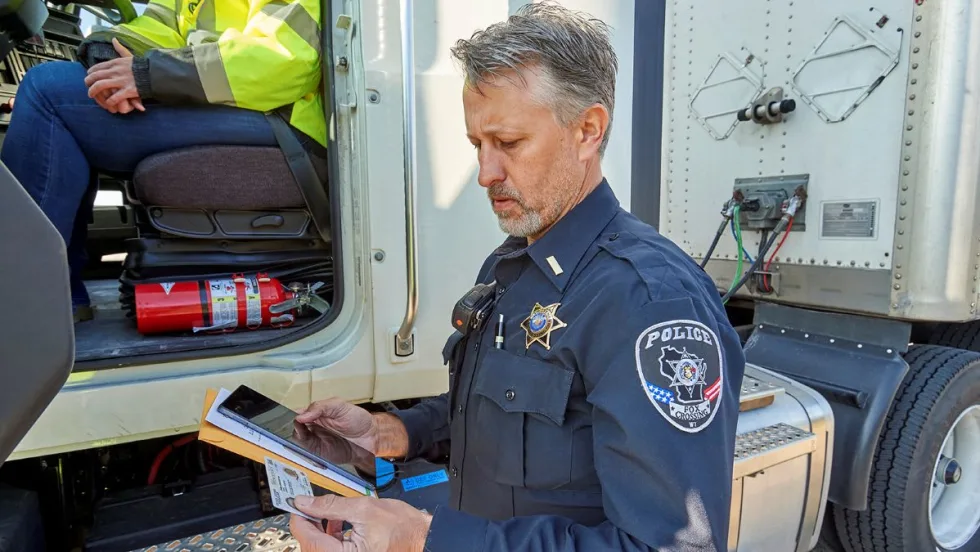
When Language Stops the Truck: The Return of ELP Out-of-Service Orders
English language proficiency rules for commercial drivers aren’t new, but renewed out-of-service enforcement has raised the stakes. Here’s what carriers need to know before a driver reaches a roadside inspection.
Read More →
Samsara Launches Custom AI Agent Builder
Agent Studio lets fleets create AI tools for hours-of-service monitoring, reporting and driver support, including agents that communicate by phone.
Read More →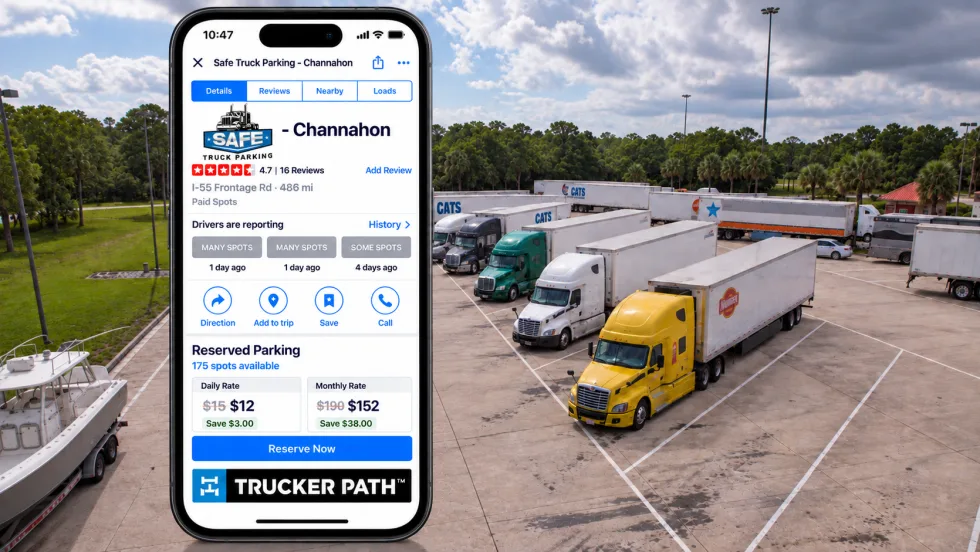
Trucker Path Expands Reserved Parking Network
Trucker Path has added close to 6,000 more truck parking spaces to its Trucker Path Reserved Parking Network with the addition of Safe Truck Parking.
Read More →
EEOC Sues Texas Trucking Company Over Driver Age Limits
The agency says Trancasa USA rejected applicants over 65 and applied tougher driving-record standards to those over 60.
Read More →
Nussbaum, Roehl Announce Second Driver Pay Increase This Year
This year has seen a swath of major truck driver pay increases as freight capacity has tightened.
Read More →
From One Generation to the Next: How Mentorship Builds Safer Truck Drivers
After three decades in trucking, Harold Perry shares what he's learned about driver safety, mentorship, and helping the next generation build confidence behind the wheel.
Read More →
Truck Drivers Need More Than Another Alert
Fleets have more visibility into truck health, safety events, and driver activity than ever. The next challenge is turning all that information into useful guidance for the person who has to decide what to do next.
Read More →
FMCSA Removes 110 Truck Driver Training Schools from Certified ELDT List
Federal regulators also are targeting more than 160 additional training providers and launching a nationwide audit of third-party CDL skills testers as part of a broader crackdown on trucking fraud.
Read More →
Hours of Service Pilot Programs: FMCSA Readies for 2027 Rollout
Two pilot programs could eventually reshape hours-of-service rules, giving truck drivers options to pause their 14-hour clock or use longer split sleeper rest periods.
Read More →