




FMCSA Issues Safety Advisory for Keith Huber Tankers
The FMCSA has issued a safety advisory to owners and operators of DOT407 and DOT412 specification cargo tank motor vehicles manufactured by the defunct Keith Huber Inc.
The Federal Motor Carrier Safety Administration issued a safety advisory to owners and operators of DOT407 and DOT412 specification cargo tank motor vehicles manufactured by Keith Huber Inc..
The CTMVs do not comply with Federal Hazardous Materials Regulations and do not meet DOT specification requirements in the Title 49 Code of Federal Regulations. The advisory applies to CTMVs manufactured before May 1, 2013.
Keith Huber Inc. is no longer in business and all manufacturing ended on or about May 1, 2013. The agency notes that Keith Huber Inc. is a distinct entity from Keith Huber Corp. CTMVs made by Keith Huber Corp. after May 1, 2013, are not included in the advisory, according to the FMCSA.
An investigation revealed that Keith Huber CTMVs have the following specification shortages:
The Series III rear end protection device does not meet the requirements of Section 178.345-8(b)(1).
The 4x4 tube rear end protection device does not meet the requirements of Section 178.345-8(b)(1).
The CTMVs were manufactured with internal baffles without installing pads on the cargo tank wall.
The CTMVs may not be equipped with a fusible element as required by Section 178.345-11(b)(1)(iii).
Because of the shortcomings, continued use of the equipment is prohibited and owners and operators will be subject to enforcement and penalties. Because the company that made these tankers no longer exists, owners and operators can either remove the DOT specification plate and take the CTMV out of specification hazardous materials service, o hHave qualified personnel perform the following repairs on the CTMV in accordance with the HMR before continued use in specification hazardous materials service:
Replace the rear end protection device with a device that is compliant with Section 178.345-8(b)(1), including certification by a Design Certifying Engineer.
If necessary, install a fusible element. Have this done by a Registered Inspector in accordance with Section 178.345-11(b)(1)(iii).
Install mounting pads for the internal baffle attachments. Have this done by qualified personnel at a cargo tank facility registered with FMCSA and holding a valid National Board Certificate of Authorization for use of the National Board “R” Stamp in accordance with Section 180.413.
For more information contact Paul Bomgardner, Chief, Hazardous Materials Division, at 202-493-0027 or by email at paul.bomgardner@dot.gov.
More Safety & Compliance

Paccar Recalls 2027 Trucks Built This Summer for Possible Electrical Problem
The nearly 6,000 Kenworth and Peterbilt trucks in the recall could potentially lose engine power, among other things.
Read More →
Brake Safety Week to Focus on Drums and Rotors
Commercial vehicle inspectors will be focusing on brakes during CVSA's Brake Safety Week, August 23-29.
Read More →
Trump Administration Looks to Put More Veterans Behind the Wheel
The Freedom Haulers program pulls together existing and expanded programs at several federal agencies to recruit veterans to drive commercial heavy-duty trucks and cut the red tape for them to get a CDL, training, and employment.
Read More →
$604 Million Verdict Tests Broker Liability After Supreme Court Ruling
C.H. Robinson plans to appeal after a Texas jury found it bore the largest share of responsibility for a fatal 2021 crash, in a case that follows the Supreme Court's Montgomery decision allowing negligent hiring claims against freight brokers.
Read More →
How Fraley & Schilling Improved Logbook Compliance by Over 50%
Fraley & Schilling needed a way to close a compliance workflow gap in its ELD system without adding more work from driver training, reminders, and back-office follow-ups. It found the answer in a custom driver app.
Read More →
Farewell, CDL: Why I'm Giving Up My Commercial Driver's License
After more than 20 years as a CDL holder, HDT Executive Editor Jack Roberts is letting his commercial license expire. Not because he wants to — but because trucking's nuclear verdict crisis has made the risks of public-road test drives too great for editors, manufacturers, and everyone involved.
Read More →
Enhance Fleet Performance with High-Efficiency Auxiliary Power Units
Drive sustainable cost savings while increasing driver comfort during short- and long-haul logistics operations.
Read More →
Wabash Trailers Recalled for Improperly Installed Underride Guards
More than 900 Wabash dry van trailers may not comply with the Federal Motor Vehicle Safety Standard for rear impact guards.
Read More →
Why K&B Trucking Is Embracing AI and Driver Safety Technology
Crunching data and embracing artificial intelligence are key in K&B Trucking's safety efforts, says the company's safety director.
Read More →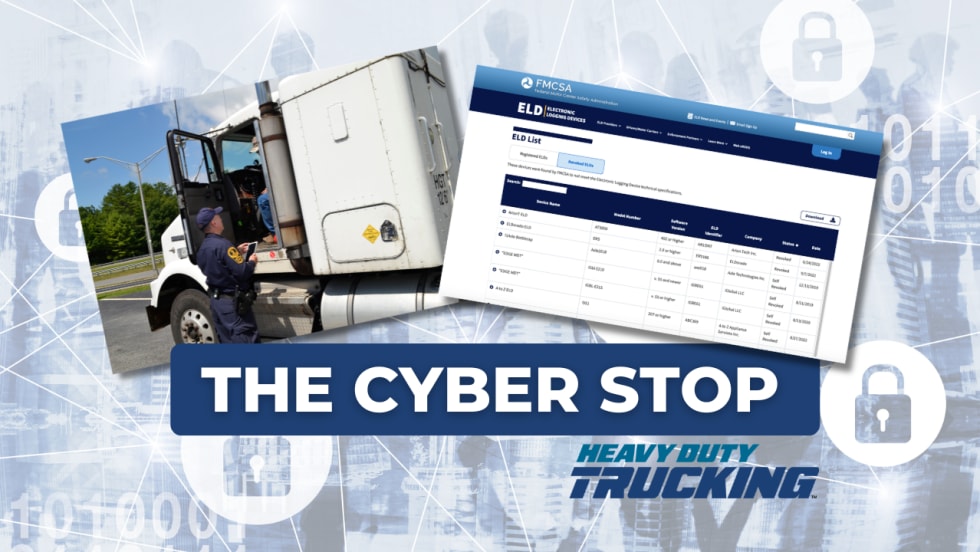
The Hidden Problem Behind FMCSA's ELD Revocations
NMFTA researchers say dozens of registered ELDs may be built on the same software platforms, allowing compliance and security concerns to persist even after individual devices are removed from the market.
Read More →