





USDA Clarifies Rules on Transporting Hemp Across State Lines
FMCSA Clarifies Ag Products That Qualify for Hours-of-Service Exemptions
The Federal Motor Carrier Safety Administration has published an interim final rule clarifying agricultural commodity and livestock definitions in hours-of-service regulations.
November 19, 2020
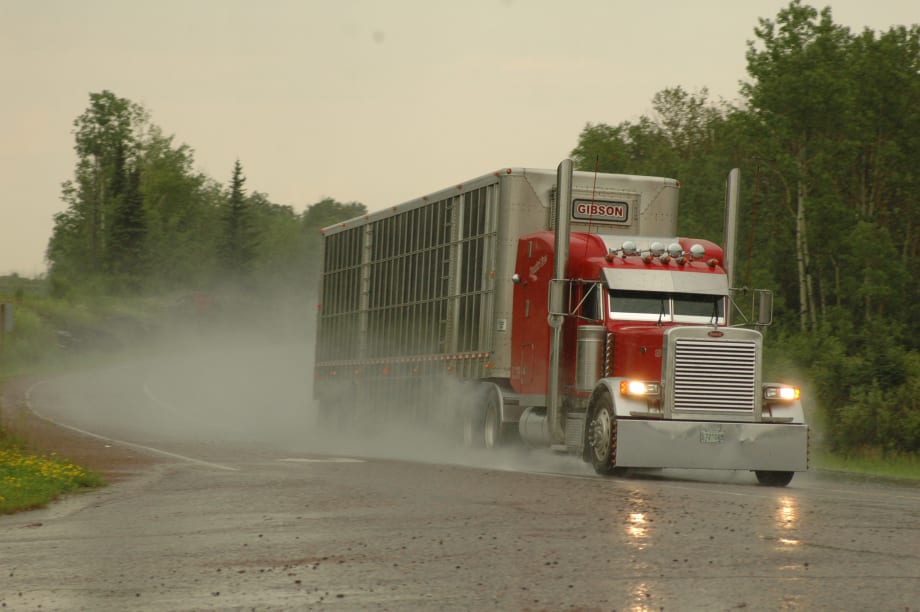
Cattle are pretty obviously livestock, but the regulatory definition of "livestock" when it comes to hours of service exemptions needed some clarifying.
Photo: Jim Park
4 min to read
The Federal Motor Carrier Safety Administration has published an interim final rule clarifying agricultural commodity and livestock definitions in hours-of-service regulations.
During harvesting and planting seasons as determined by each state, drivers transporting agricultural commodities, including livestock, are exempt from the HOS requirements from the source of the commodities to a location within a 150-air-mile radius from the source. In addition, the requirement for a 30-minute rest break does not apply to drivers transporting livestock in interstate commerce.
However, the agency found that the definition of those terms was not well-understood and enforced consistently when determining whether the HOS exemption applies.
The clarifications will primarily affect transporters of perishable horticultural commodities, non-processed food, and aquatic animals.
The agency worked closely with the U.S. Department of Agriculture on the rule.
How Do You Define Agricultural Commodities?
Congress initially adopted the HOS exemption for the transportation of agricultural commodities, during harvesting and planting seasons as defined by each state, in 1995 as part of the NHS Designation Act. Congress did not, however, define the term “agricultural commodities” at that time.
Several moves by Congress attempted in transportation and agriculture bills to define it, leaving us with the still-vague: “Agricultural commodity means any agricultural commodity, non-processed food, feed, fiber, or livestock (including livestock as defined in sec. 602 of the Emergency Livestock Feed Assistance Act of 1988 [7 U.S.C. 1471] and insects).”
Three main areas were addressed in the clarification:
• Horticultural products. The rule clarifies that horticultural products subject to perishability or significant degradation in product quality during transport fall within the meaning of “any agricultural commodity” in the regulations. That includes plants, including sod, flowers, ornamentals, seedlings, shrubs, live trees, and Christmas trees. The definition does not include horticultural products that are not sensitive to temperature and climate and do not risk perishability while in transit, such as timber harvested for lumber, or wood pulp or related products.
• Processed vs. non-processed. Another problem area was the distinction between “processed” and “non-processed,” with commenters on the ANPRM saying that in some areas, fresh fruits or vegetables are considered “processed” by enforcement officials if they are bagged or cut (e.g., cut and bagged lettuce) while in other locations, commodities subject to this type of minimal processing are deemed “non-processed” for the purpose of applying the HOS exemption.
FMCSA clarifies that “non-processed food” includes fruits, vegetables, and cereal and oilseed crops that have been minimally processed by cleaning, cooling, trimming, cutting, shucking, chopping, bagging, or packaging to facilitate transport by CMV. Products subject to post-harvest changes, such as jarring, canning, drying, or freezing, are not “non-processed food.”
• Aquatic animal. Another change essentially clarified that aquatic animals are included in the livestock definition, which includes “all living animals cultivated, grown, or raised for commercial purposes.”
“The agriculture industry is vital to our nation, and this new rule will provide clarity and offer additional flexibility to farmers and commercial drivers, while maintaining the highest level of safety,” said Transportation Secretary Elaine Chao.
More details are in the IRF: https://www.fmcsa.dot.gov/regulations/hours-service/hours-service-drivers-definition-agricultural-commodity-0
You Can Still Comment
The agency based this interim final rule on comments it received on its July 2019 advanced notice of proposed rulemaking soliciting feedback from the agriculture community. After an advance notice of proposed rulemaking, the typical next step is for an agency to issue a notice of proposed rulemaking. However, FMCSA elected to move forward with an interim final rule in this instance.
When an agency finds that it has good cause to issue a final rule without first publishing a proposed rule, it often characterizes the rule as an “interim final rule,” or “interim rule.” This type of rule becomes effective immediately upon publication, although the agency is still taking comments and could alter it if those comments warrant. If the agency decides not to make changes to the interim rule, it generally will publish a brief final rule in the Federal Register confirming that decision.
FMCSA said it “continues to work closely with the U.S. Department of Agriculture to eliminate confusion and further align the agencies’ interpretations of agricultural commodity definitions.”
More Safety & Compliance

From One Generation to the Next: How Mentorship Builds Safer Truck Drivers
After three decades in trucking, Harold Perry shares what he's learned about driver safety, mentorship, and helping the next generation build confidence behind the wheel.
Read More →
FMCSA Pauses Biennial-Update Enforcement Amid Motus Transition
Carriers whose updates were due on or after June 1 have more time, while FMCSA works to stabilize its new registration system and warns of phishing sites impersonating its new carrier registration system, Motus.
Read More →
ZF Expands Commercial Vehicle Push in North America
ZF is expanding its North American commercial-vehicle presence with new transmission applications, electrification, trailer technology and autonomous-driving systems.
Read More →
Truck Drivers Need More Than Another Alert
Fleets have more visibility into truck health, safety events, and driver activity than ever. The next challenge is turning all that information into useful guidance for the person who has to decide what to do next.
Read More →
Tesla Wants a Self-Driving Semi. Are Cameras Enough?
Could Tesla’s camera-only autonomous driving technology work on an 80,000-pound Semi? In this commentary, HDT's Deborah Lockridge takes a look at Tesla, Cybercab, and how autonomous trucks see the road.
Read More →
What DOT’s Automated Vehicle Strategy Means for Trucking
The U.S. Department of Transportation issued a new automated-vehicle strategy that outlines plans for driverless-truck regulations, cross-state freight corridors, and federal safety standards.
Read More →
NYC Expands Speed, Pedestrian Safety Tech Across Fleet
New York City is expanding intelligent speed assistance and pedestrian-alert systems across its municipal fleet, moving the technologies from pilot programs into vehicle procurement and retrofit requirements.
Read More →
FMCSA Removes 110 Truck Driver Training Schools from Certified ELDT List
Federal regulators also are targeting more than 160 additional training providers and launching a nationwide audit of third-party CDL skills testers as part of a broader crackdown on trucking fraud.
Read More →
Beyond DOT Compliance: What Makes a Trucking Fleet Truly Safe?
A trucking fleet can follow every rule and still make unsafe decisions. The real test comes when safety conflicts with freight, productivity, or cost.
Read More →
Hours of Service Pilot Programs: FMCSA Readies for 2027 Rollout
Two pilot programs could eventually reshape hours-of-service rules, giving truck drivers options to pause their 14-hour clock or use longer split sleeper rest periods.
Read More →