




Fleetworthy: Nuclear Verdicts and Compliance Top Fleet Management Concerns
Fleetworthy’s 2025 Trucking and Fleet Insights Report has found that fleet managers top concerns are centered on safety, DOT compliance and the fear of nuclear verdicts.

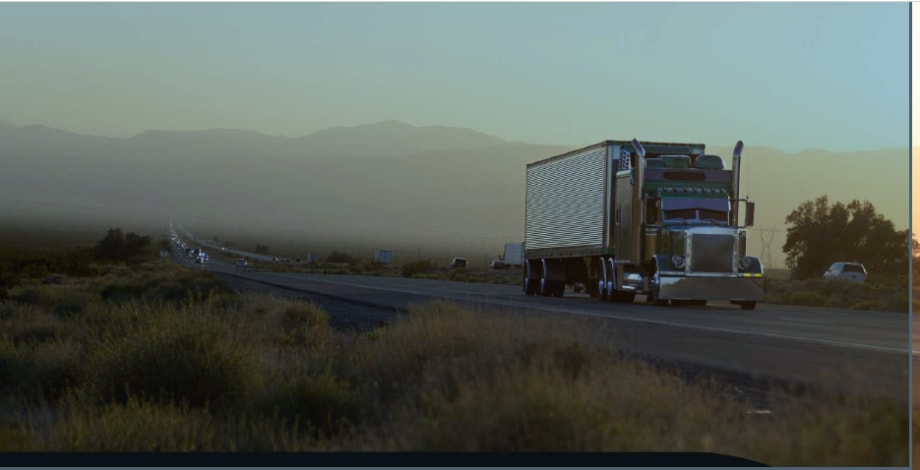
Photo: Fleetworthy
Fleetworthy has released its 2025 Trucking and Fleet Insights Report. The new study reveals key challenges fleets and owner-operators face in regard to compliance, safety, and administrative-related tasks, the company said.
The report surveyed 300 U.S.-based employees of large (500+ vehicles) and midsize (50-500 vehicles) trucking companies and owner-operators (single truck operators).
Fleetworthy said the findings provide a glimpse into some of the greatest business administration pain points fleets and owner-operators face daily heading into 2025.
Rising Costs and Workloads
The report found that the increasing costs and administrative tasks required for trucking companies to maintain compliance and run efficiently are major issues impacting operations.
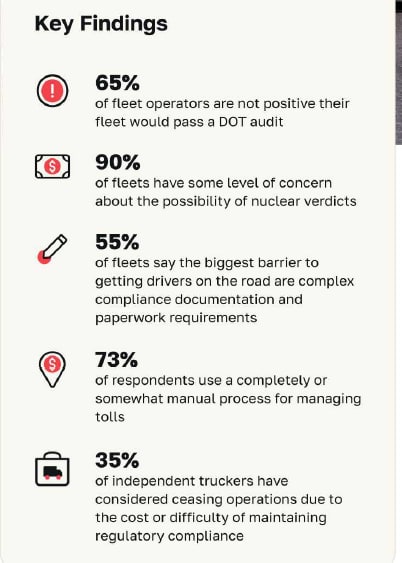
Fleetworthy found that paperwork and documentation issues are top concerns for fleet managers today.
Graphic: Fleetworthy
Key findings include:
96% of respondents reported reducing costs in other areas of their business to cover compliance-related expenses over the past 12 months.
93% of respondents face significant challenges in managing tolls, including the complexity of multiple transponders and unpredictable toll expenses.
35% of owner-operators said they have considered ceasing operations due to rising costs and time required to manage compliance tasks.
“With regulations in our industry constantly changing, fleets and owner-operators are spending a lot of time and money ensuring their trucks and company are staying compliant,” said Michael Precia, Fleetworthy president and chief strategy officer. “In many cases, keeping up with compliance-related tasks hampers a trucking company’s ability to grow its business. In fact, 95% of all respondents in this report said compliance challenges are holding fleets and owner-operators back from growing their businesses and offering new services. This report provides a great look into what compliance, safety, and other administrative challenges fleets are faced with and how they’re responding to them.”
Fear of Nuclear Verdicts
According to the report, the possibility of a nuclear verdict in the event of a significant accident or legal dispute is a top concern.
This is especially the case for midsize and small trucking operations that have more limited resources and capabilities to maintain robust compliance records and safety programs.
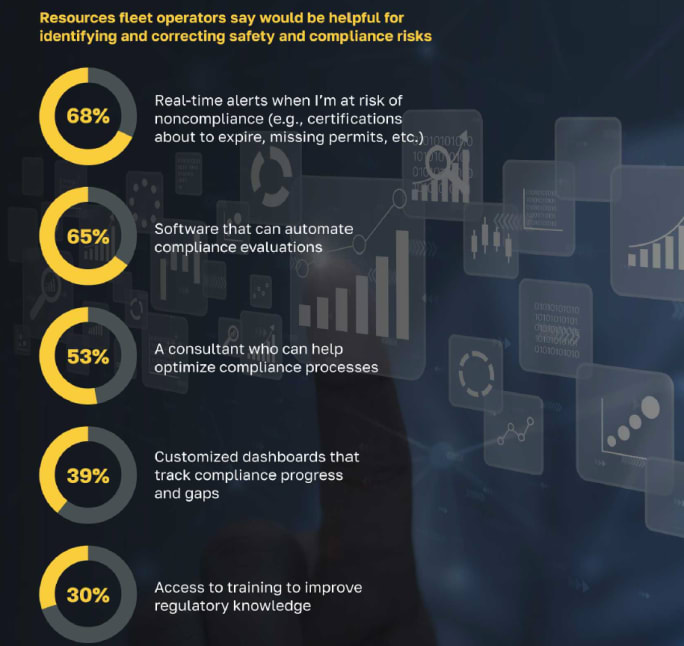
Fleet managers say new resources are needed to better manage safety and compliance.
Graphic: Fleetworthy
In the report, 35% of leaders at midsize fleets reported being very or extremely concerned about being involved in a nuclear verdict case.
Despite concerns regarding nuclear verdicts, 93% of all fleet leaders surveyed believe their organization has a strong safety culture and is well informed on all DOT regulations.
Still, 65% of respondents voiced concern that their fleet would not pass a DOT audit. And 87% cited compliance documentation issues and complications as a major barrier to doing so.
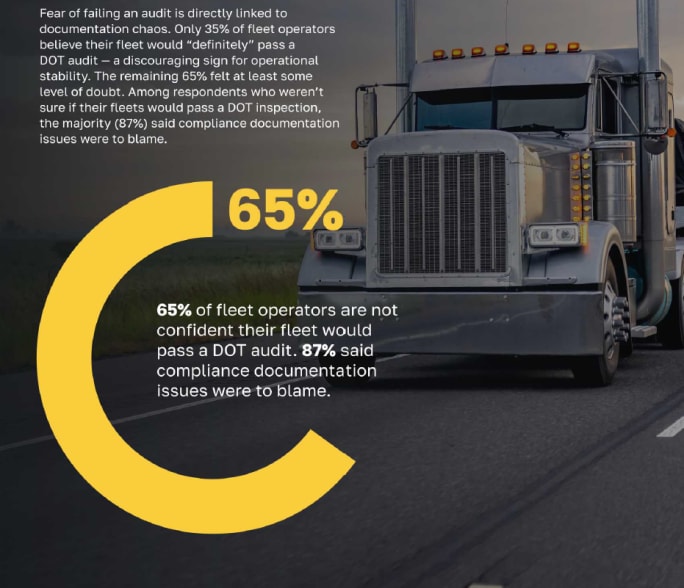
A majority of fleet managers lack confidence their operation would pass a DOT safety audit.
Graphic: Fleetworthy
Respondents also identified resources they felt would be helpful for identifying and correcting safety and compliance issues:
68% said they wanted real-time alerts for things like certification expirations, missing permits and other documentation issues
65% are interested in software management systems that can automate compliance evaluations
53% would like access to a consultant who can help optimize the compliance process
39% said they would like to have customizable dashboards that track compliance progress and alert them to gaps
30% said they need access to more training to improve their knowledge concerning regulatory compliance.
Safety a Top Concern
Among owner-operators, 97% thought they were more aware of safety and compliance best practices and DOT regulations compared to other independent truckers on the road.

Toll verification and management is a rising concern for fleet managers.
Graphic: Fleetworthy
To assist with fleet and driver safety, the report found an overwhelming majority of all respondents (96%) have made some type of investment in safety equipment in the past 12 months. In addition, in-cab cameras and monitoring systems are among the top (51%) of equipment fleet and owner-operators are adding.
For more insight on compliance, safety, and administrative trends impacting commercial fleets and owner-operators, download the 2025 Trucking and Fleet Insights Report at https://fleetworthy.com/resources/the-road-ahead-2025-trucking-and-fleet-insights-report/.
More Safety & Compliance

FMCSA Pauses Biennial-Update Enforcement Amid Motus Transition
Carriers whose updates were due on or after June 1 have more time, while FMCSA works to stabilize its new registration system and warns of phishing sites impersonating its new carrier registration system, Motus.
Read More →
ZF Expands Commercial Vehicle Push in North America
ZF is expanding its North American commercial-vehicle presence with new transmission applications, electrification, trailer technology and autonomous-driving systems.
Read More →
Truck Drivers Need More Than Another Alert
Fleets have more visibility into truck health, safety events, and driver activity than ever. The next challenge is turning all that information into useful guidance for the person who has to decide what to do next.
Read More →
Tesla Wants a Self-Driving Semi. Are Cameras Enough?
Could Tesla’s camera-only autonomous driving technology work on an 80,000-pound Semi? In this commentary, HDT's Deborah Lockridge takes a look at Tesla, Cybercab, and how autonomous trucks see the road.
Read More →
What DOT’s Automated Vehicle Strategy Means for Trucking
The U.S. Department of Transportation issued a new automated-vehicle strategy that outlines plans for driverless-truck regulations, cross-state freight corridors, and federal safety standards.
Read More →
NYC Expands Speed, Pedestrian Safety Tech Across Fleet
New York City is expanding intelligent speed assistance and pedestrian-alert systems across its municipal fleet, moving the technologies from pilot programs into vehicle procurement and retrofit requirements.
Read More →
FMCSA Removes 110 Truck Driver Training Schools from Certified ELDT List
Federal regulators also are targeting more than 160 additional training providers and launching a nationwide audit of third-party CDL skills testers as part of a broader crackdown on trucking fraud.
Read More →
Beyond DOT Compliance: What Makes a Trucking Fleet Truly Safe?
A trucking fleet can follow every rule and still make unsafe decisions. The real test comes when safety conflicts with freight, productivity, or cost.
Read More →
Hours of Service Pilot Programs: FMCSA Readies for 2027 Rollout
Two pilot programs could eventually reshape hours-of-service rules, giving truck drivers options to pause their 14-hour clock or use longer split sleeper rest periods.
Read More →
New Guide Offers Pet Safety Tips for Truck Drivers
Hundreds of thousands of pets travel in truck cabs. A new safety guide from Volvo Trucks and the Center for Pet Safety offers practical advice for truck drivers who bring dogs and cats along for the ride.
Read More →