




FMCSA Looking to Change How it Determines Motor Carrier Safety Fitness
What Happens if I Fail a U.S. DOT Compliance Review?
Learn about the potential pitfalls of failing a DOT compliance review (aka a safety audit) and how motor carriers can safeguard their operations against these significant risks.
by Christopher Eckhart, Scopelitis Law Firm
October 11, 2024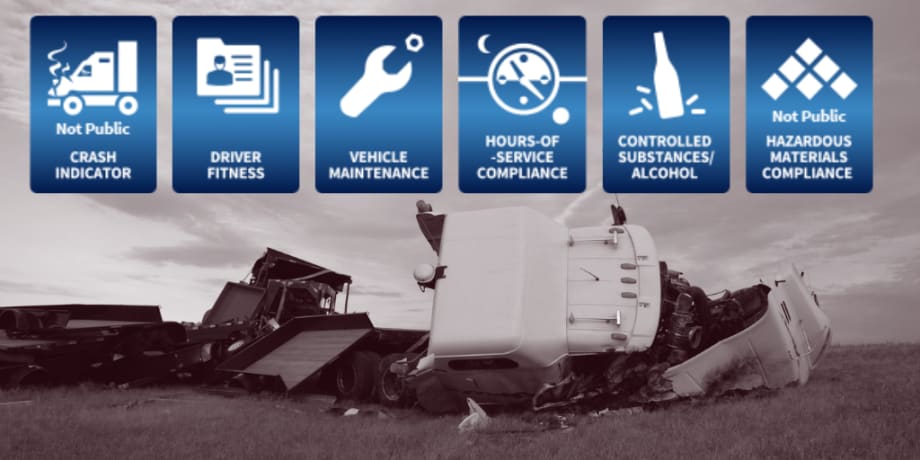
One way to make sure you're ready for a safety audit: Perform a safety gap analysis on portions of your safety program, such as any CSA BASICs currently near or above threshold.
Image: HDT graphic
6 min to read
Statistically, only a fraction of motor carriers currently authorized to operate in the United States will face a compliance review by the Federal Motor Carrier Safety Administration. But if your fleet fails a safety audit, what happens next?
In 2023, for example, the FMCSA and its state counterparts conducted approximately 12,000 compliance reviews, even though several hundred thousand carriers have authority to operate.
Nevertheless, the consequences of a failed compliance review are too serious to ignore. This article explores the potential pitfalls of failing a compliance review and offers insights into how carriers can safeguard their operations against these significant risks.
How Does FMCSA Rate Motor Carriers?
The safety fitness methodology and procedures used by the FMCSA in conducting a compliance review are summarized in 49 C.F.R. Part 385. Under these procedures, the portions of the Safety Regulations and Hazardous Material Regulations having similar characteristics are combined together into five regulatory factors and one accident rate factor.
In reviewing each of these six factors, the safety fitness methodology distinguishes between violations that are considered acute or critical.
Acute Violation
An acute violation is an instance of non-compliance that is so severe that it requires immediate corrective action by the motor carrier. Non-compliance with a single acute regulation can result in enforcement action by the FMCSA and will be considered a serious violation.
Critical Violation
A critical violation is a less serious non-compliance issue that relates to a breakdown in the carrier’s management control. The FMCSA uses a 10% threshold to determine whether a violation shows a trend by the carrier that does not sufficiently address a key safety or compliance issue.
That means if at least 10% of the files reviewed contained a particular violation, the FMCSA considers the violation “critical.”
Thus, in reviewing critical compliance issues, FMCSA investigators look for patterns of non-compliance by a motor carrier that may show a breakdown in the carrier’s management control in that area.
A list of the acute and critical violations identified by the FMCSA can be found in 49 C.F.R. Part 385.
Under the FMCSA methodology, each of the six factors receives a rating of Satisfactory, Conditional, or Unsatisfactory. The total number of conditional and satisfactory factors are added to determine that carrier’s overall safety rating, using the following table:
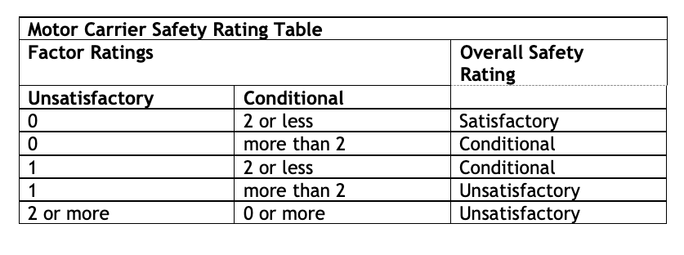
In a DOT audit, the portions of the Safety Regulations and Hazardous Material Regulations having similar characteristics are combined together into five regulatory factors and one accident rate factor.
Source: Scopelitis
At the completion of the FMCSA compliance review, the carrier will receive written notification of the proposed safety rating that lists the deficiencies discovered during the review.
The proposed safety rating, if not contested, will become effective 60 days after the date the motor carrier receives the notice of the proposed safety rating.
A motor carrier that receives an unsatisfactory safety rating will have its operating authority revoked unless the rating is upgraded 60 days after its effective date. (The timeline is 45 days for passenger carriers and carriers transporting hazardous materials).
In 2023, almost 36% of all carriers that underwent a compliance review received either a conditional or unsatisfactory safety rating.
6 Consequences of Failing a DOT Audit
Some of the more damaging consequences of an adverse safety rating include:
1. Mandatory Out-of-Service Order for Unsatisfactory Rating
An unsatisfactory safety rating will automatically result in an operational out-of-service order issued by the FMCSA, unless the rating is upgraded to either conditional or satisfactory within 60 days after the date of the FMCSA’s notice of a proposed unsatisfactory rating.
Passenger carriers and motor carriers transporting hazardous materials requiring vehicle placarding must receive an upgraded safety rating within 45 days after the issuance of a proposed unsatisfactory safety rating.
2. Loss of Business
A carrier that receives an adverse safety rating may also face the loss of business from its customers. Shippers are becoming increasingly concerned about the impact such a rating may have on their potential liability if the motor carrier is involved in a serious accident while hauling the customer’s freight.
3. Punitive Damage Liability Issues
Interstate motor carriers must also be aware of their potential exposure to punitive damages in litigation.
A jury may assess punitive damages if it determines that the motor carrier does not have significant safety programs in place or has acted with gross negligence in hiring an unsafe driver. Motor carriers with an unsatisfactory safety rating or a history of enforcement cases brought by the FMCSA are at particular risk, since this information may find itself in front of a jury and lead to punitive damages.
4. Increased Insurance Premium or Inability to Obtain Coverage
Because motor carriers’ safety ratings are publicly available and can, in many cases, increase a motor carrier’s liability exposure for punitive damages, many insurance companies factor the ratings into their decisions concerning coverage and premium levels.
In today’s environment, motor carriers wishing to maintain competitive insurance costs need to maintain a satisfactory safety rating.
5. Due Diligence Concern
Companies regularly conduct due diligence on a target motor carrier’s safety rating and safety scores as part of a potential acquisition or investment.
6. Penalties for Safety Violations
The FMCSA can also pursue enforcement proceedings to recover civil penalties for violations of the Federal Motor Carrier Safety Regulations.
The largest penalty FMCSA can issue is $225,000 for violations of Hazardous Materials and Safety Permitting Regulations that result in serious illness, severe injury to persons, or destruction of property.
The least expensive violation is $387 for a first violation of tariff rules.
In any given case, the FMCSA has considerable discretion in the amount of the civil penalties it issues. For example, in 2023, FMCSA closed 3,650 cases on non-hazmat motor carriers with fine assessments between $150 and $251,000, but the average value was $6,763.
Prepare Now Before Facing a Compliance Review
Given these potential ramifications of an unsuccessful compliance review, motor carriers should proactively review the status of their compliance with federal safety regulations. Below are some options to consider:
- Mock DOT Audit. One of the best methods of assessing a motor carrier’s current compliance is to conduct a mock DOT audit. A mock audit simulates a compliance review by the FMCSA. It will identify any significant compliance gaps and provide a roadmap on how to achieve compliance before the FMCSA begins an official compliance review.
- Safety Gap Analysis. Motor carriers can perform a safety gap analysis on portions of their safety program, such as any CSA BASICs currently near or above threshold.
- Auditing Critical Compliance Records. During a compliance review, one of the FMCSA’s primary focuses is ensuring the motor carrier maintains compliant records. Conducting an audit of driver qualification, vehicle maintenance files, and drug and alcohol testing files can identify violations that, in some cases, can be fixed before a compliance review.
- Review Safety Policies. Reviewing the company’s current safety policies could identify potential compliance gaps. In some cases, the carrier can avoid violations by updating the policies.
Regardless of which option a carrier chooses, taking these steps to proactively assess the carrier’s compliance with the federal motor carrier safety regulations will put the company in a much better position during a compliance review.

About the Author: Christopher J. Eckhart, partner,Scopelitis Law Firm, counsels motor carriers and other transportation intermediary clients regarding DOT regulatory compliance. His work includes representing clients in FMCSA compliance reviews and enforcement actions. Scopelitis serves the legal needs of more than 5,000 transportation-related companies, including 90 of the top 100 motor carriers in the nation.
This contributed guest article was authored and edited according to Heavy Duty Trucking’s editorial standards and style to provide useful information to our readers. Opinions expressed may not reflect those of HDT.
Subscribe to Our Newsletter
More Safety & Compliance

FMCSA Pauses Biennial-Update Enforcement Amid Motus Transition
Carriers whose updates were due on or after June 1 have more time, while FMCSA works to stabilize its new registration system and warns of phishing sites impersonating its new carrier registration system, Motus.
Read More →
ZF Expands Commercial Vehicle Push in North America
ZF is expanding its North American commercial-vehicle presence with new transmission applications, electrification, trailer technology and autonomous-driving systems.
Read More →
Truck Drivers Need More Than Another Alert
Fleets have more visibility into truck health, safety events, and driver activity than ever. The next challenge is turning all that information into useful guidance for the person who has to decide what to do next.
Read More →
Tesla Wants a Self-Driving Semi. Are Cameras Enough?
Could Tesla’s camera-only autonomous driving technology work on an 80,000-pound Semi? In this commentary, HDT's Deborah Lockridge takes a look at Tesla, Cybercab, and how autonomous trucks see the road.
Read More →
What DOT’s Automated Vehicle Strategy Means for Trucking
The U.S. Department of Transportation issued a new automated-vehicle strategy that outlines plans for driverless-truck regulations, cross-state freight corridors, and federal safety standards.
Read More →
NYC Expands Speed, Pedestrian Safety Tech Across Fleet
New York City is expanding intelligent speed assistance and pedestrian-alert systems across its municipal fleet, moving the technologies from pilot programs into vehicle procurement and retrofit requirements.
Read More →
FMCSA Removes 110 Truck Driver Training Schools from Certified ELDT List
Federal regulators also are targeting more than 160 additional training providers and launching a nationwide audit of third-party CDL skills testers as part of a broader crackdown on trucking fraud.
Read More →
Beyond DOT Compliance: What Makes a Trucking Fleet Truly Safe?
A trucking fleet can follow every rule and still make unsafe decisions. The real test comes when safety conflicts with freight, productivity, or cost.
Read More →
Hours of Service Pilot Programs: FMCSA Readies for 2027 Rollout
Two pilot programs could eventually reshape hours-of-service rules, giving truck drivers options to pause their 14-hour clock or use longer split sleeper rest periods.
Read More →
New Guide Offers Pet Safety Tips for Truck Drivers
Hundreds of thousands of pets travel in truck cabs. A new safety guide from Volvo Trucks and the Center for Pet Safety offers practical advice for truck drivers who bring dogs and cats along for the ride.
Read More →