





From the archives (2008): EPA Aims to Cut NOx Emissions from Heavy-Duty Trucks
EPA Proposed Emissions Rules Would Cut NOx 60%
EPA's proposal would reduce heavy-duty engine emissions during a broader range of operating conditions that span nearly all in-use operations, such as low-load and idling.
March 7, 2022
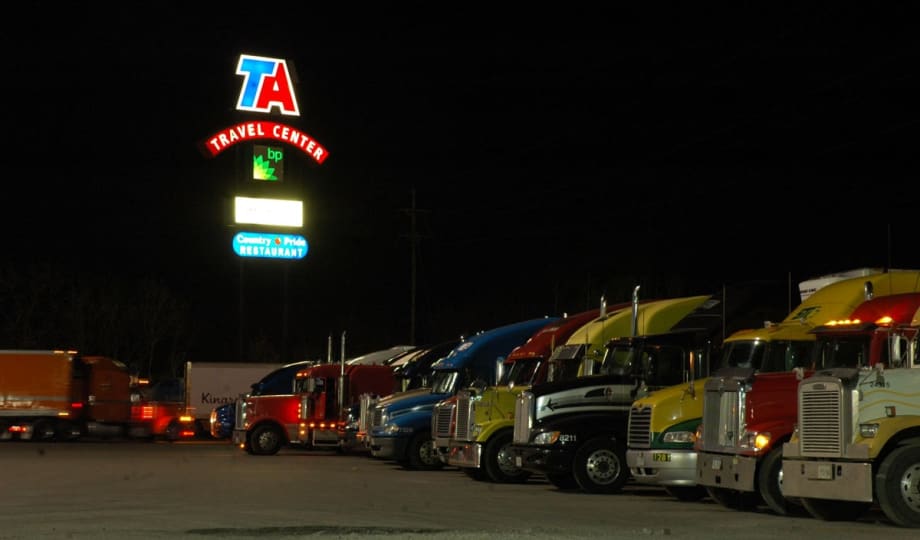
Proposed truck engine emissions rules would be more strict about NOx produced while idling.
Photo: Jim Park
8 min to read
The U.S. Environmental Protection Agency has issued a much-anticipated proposed rule for more stringent emissions standards from heavy-duty vehicles and engines starting in model year 2027.
The proposed emissions standards would reduce emissions of smog- and soot-forming nitrogen oxides (NOx) from heavy-duty gasoline and diesel engines and set updated greenhouse gas standards for certain commercial vehicle categories. It would cut NOx emissions from trucks by as much as 60% in 2045. NOx is a key in smog formation.
It’s been two decades since the last major rule was promulgated to address emissions of NOX, PM, HC, and CO (what EPA calls “criteria pollutants”) and toxic pollutants from heavy-duty engines. EPA Administrator Michael Regan said in an announcement that the proposed rule would “harness recent advancements in vehicle technologies from across the trucking industry as it advances toward a zero-emissions transportation future.”
This proposal would change the heavy-duty emission control program — including the standards, test procedures, regulatory useful life, emission-related warranty, and other requirements. The proposed rules would reduce emissions during a broader range of operating conditions that span nearly all in-use operations, such as low-load and idling.
The proposal also includes “targeted updates” to the existing Heavy-Duty Greenhouse Gas Emissions Phase 2 program.
The Biden administration also announced investments and actions to accelerate near-term zero-emitting vehicle deployment. These include new funding for electric school buses, leveraging existing funding for zero-emitting solutions in the bi-partisan infrastructure bill, driving down pollution at ports through Department of Transportation grants, and accelerating innovation through the Department of Energy’s SuperTruck3 Program.
More About EPA’s Emissions Proposal
There actually are two proposed options. EPA estimates that Option 1 would reduce NOx emissions from heavy-duty vehicles in 2040 by more than 50%; by 2045 (by which time it said most of the regulated fleet would have turned over), heavy-duty NOx emissions would be more than 60% lower than they would have been without this action, according to EPA. Estimates show Option 2 would reduce heavy-duty NOx emissions in 2045 by 47%.
According to the notice of proposed rulemaking, data shows that emission levels demonstrated for certification are not achieved under the broad range of real-world operating conditions. In fact, less than 10% of the data collected during a typical test while the vehicle is operated on the road is subject to EPA's in-use, on-the-road emission standards.
These testing data further show that NOx emissions from heavy-duty diesel vehicles are high during many periods of vehicle operation that are not subject to current on-the-road emission standards. For example, “low-load” engine conditions occur when a vehicle operates in stop-and-go traffic or is idling. These low-load conditions can result in exhaust temperature decreases that then lead to the diesel engine’s selective catalytic reduction emission control system becoming less effective or ceasing to function. Test data collected as part of EPA’s manufacturer-run in-use testing program indicate that this low-load operation could account for more than half of the NOx emissions from a vehicle during a typical workday. That’s why the proposal includes a new low-load-cycle test procedure, among others.
EPA said the proposed regulations can be thought of in three broad categories:
controlling emissions under a broader range of engine operating conditions,
maintaining emission control over a greater portion of an engine's operational life
providing manufacturers with flexibilities to meet the proposed standards while clarifying EPA regulations.
Provisions in the first category would include updated test procedures and revised emission standards. Those in the second category would include lengthened regulatory useful life and emission warranty periods, as well as several other updates to encourage proper maintenance and repair for engines used in Class 2b through Class 8 vehicles.
Provisions in the third category would provide opportunities to generate NOx emission credits that provide manufacturers with flexibilities to meet the proposed standards and encourage the introduction of new emission control technologies earlier than required. This category also includes clarifications and updates for hybrid electric, battery-electric, and fuel-cell-electric heavy-duty vehicles.
'Get it Right'
A flurry of statements issued by industry organizations in general welcomed the proposal and agreed with the goals of reducing emissions, but they expressed concerns that we could see a repeat of what happened with the last round of EPA emissions regulations. Those engines experienced reliability problems when they first came out, leading many truckers to hold off on buying new cleaner-burning engines. Some even used a loophole in the regulations that allowed older, higher-polluting engines to be used in glider kits, effectively giving owners a more aerodynamic truck that was more appealing to drivers, without the headaches of the new-emissions engines.
“It is vitally important that EPA get this right,” said Allen Schaeffer, executive director of the Diesel Technology Forum, in a statement. “Diesel engines are going to continue to dominate many segments of the trucking sector for some time yet, even as alternative fuels and zero-emission vehicles become more available. The right rule will enable further improvements in diesel technology and continued investments in new vehicles that will be important to sustain progress toward meeting both clean air and climate goals. A rule that results in dramatic shifts in the new truck market (pre-buy/low-buy) will be bad for jobs, the economy and the environment.”
Jed Mandel, president of the Truck and Engine Manufacturers Association, in an official statement said that “heavy-duty truck and engine manufacturers have long advocated for and benefited from national standards for NOx emissions, and we welcome today’s proposed rule as an important step toward maintaining that goal. …We look forward to working with EPA to ensure that the final version of today’s rule is practical, technically feasible, cost-effective, and will result in the necessary fleet turnover to achieve the nation’s environmental objectives.
"Engines made after 2010 emit roughly 30 times less NOx than those made before 2010. Yet only about 50% of the fleet has turned over and realized the benefits of that modern technology that eliminates 98% of NOx and particulate matter emissions. It is imperative the new rule facilitate the transition to newer, cleaner trucks so we can achieve lower NOx emissions as soon as possible.”
Mandel sounded more concerned in an interview with the New York Times, “This new standard simply may not be technologically feasible. We’re worried about the cost. There is a potential of adverse impacts on the economy and jobs.”
The American Trucking Associations focused on the possibility of having more consistent national standards.
“We share the Biden administration's goals of reducing air pollution,” said ATA president and CEO Chris Spear in a statement. “As a longtime member of EPA SmartWay Transport Partnership, we have worked in harmony with environmental regulators to successfully reduce greenhouse gas and NOx emissions.”
However, the association would be looking closely at the proposal, Spear also expressed concern that the rule could build on the industry’s progress in reducing emissions without “hurting the reliability of the trucks and trailers we purchase, nor imposing unreasonable or unworkable costs on our industry.
“We want to ensure that the Biden administration sets one, single national NOx emissions standard and that such standard can be achieved with workable, reliable technology – anything less than that will be extremely problematic for ATA and our members.”
The Owner-Operator Independent Drivers Association called the proposal government overreach.
“When the Cleaner Trucks Initiative was first announced in 2020, OOIDA stood side-by-side with EPA in hopes that a collaborative rulemaking process with input from professional truck drivers would result in practical emissions standards," OOIDA said in a statement. "Today’s announcement largely ignores that goal in favor of government overreach that will almost assuredly force safe drivers off the road, especially small-business truckers and owner-operators…
“Make no mistake, clean air is a priority for everyone. However, we believe there is a more realistic path forward to reducing commercial vehicle emissions that actually involves listening to men and women in the trucking industry. We hope EPA will get back to that strategy as they develop the Final Cleaner Trucks Initiative Rule throughout the rest of the year. Truckers know all too well from experience with previous rulemakings that poorly implemented regulations will result in breakdowns, downtime, and ultimately set back the goal of achieving cleaner air.”
California’s South Coast Air Quality Management District urged the EPA to “move quickly on finalizing the most stringent version of this plan by the end of this year that is more in line with the stronger standards already set by California. One that will provide the most benefits by 2027, not 2031.”
South Coast AQMD is the regulatory agency responsible for improving air quality for large areas of Los Angeles, Orange County, Riverside and San Bernardino counties, including the Coachella Valley.
More from EPA
The agency said the proposal reflects input from stakeholders including community groups, manufacturers, and state, local, and tribal governments. It's had two years to sift through feedback from its advanced notice of proposed rulemaking in 2020.
The action is the first step in EPA’s “Clean Trucks Plan” — a series of clean air and climate regulations that the agency will develop over the next three years to reduce pollution from trucks and buses and to advance the transition to a zero-emissions transportation future.
The proposed revisions to existing GHG standards for MY2027 and beyond would set updated GHG emissions standards for subsectors where electrification is advancing at a more rapid pace. These sectors include school buses, transit buses, commercial delivery trucks, and short-haul tractors.
In a separate action, EPA will be setting new GHG emissions standards for heavy-duty vehicles as soon as model year 2030. This action will more comprehensively address the long-term trend towards zero emissions vehicles across the heavy-duty sector.
EPA estimates that by 2045 the most ambitious option outlined in the proposal would result in the following annual benefits:
Up to 2,100 fewer premature deaths
6,700 fewer hospital admissions and emergency department visits
18,000 fewer cases of asthma onset in children
3.1 million fewer cases of asthma symptoms and allergic rhinitis symptoms
78,000 fewer lost days of work
1.1 million fewer lost school days for children
The proposal appears to be on the fast track, with comments due 46 days after publication in the Federal Register – but it says comments will get the best consideration iif they are submitted by 30 days after publication. EPA plans to hold a virtual public hearing about two weeks after publication.
More Equipment

How Volvo Updated Its D13 for EPA 2027 [Watch]
Volvo’s updated D13 promises lower emissions without sacrificing performance or fuel economy. Take a closer look at what changed inside the engine in this HDT Spotlight video.
Read More →
Michelin Tire Improves Efficiency and Durability for Regional Fleets
The Michelin X Multi Energy D2 is a regional haul drive tire engineered to help fleets improve fuel efficiency, durability and traction in demanding stop-and-go operations.
Read More →
ZF Expands Commercial Vehicle Push in North America
ZF is expanding its North American commercial-vehicle presence with new transmission applications, electrification, trailer technology and autonomous-driving systems.
Read More →
Tesla Wants a Self-Driving Semi. Are Cameras Enough?
Could Tesla’s camera-only autonomous driving technology work on an 80,000-pound Semi? In this commentary, HDT's Deborah Lockridge takes a look at Tesla, Cybercab, and how autonomous trucks see the road.
Read More →
Kodiak: Driverless Long-Haul Truck Launch on Track for 2026
Kodiak AI says its driverless long-haul safety case is 93% complete and it remains on track to begin commercial operations by year-end 2026.
Read More →
What DOT’s Automated Vehicle Strategy Means for Trucking
The U.S. Department of Transportation issued a new automated-vehicle strategy that outlines plans for driverless-truck regulations, cross-state freight corridors, and federal safety standards.
Read More →
East Coast Port Launches $45M Electric Truck Push
The Port Authority of New York and New Jersey announced millions in incentives for zero-emission drayage trucks, yard tractors, and new charging hubs near the port.
Read More →
PlusAI Going Public to Fund Autonomous Truck Launch
A SPAC deal could provide PlusAI with up to $300 million as it works toward a 2027 commercial launch of factory-built autonomous trucks.
Read More →
NHTSA Moves to Rewrite Truck Fuel-Economy Rules
The National Highway Traffic Safety Administration says it lacks authority to regulate medium- and heavy-duty truck engines separately from complete vehicles, but the existing standards have not yet been eliminated.
Read More →
Detroit Opens Orders for EPA 2027 Engines
Detroit isn’t starting from scratch to meet EPA 2027 diesel emissions standards. Its Gen 6 DD13 and DD15 engines keep much of today’s platform while updating the fuel and aftertreatment systems.
Read More →