




Enphase Energy Launches CS-100 Truck Charger
The CS-100 also enables customized charging schedules and other smart features through Enphase’s proprietary COSMOS interface

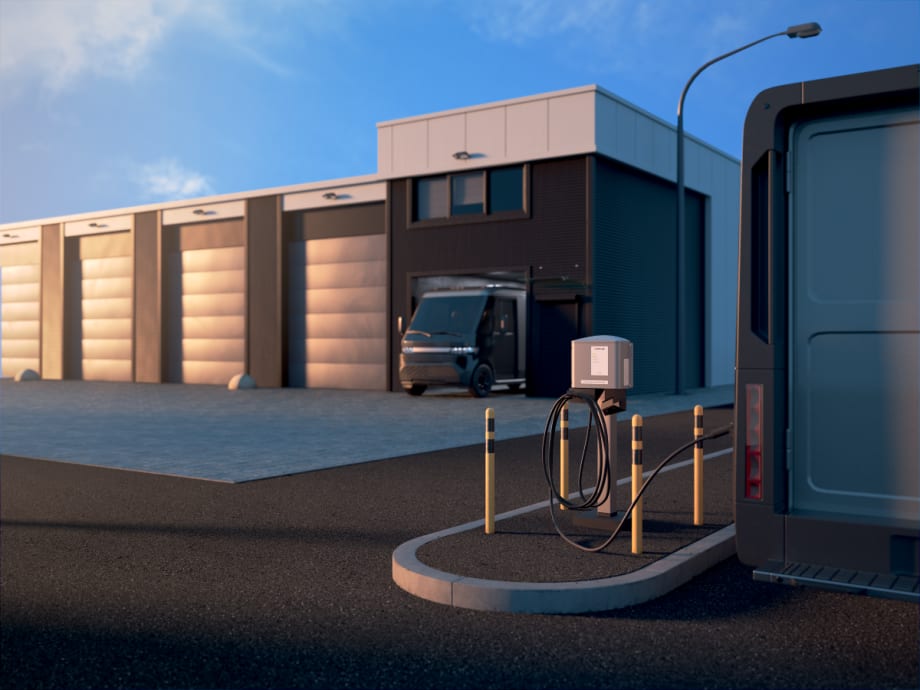
The Enphase CS-100 charger is built for both indoor and outdoor use, ensuring safe and reliable operation in diverse environments.
Photo: Enphase
Enphase Energy, a global energy technology company and supplier of microinverter-based solar and battery systems, announced today the launch of the CS-100 EV Charger. The new charging system is designed for customers with commercial fleet electric vehicles (EVs) in the United States.
The CS-100 is a Level 2 charging station and Enphase’s most powerful EV charger on the market, providing up to 19.2 kW of continuous power output.
Customizable Charging Schedules
Enphase said the CS-100 also enables customized charging schedules and other smart features through Enphase’s proprietary COSMOS interface. This unlocks enhanced capabilities of digital load management, load sharing, and access control by seamlessly integrating with fleet management software and building energy management systems.
“The CS-100 is a reliable and durable product that delivers unparalleled benefits to our rapidly growing fleet of electric vehicles,” said Phil Haupt, owner of Phil Haupt Electric, an installer of commercial and residential EV charging products in California. “The CS-100 will significantly improve the efficiency of operating and managing our fleet.”
"The CS-100 offers industry-leading power and control to meet the needs of our operations,” said Dan Lulich, CTO at OpConnect Inc, a provider of fleet EV charging solutions in the U.S. “Whether we need to charge quickly or shift charging to other times, the CS-100 has the capabilities we need.”
Certified by UL and featuring a NEMA 3R-rated enclosure, the CS-100 is built for both indoor and outdoor use, ensuring safe and reliable operation in diverse environments.
It includes a 25-foot charging cable and a ruggedized, impact-resistant J1772 connector that withstands daily wear and tear. The charger supports all J1772-compatible EVs and comes with a three-year limited warranty for added peace of mind.
“At Enphase, we continually advance our products to meet the evolving needs of the market,” said Jayant Somani, senior vice president and general manager, digital business unit at Enphase Energy. “The new CS-100 EV Charger unlocks enhanced capabilities, driving the efficiency and growth of commercial fleet operations across the United States.”
More Fuel Smarts

How Volvo Updated Its D13 for EPA 2027 [Watch]
Volvo’s updated D13 promises lower emissions without sacrificing performance or fuel economy. Take a closer look at what changed inside the engine in this HDT Spotlight video.
Read More →
Diesel Price Spike Shortens Payback for Natural Gas Trucks, Report Says
Energy Vision estimates fleets could recover the higher purchase price of an RNG-fueled Class 8 tractor in 1.3 to 2.8 years under current fuel-price scenarios.
Read More →
Calstart Becomes Catalyst Mobility, Reflecting Broader Focus
Calstart is now Catalyst Mobility, reflecting the nonprofit’s growing national role in clean transportation, including zero-emission trucks, infrastructure and incentive programs.
Read More →

Record Diesel Prices Squeeze Trucking Fleets
Average U.S. diesel prices have climbed to nearly $6 a gallon, surpassing the 2022 record as tight refinery capacity and Middle East disruptions keep fuel costs elevated.
Read More →
How Fuel Delivery Shapes Engine Performance
Fuel delivery depends on more than what happens at the injector. For fleet, maintenance and technical professionals, looking at the full path from pump to injector can provide useful context for understanding engine performance.
Read More →
East Coast Port Launches $45M Electric Truck Push
The Port Authority of New York and New Jersey announced millions in incentives for zero-emission drayage trucks, yard tractors, and new charging hubs near the port.
Read More →
California Bill Could Shed Light on Electric Truck Prices
Why do battery-electric Class 8 trucks remain so expensive? A California bill headed to Gov. Gavin Newsom would give fleets and state agencies more visibility into what manufacturers charge.
Read More →
Detroit Opens Orders for EPA 2027 Engines
Detroit isn’t starting from scratch to meet EPA 2027 diesel emissions standards. Its Gen 6 DD13 and DD15 engines keep much of today’s platform while updating the fuel and aftertreatment systems.
Read More →
Zero-Emission Truck Corridor Planned for West Coast
California, Oregon, Washington, British Columbia and Baja California are coordinating plans for truck charging and hydrogen fueling from Canada to Mexico.
Read More →
A Closer Look at Kenworth’s Electric T880E Vocational Truck [Video]
Learn more about Kenworth's T880E battery-electric vocational truck at the Paccar Technical Center, including its range, applications, upfitting considerations, and PTO options, in this HDT Spotlight video.
Read More →