




Electric, Hydrogen Station Designed for Trucks at Swedish Port
The gates are now open for Circle K’s charging and hydrogen filling station at the Port of Gothenburg in Sweden. The first of its kind in the Nordic region, it has been built from a heavy trucks perspective.

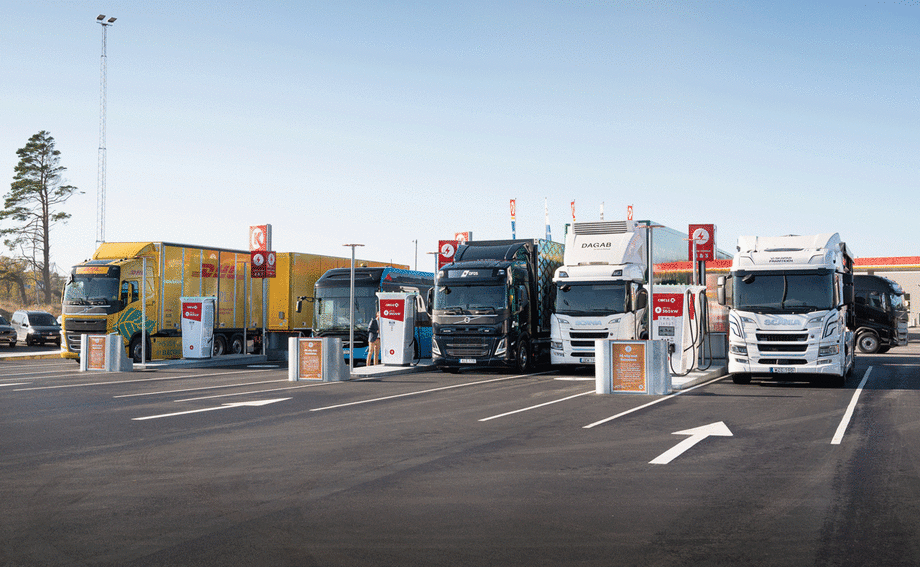
Initially the Port of Gothenburg station will have six public charging stations for battery-electric heavy trucks.
Photo: Port of Gothenburg
The Port of Gothenburg in Sweden has opened a public electric-vehicle charging and hydrogen filling station designed for trucks.
The gates are now open for Circle K’s charging and hydrogen filling station. The first of its kind in the Nordic region, it has been built from a heavy trucks perspective, with the intention of facilitating the green transition for heavy goods traffic in and around the Port of Gothenburg.
The station will form a new hub of the port for facilitating the transition from fossil to electricity and alternative fuels for heavy goods traffic. Initially there will be six public charging stations for electrically powered heavy trucks, with a capacity of up to 360 kW per charging bay. Having several charging bays at the same location means not only increased capacity, but also shorter waiting times. Within one year there will be hydrogen available at the station.
Over 1 million heavy trucks collect or deliver goods at the Port of Gothenburg every year. The port has conducted a study of the driving patterns of the heavy trucks together with Volvo Group, Scania and Stena Line in the collaboration initiative Tranzero. A large proportion of heavy trucks have been identified as particularly suitable for the fossil-free transition here and now, and a public station for charging and hydrogen in the heart of the port will be a key enabler.
“The station’s opening at exactly the right place, in terms of both timing and location,” said Elvir Dzanic, CEO at the Gothenburg Port Authority. “Serial production of electric heavy goods vehicles is up and running, and vehicles have been ordered by actors with a lot of traffic at the port. By the end of the year, electric heavy trucks will be a common sight in the port, and it will just keep on growing from there.”
The station is built from a heavy trucks perspective, providing good turning radius and ensuring that all charging bays can be accessed from multiple directions by different kinds of heavy trucks.
About Gothenburg's New Public EV Charging and Hydrogen Station:
The first public charging and hydrogen filling station in the Nordic region for heavy goods traffic
Charging bays for heavy goods traffic: 6 (with possibility for more bays)
Charging power: 360 kW (1 MW possible if more bays)
The station’s network capacity: 6 MW (with possibility of an additional 6 MW soon)
Hydrogen available for heavy goods traffic: In one year’s time
Hydrogen bays for heavy goods traffic: 1 (when fully expanded)
Hydrogen capacity: 720 kg, approx. 15 heavy trucks/day (when fully expanded)
More Fuel Smarts

Wex Adds Cardless Fuel Payments for Over-the-Road Customers
A new fuel card feature for Wex customers offers convenience and security.
Read More →
New California Law Could Shed Light on Electric Truck Prices
Why do battery-electric Class 8 trucks remain so expensive? A California bill signed by Gov. Gavin Newsom would give fleets and state agencies more visibility into what manufacturers charge.
Read More →
How Volvo Updated Its D13 for EPA 2027 [Watch]
Volvo’s updated D13 promises lower emissions without sacrificing performance or fuel economy. Take a closer look at what changed inside the engine in this HDT Spotlight video.
Read More →

Diesel Price Spike Shortens Payback for Natural Gas Trucks, Report Says
Energy Vision estimates fleets could recover the higher purchase price of an RNG-fueled Class 8 tractor in 1.3 to 2.8 years under current fuel-price scenarios.
Read More →
Calstart Becomes Catalyst Mobility, Reflecting Broader Focus
Calstart is now Catalyst Mobility, reflecting the nonprofit’s growing national role in clean transportation, including zero-emission trucks, infrastructure and incentive programs.
Read More →
Record Diesel Prices Squeeze Trucking Fleets
Average U.S. diesel prices have climbed to nearly $6 a gallon, surpassing the 2022 record as tight refinery capacity and Middle East disruptions keep fuel costs elevated.
Read More →
How Fuel Delivery Shapes Engine Performance
Fuel delivery depends on more than what happens at the injector. For fleet, maintenance and technical professionals, looking at the full path from pump to injector can provide useful context for understanding engine performance.
Read More →
East Coast Port Launches $45M Electric Truck Push
The Port Authority of New York and New Jersey announced millions in incentives for zero-emission drayage trucks, yard tractors, and new charging hubs near the port.
Read More →
Detroit Opens Orders for EPA 2027 Engines
Detroit isn’t starting from scratch to meet EPA 2027 diesel emissions standards. Its Gen 6 DD13 and DD15 engines keep much of today’s platform while updating the fuel and aftertreatment systems.
Read More →
Zero-Emission Truck Corridor Planned for West Coast
California, Oregon, Washington, British Columbia and Baja California are coordinating plans for truck charging and hydrogen fueling from Canada to Mexico.
Read More →