




Economic Watch: Job Gains Moderate, Service Sector Jumps
Even as service sector growth surged in July, a lackluster employment report is leading to more speculation on whether the Federal Reserve will raise interest rates at its September meeting.



As service sector growth surged in July, a lackluster employment report is leading to more speculation on whether the Federal Reserve will raise interest rates at its September meeting.
Private sector U.S. employment increased by 185,000 jobs from June to July, a pace that’s eased from the previous month’s gain.
According to payroll processor ADP and its National Employment Report, The rate compares to a revised 229,000 non-farm jobs added in June from May. That revised number is down from its first reported 237,000 rise, but still the best monthly performance so far this year.
“Job growth is strong, but it has moderated since the beginning of the year,” said Mark Zandi, chief economist of Moody’s Analytics. “Layoffs in the energy industry and weaker job gains in manufacturing are behind the slowdown. Nonetheless, even at this slower pace of growth, the labor market is fast approaching full employment.”
Large businesses with more than 500 employees had their strongest job gains since last December and were almost double the June number.
Goods-producing employment rose by 8,000 jobs in July, after adding 13,000 in June. The construction industry added 15,000 jobs in July, down from 17,000 last month. Meanwhile, manufacturing added 2,000 jobs in July, after gaining 9,000 in June.
Service-providing employment rose by 178,000 jobs in July, down from 216,000 in June. The ADP National Employment Report indicates that professional/business services contributed 42,000 jobs in July, down from June’s 61,000. Trade/transportation/utilities grew by 25,000, just over half of the previous month’s 47,000. The 10,000 new jobs added in financial activities was a drop from last month’s 16,000.
The report comes two days before the federal government releases the latest unemployment numbers.
Service Sector Jumping
Meantime, a separate report on the health of the nation’s service sector shows economic activity surged in July to its highest level since August 2005, according to a survey of the nation’s supply executives – reflecting growth for restaurants, builders, truckers and other service providers.
The Institute for Supply Management’s non-manufacturing index registered 60.3% in July, 4.3 percentage points higher than the June reading of 56%. This also represents continued growth in the non-manufacturing sector for the 72nd month and at a faster rate in July.
Fifteen of the 17 service sector industries reported growth last month, while a majority of the respondents continue to have a positive outlook on business conditions and the overall economy, according to the group.
The report follows one from Monday by the group and one other showing a mixed July performance in the nation’s manufacturing sector.
On the surface it appears that steady consumer spending continues to fuel service activity at the start of third quarter, while manufacturers remain under pressure from a rapidly rising dollar and tepid international demand, according to Lindsey Piegza, chief economist for Stifel Fixed Income.
“If the consumer can manage to maintain such heightened levels of spending further into the second half of the year, service providers will be the clear winners in today’s economy,” she said. “Of course the operative word here is ‘if.’ Consumer spending needs to be supported with job and income growth. Businesses, however, remain sidelined, hesitant to invest in everything from equipment to structures to high-wage employees. Additional data is needed at this point to determine which way the tide will turn. "
Employment and the Fed
Now for the bad news, according to Piegza: the ADP employment report.
“At this point, with a Federal Reserve presumably on the brink of raising [interest] rates, strong employment data is a clear necessity to justify a change in policy," she said. "A loss of momentum, such as an employment report falling short of 200,000, is likely to bolster the doves’ argument to wait a while longer before raising rates."
Aside from the numbers, Federal Reserve Governor Jerome Powell pushed back against more hawkish comments made Tuesday by fellow Committee member Dennis Lockhart. In an interview with CNBC, Powell said he and other Federal Open Market Committee members will be watching the data closely, particularly data on the labor market, between now and the Sept. 17 meeting.
"Nothing has been decided. I haven't made any decisions about what I would support, and certainly the committee hasn't," Powell said.
Piegza said the debate over the appropriate level of policy firming is intensifying as the Federal funds rate sits at a historical low for the 79th consecutive month.
“With the civilian unemployment rate well within the full employment range, and some officials confident in a near-term reversal in inflation pressures back towards 2%, the hawks are making an argument for a rate increase at the September meeting or December at the latest,” she said. “On the other hand, with peripheral indicators in the labor market suggesting still a significant level of slack in the labor force, such as a decade-low participation rate and stagnant average hourly earnings, coupled with still sluggishly low inflation measures, the doves are equally making an argument to wait on the sideline longer into 2016.”
More Fleet Management

How Innovative Trucking Leaders Turn Change Into an Advantage
As the pace of change accelerates in trucking, the fleets that adapt best have more than the latest technology. They have cultures that embrace improvement.
Read More →
Freight Broker Bonds Just Got Harder to Get. Here's What That Means for Your Fleet.
When it gets harder for a freight broker to prove they are financially sound, the ones who cannot clear that bar get pushed out of the market. And those are exactly the brokers who used to leave motor carriers holding the bag.
Read More →
Long-Awaited Canadian Border Bridge to Open in Detroit
For trucking, the bridge opening should offer immediate improvements in efficiency and reliability, with new customs facilities, expanded inspection capacity, and direct freeway-to-freeway connections.
Read More →
Aurora Rolls Out Next Generation of Driverless Trucks for Commercial Freight
Aurora's latest autonomous trucks it's rolling out with International feature lower-cost hardware designed for a million miles as the company expands commercial driverless freight operations across the U.S. Sun Belt.
Read More →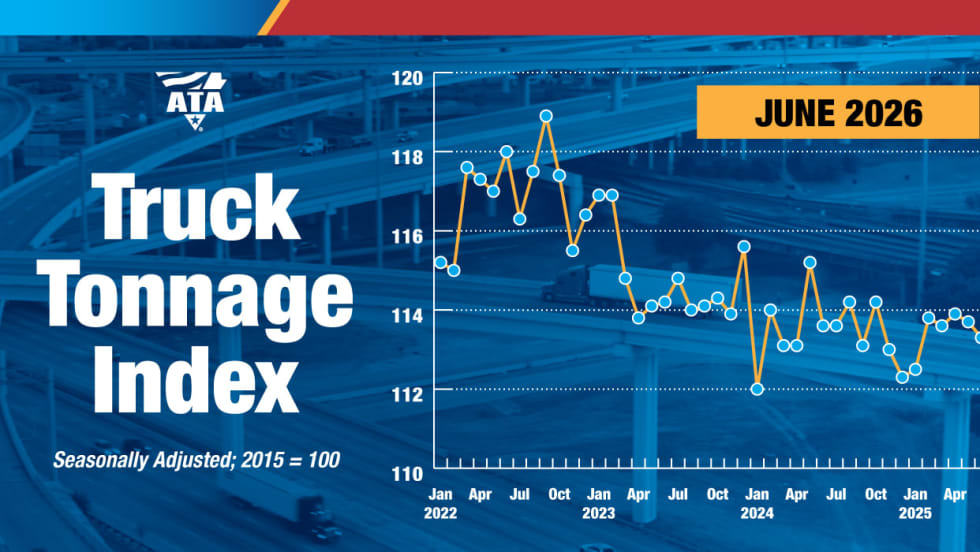
Freight Tonnage Down, Rates up, as Lower Capacity Powers Trucking Recovery
The recovery from the freight recession continues to be driven by reduction in capacity rather than by increased demand.
Read More →
Think Your Trucking Fleet Isn't Using Much AI? Think Again
Shadow AI — the use of unauthorized artificial intelligence tools at work — is becoming increasingly common, putting sensitive company data at risk. Learn how trucking fleets can protect sensitive data while embracing AI.
Read More →
ArcBest Consolidates Brands, Cuts Workforce
The company will bring three business units under the ArcBest brand, eliminate about 2% of positions, and expects the changes to generate $40 million in annual savings.
Read More →
Trucking Fleets Faced Record Operating Costs During Third Year of Freight Recession
ATRI's annual operational cost report shows carriers trimmed fleets, delayed equipment purchases, and ran older trucks as expenses continued to outpace freight rates.
Read More →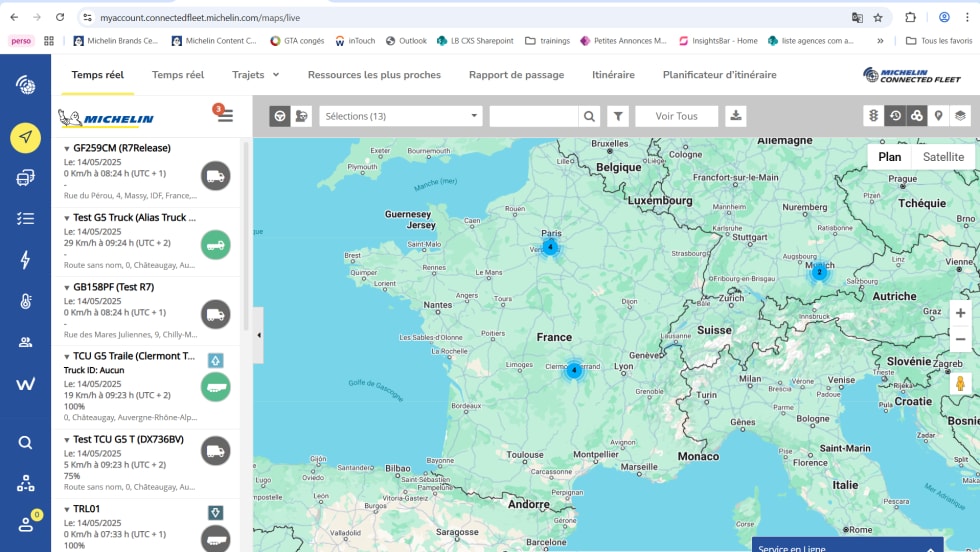
Michelin Adds AI Assistant to MyConnectedFleet Platform
Michelin’s new generative AI tool delivers instant fleet insights, helping managers analyze fuel use, tire maintenance, vehicle status, and operational performance without manually creating reports.
Read More →
LytxOne Platform Now Features AI, Compliance, and Asset Tracking Tools
New enhancements add AI-powered insights, asset tracking, compliance automation, and configurable privacy controls to Lytx's all-in-one fleet management platform.
Read More →