




Earnings Watch: Paccar Record Annual Income, Werner Profit Rises
UPDATED -- Truck and engine manufacturer Paccar on Friday reported record annual revenue of $19.12 billion and record net income of $1.60 billion for 2015, but fell short of analysts’ expectations in the final quarter of the year.



UPDATED -- Truck and engine manufacturer Paccar (NASDAQ:PCAR) on Friday reported record annual revenue of $19.12 billion and record net income of $1.60 billion for 2015, but fell short of analysts’ expectations in the final quarter of the year.
The parent to truck brands Kenworth and Peterbilt says the new figures compare to revenue of $18.99 billion and net income of $1.36 billion last year.
Diluted earnings per share last year totaled $4.51 compared to $3.82 in 2014.
Fourth quarter 2015 net sales and financial service revenues were $4.36 billion compared to $5.12 billion for the same period in 2014. Net income totaled $347.2 million versus $394.3 million a year earlier. The company attributed the drop to lower truck deliveries in North America. This was partially offset by increased deliveries in Europe, where Paccar's DAF brand has been the overall market share leader in the United Kingdom for 20 years, according to the company.
The company saw a decline in diluted earnings per share, coming in at 98 cents in the most recent quarter, 5 cents less than the consensus estimate from Zacks Investment Research. This compares to $1.11 in the 2014 final quarter.
U.S. and Canada Class 8 truck industry retail sales in 2015 of 278,000 vehicles were the highest since 2006, according to the company. Europe above-16-tonne registrations in 2015 of 269,000 vehicles were the highest since 2008.
“Truck demand is being driven by good economic growth, strong freight tonnage and lower fuel prices. In 2015, Paccar achieved a Class 8 retail market share in the U.S. and Canada of 27.4%,” said Gary Moore, Paccar executive vice president.
Paccar’s truck segment, which also includes Paccar engines, had sales and revenue of $3.29 billion in the fourth quarter of 2015, down from nearly $4 billion a year earlier. For 2015 the figure increased to $14.8 billion from $14.6 billion in 2014.
The company’s parts segment also saw a small decline in its fourth quarter performance but was up slightly for the entire year.
“Paccar’s aftermarket parts business achieved annual revenues of $3.06 billion and record pretax profit of $555.6 million in 2015,” said David Danforth, Paccar Parts general manager and vice president. “The growth in Paccar’s aftermarket parts business has been driven by investments in distribution, technology and products.”
Paccar Financial Services achieved fourth quarter 2015 pretax income of $89.9 million compared to $96.3 million earned in the fourth quarter of 2014. Fourth quarter 2015 revenues were $292.8 million compared to $302 million in the same quarter of 2014. Full year revenues were $1.17 billion compared to $1.20 billion for the same period a year ago.
More information about Paccar’s financial performance is on the company website.
Werner Boosts Full-Year, Quarterly Profits
Meantime, on the fleet side of the recent wave of earnings reports, Nebraska-based Werner Enterprises Inc. (NASDAQ:WERN) turned in better numbers, most notably for the fourth quarter of last year as many other fleets have reported lower profits.
Net income for the final quarter of 2015 improved 12% from a year earlier to $36.6 million while it jumped 25% in 2015 from 2014 to $123.7 million.
Earnings per diluted share for the quarter were 51 cents, up 12% from the same time in 2014 and beating expectations by Zacks Investment Research by 5 cents per share, while moving 26% higher year-over-year to $1.71.
This happened as total revenue for the quarter slipped 2% to $528.8 million while it declined 4% for all of last year to $2.093 billion. In contrast revenue minus fuel surcharges increased from year earlier levels by 4% for the quarter and 6% for 2015.
“Our freight demand in fourth quarter 2015 was less robust than the strong fourth quarter of 2014, however, it was consistent with our average freight demand in the fourth quarters of 2013, 2012 and 2011,” the company said in a news release, “Demand was less than expected in the first half of fourth quarter 2015, picked up significant strength in latter November and early December and then tapered to seasonally solid freight levels for the remainder of the year.”
According to Werner, 2014 and 2015 were cyclically contrasting years with 2014 providing the benefits of gradually improving demand from a strengthening economy and constrained supply due to a tight driver market and increasing safety regulations.
“Freight demand in 2015 did not strengthen as the year progressed, as the rate of economic growth slowed. The truckload sector also experienced supply increases in 2015 as small carrier confidence rose as a result of better rates in 2014 and much lower fuel prices beginning in late 2014,” Werner said. “Finally, as 2015 ended, truckload supply began to stabilize as truck orders declined significantly and safety regulators finalized the long awaited electronic logging device regulations in December 2015.”
A further look into company numbers shows average revenues per tractor per week, net of fuel surcharge, decreased 2.3% in fourth quarter 2015 compared to a year earlier while average miles per truck declined by 2.8% but average revenues per total mile, net of fuel surcharge, increased 0.5%. The company’s average length of haul in fourth quarter 2015 was essentially flat compared to fourth quarter.
Werner said it ended the fourth quarter 2015 with 7,450 trucks in its truckload segment, a year-over-year improvement of 400 trucks compared to the end of fourth quarter 2014. Its specialized services business, primarily dedicated, ended 2015 with 3,675 trucks, or 49% of its total truckload segment fleet.
Its non-asset based business, which includes brokerage, intermodal and international operations, revenue fell 2% in the fourth quarter to $96.7 million but operating income jumped 84% to $4.4 million
The company said it also invested heavily in capital expenditures last year to lower the average age of its truck fleet to 1.9 years as of Dec. 31, 2015, compared to an average age of 2.2 years a year earlier.
As for it where things are heading so far this year, Werner said things have eased up a bit.
“Freight demand to date in January 2016 has been seasonally softer and in-line with the same periods of 2013, 2012 and 2011. Compared to the same periods in January 2015 and January 2014, freight demand is not as strong,” the company said.
There are more details on the Werner Enterprises website.
Update adds Werner earnings.
More Equipment
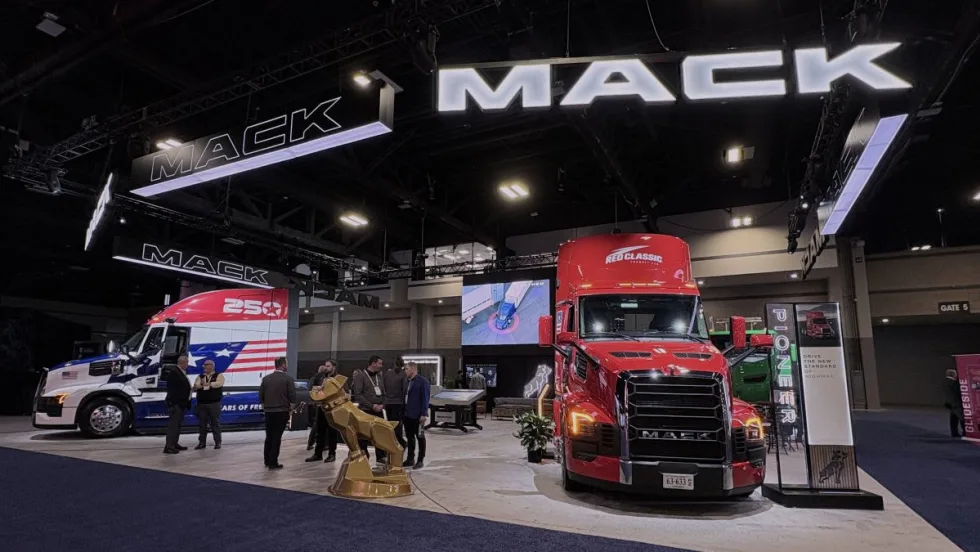
Trucks at ATA's 2026 MC&E in Charlotte, North Carolina [Photos]
From rigs decked out in patriotic America's 250 paint schemes to autonomous trucks and more, check out these photos from ATA's 2026 Management Conference & Exhibition.
Read More →
Help HDT Find Trucking’s Top Products
Have you come across a new product that could make a difference for trucking fleets? Nominate it for HDT’s 2027 Top 20 Products Awards by November 9.
Read More →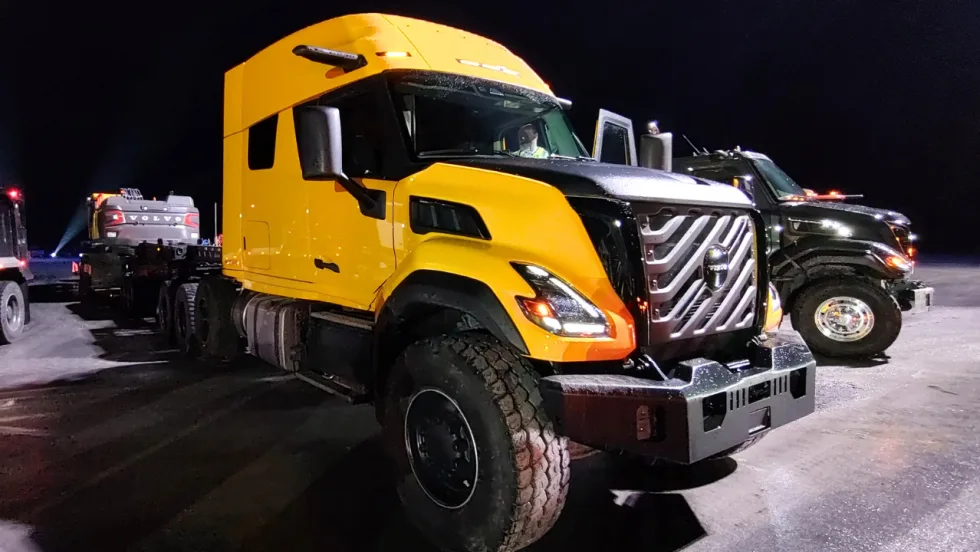
Volvo Unveils New VNX Heavy-Haul and Vocational Truck
Volvo Trucks has launched the VNX, a new vocational truck also available as a tractor in day cab and two sleeper configurations, with one heavy-haul model. The Volvo VNX is powered by Volvo's D13 platform, which delivers up to 540 horsepower and 1,950 pound-feet of torque and is EPA 2027-compliant.
Read More →
How GP Transco Cuts Trucking Fuel Costs, a Tenth of a Gallon at a Time
What’s another tenth of a mile per gallon worth? GP Transco shares how equipment upgrades and driver coaching turn small gains into meaningful fuel savings.
Read More →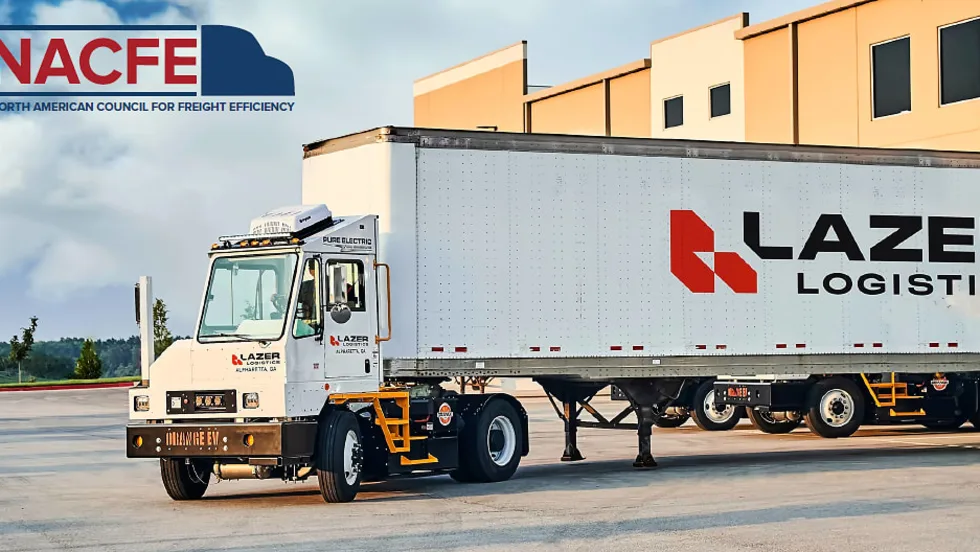
Electric Yard Tractors Move Beyond Pilots
Operating-cost savings have overtaken sustainability goals as the leading reason surveyed fleets are adopting battery-electric terminal tractors, according to new NACFE research.
Read More →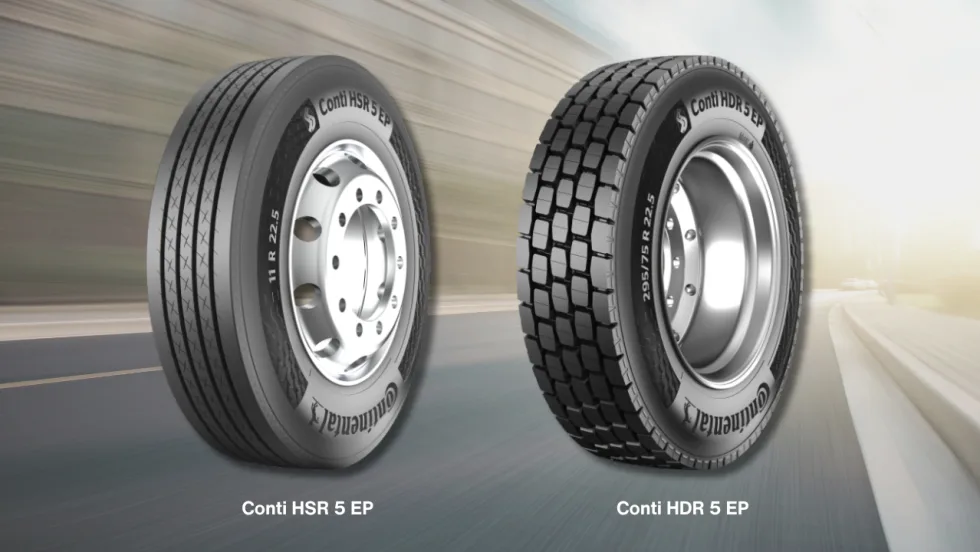
Continental Introduces New Regional Truck Tires
Continental says its new Generation 5 steer and drive tires for regional operations offer longer tread life, with estimated mileage gains of 22% and 19%, respectively.
Read More →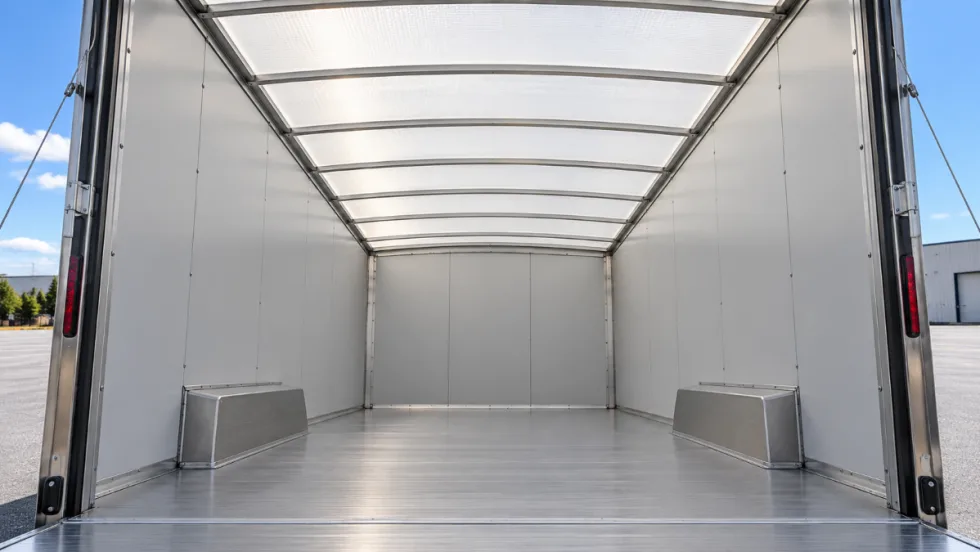
Tekmodo Introduces CargoBright Brand for Translucent Trailer Roofs
CargoBright is designed to diffuse daylight across the cargo area while performing as a working vehicle roof.
Read More →
Fleet Economics Shape Electric Truck Outlook
ACT Research expects costs, charging infrastructure, and technology improvements to drive zero-emission commercial vehicle adoption as federal regulations and incentives retreat.
Read More →
Kodiak Targets Dallas–Houston for Driverless Trucks
The company says its autonomous trucks are completing the I-45 run without a safety observer taking control. It plans to remove the observer by the end of 2026.
Read More →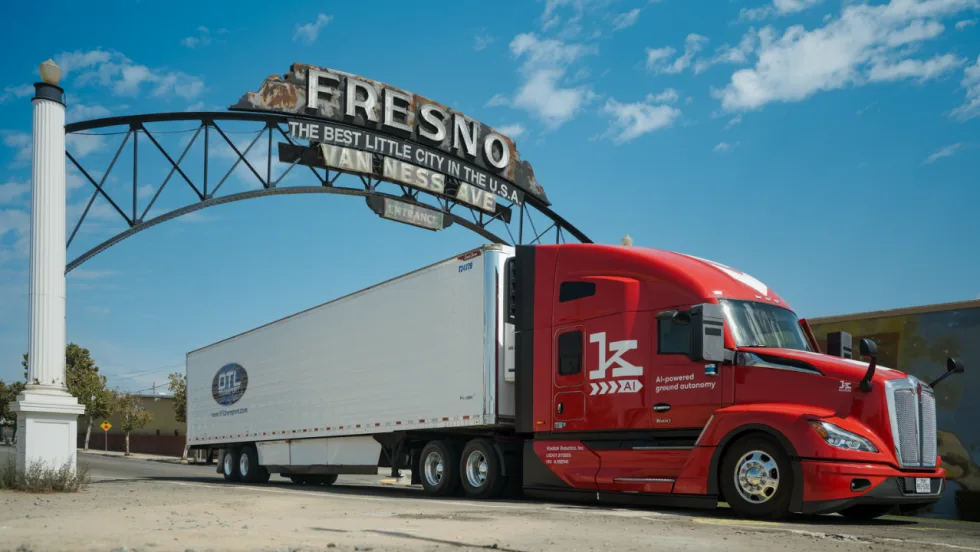
Kodiak Hauls Produce in California Autonomous Truck Pilot
Kodiak AI and DTL Transport have begun hauling produce between Fresno and Los Angeles under California’s new rules for testing heavy-duty autonomous trucks. A safety driver remains behind the wheel.
Read More →