




Earnings Watch: Covenant, Knight, Roadrunner See Lower Profits
Phrases such a “challenging freight market” and a freight environment that’s “less attractive” continued to be some of the buzz words Wednesday as another raft of second quarter corporate earnings washed ashore, while one company defied the trend with its net income soaring more than 300%.


Phrases such a “challenging freight market” and a freight environment that’s “less attractive” continued to be some of the buzz words Wednesday as another raft of second quarter corporate earnings washed ashore, while one company defied the trend with its net income soaring more than 300%.
Covenant Profit Falls By More Than Half
The parent a handful of trucking operations, Covenant Transportation Group Inc. (NASDAQ:CVTI), reported its profit fell to $3.6 million, or 20 cents per share, compared to $11 million, or 60 cents per diluted share in the second quarter of 2015.
Total revenue declined 9.5% to $158.8 million, due in part to a reduction in its number of power units. Freight revenue, which excludes revenue from fuel surcharges, fell 5.1% to $144.4 million.Meanwhile, operating income totaled $7.3 million compared to $18.8 million a year earlier for the Tennessee-based company.
“The quarter was characterized by a challenging freight market as well as specific items that impacted our results. From a freight market perspective, demand was lackluster for the quarter,” said Chairman and CEO David R. Parker. “Capacity was plentiful industry-wide, and a segment of the shipping community became more rate conscious, which pressured our average freight revenue per mile as well as our volumes where we were not willing to match some of the rates quoted by competitors.”
Despite this, he said there were some positives in the weak freight market including the company’s average freight revenue per loaded mile improving approximately 0.9 of a cent per mile. It also completed bringing on two significant new dedicated customers. Also, its number of team-driven tractors increased, which Parker said should position the company well duing the peak shipping season.
According to Parker, the company’s Southern Refrigerated Transport operations saw its second straight quarter of operating at a loss and has enlisted company director and former Con-way executive Herb Schmidt as a consultant to work directly with helping turn SRT around, which is expected to take several quarters.
In the company’s asset-based truckload operations, which include Covenant Transport, total revenue for the quarter decreased to $144.7 million, a drop of $18.1 million compared with the second quarter of 2015.
This decrease consisted of a $9.2 million reduction of freight revenue, along with lower fuel surcharge revenue of $8.9 million. The drop was also related to a 111 truck decrease, or 4.1%, in the average tractor fleet and a 3.2% decrease in average freight revenue per tractor. Team-driven trucks increased to an average of 1,007 teams in the second quarter of 2016, an increase of approximately 5.9% over the average of 951 teams in the second quarter of 2015.
Covenant’s non-asset based brokerage and other operations, including Covenant Transport Solutions, saw total revenue increase 11.7%, to $14.1 million while operating income was approximately $1.5 million, up from $600,000 a year earlier.
For the first half of 2015, CTG reported net income of nearly $8 million compared $21.2 million a year earlier while freight revenue declined 2.2% to $315.2 million.
Looking toward the rest of the year, Richard B. Cribbs, the executive vice president and chief financial officer said, “For the second half of the year, our focus will be on laying the groundwork to improve the performance of SRT, gaining commitments for the peak season from our key customers, and increasing the percentage of our trucks with drivers.
He said due to this, the company is not issuing earnings guidance for the second half of 2016 and Covenant does not expect the second half of 2016 to be as profitable as the second half of 2015.
Knight Transportation Profit Totals Nearly $25 Million Despite Decline
Also reporting lower earnings is truckload operator Knight Transportation Inc. (NYSE: KNX), which saw profit fall by 10.7% in the second quarter from a year earlier, totaling $24.7 million. Earnings per share dipped slightly to 31 cents from 33 cents.
The Arizona operation experienced an 8.5% drop in total revenue, hitting $276.3 million, while freight revenue excluding fuel surcharges fell 5.5% to $253.8 million.
In issuing the numbers, Knight said it also released adjusted earnings, due $7.2 million in pre-tax expenses, or $4.4 million after-tax, it incurred a year ago related to two class action lawsuits. This resulted in even bigger drops in profits, with adjusted net income falling 23% from a year ago while adjusted earnings declined from 39 cents to 31 cents.
Knight’s operating income slid 8.5% in the second quarter to $38 million while the decline in adjusted operating income is 23%.
“The freight environment in the second quarter of 2016 was less attractive than the same quarter a year ago. We attribute the change to excess trucking capacity in the markets we serve,” said Dave Jackson, president and CEO. “Although a surplus of trucking capacity remains currently, significantly declining new truck orders, increased bankruptcies, reductions in the driver workforce, low returns on invested capital, and additional regulatory burdens expected to phase in over the coming quarters has and will continue to reduce available capacity.”
According to Jackson, Knight believes these latter developments will lead to “an improvement in the supply/demand relationship in the coming quarters.” However, Jackson noted that, during the second quarter, "the more competitive freight environment and fewer non-contract opportunities continued to pressure our overall revenue per loaded mile.”
During the quarter, revenue per loaded mile, excluding fuel surcharge, decreased 2.4% and negatively impacted the company’s results by approximately 4 cents per share when compared to the same period last year, according to Knight, which said it also felt the affect of higher driver pay.
Like some other fleets, Knight trimmed its number average number of tractors in the second quarter to just fewer than 4,700 from a little more than 4,800 a year earlier.
In the second quarter, trucking segment revenue excluding fuel surcharges fell to $204 million from $212.4 million in the second quarter of 2015. Revenue from Knight’s logistics segment declined 11.2% to $49.9 million.
In the first half of 2016, Knight reported a profit of $47.2 million, down 17.4% from the first six months of 2015 as total revenue declined 7.4% and revenue excluding fuel surcharges fell 3.5%.
Roadrunner Net Income Plummets
On the asset light and logistics services side of trucking, Roadrunner Transportation Systems Inc. (NYSE: RRTS) reported sharply lower earnings and pulled back on its expectations.
Second quarter net income totaled $1.8 million, or 5 cents per share, compared to $16.5 million a year earlier, or 42 cents per share.
Revenues for the quarter decreased to $483.4 million from $517.9 million for the same quarter in 2015 while operating income was $8.6 million, compared to $31.2 million a year ago.
Mark DiBlasi, CEO of Roadrunner, said the decrease in revenue was “primarily due to continuing declines in freight rates and volumes across most end markets and lower fuel surcharge revenue of $20.1 million quarter-over-quarter.”
He said excess capacity and lower margins, especially in the company’s ground and air expedite businesses, continued to negatively affect its truckload segment.
Roadrunner’s truckload revenues decreased to $282.2 million for the second quarter of 2016 from $285.9 million for the second quarter of 2015, primarily due to lower fuel surcharge revenues across the entire TL segment, which were partially offset by increases in expedited ground freight brokerage revenues, according to the company. TL operating income decreased to $6.2 million for the second quarter of 2016 from $19.7 million for the second quarter of 2015.
LTL revenues decreased 11.9% to $122.3 million for the second quarter of 2016 The decrease in LTL revenues was attributed to a combination of lower fuel surcharge revenue, which decreased $5.3 million quarter-over-quarter, and weak freight demand in the general industrial markets Roadrunner serves, according to the company. LTL operating income was $800,000 million for the second quarter of 2016, compared to $8.4 million for the second quarter of 2015.
“Trends in our less-than-truckload segment remain mostly unchanged with continued market impacts from weak freight demand in the general industrial markets we serve and lower fuel surcharge revenue,” DiBlasi said.
For the first half of the year, the Wisconsin based company’s net income totaled $4.9 million, down dramatically from $30 million a year earlier as revenue fell by a much smaller margin, totaling $949 million compared to a little over $1 billion in the first half of 2015.
Because of the company’s performance and due to what Roadrunner said are continuing market trends and historically low freight rates in many end markets, it lowered 2016 guidance.
“We expect to achieve EBITDA, excluding downsizing costs of approximately $7 million, of approximately $110 million for 2016 and anticipate diluted earnings per share available to common stockholders, excluding the impact of downsizing costs, to be in the range of 70 cents to 85 cents for 2016,” said Peter Armbruster, chief financial officer.
He said this guidance assumes that historic seasonal patterns will increase volumes and slightly improve rates in certain end markets during the second half of 2016; new business awards will build throughout the year; cost saving initiatives will benefit results in the second half; and the company does begin any new acquisitions.
Echo Global Logistics Swings To A Profit
Meantime on the logistics side of trucking, things were bright for Echo Global Logistics Inc. (NASDAQ: ECHO) in the second quarter.
The Illinois company said its net income improved 383% to $1.9 million from a loss of $700,000 a year earlier while total revenue increased by 19% to $444 million from the second quarter of 2015.
Echo also reported big gains in earnings per share, moving from a loss of 3 cents a year ago to a profit of 7 cents in the most recent quarter.
"Echo posted another strong quarter of record volumes and revenue in a market with continuing soft demand and capacity," said Doug Waggoner, chairman and CEO. "We are very pleased with this growth and believe it highlights the value we bring to both shippers and carriers in any environment. We are excited to soon begin to enjoy the benefits of the full integration of our Command acquisition in the coming months."
For the first half of 2016, Echo’s net income fell slightly to $2.2 million from 2.6 million a year earlier while revenue jumped to $849.1 million from $655.3 million.
The company also revised its full year 2016 total revenue guidance to be in the range of $1.7 billion to $1.76 billion, down slightly from between $1.7 billion to $1.78 billion, when it released its first quarter earnings.
More Fleet Management
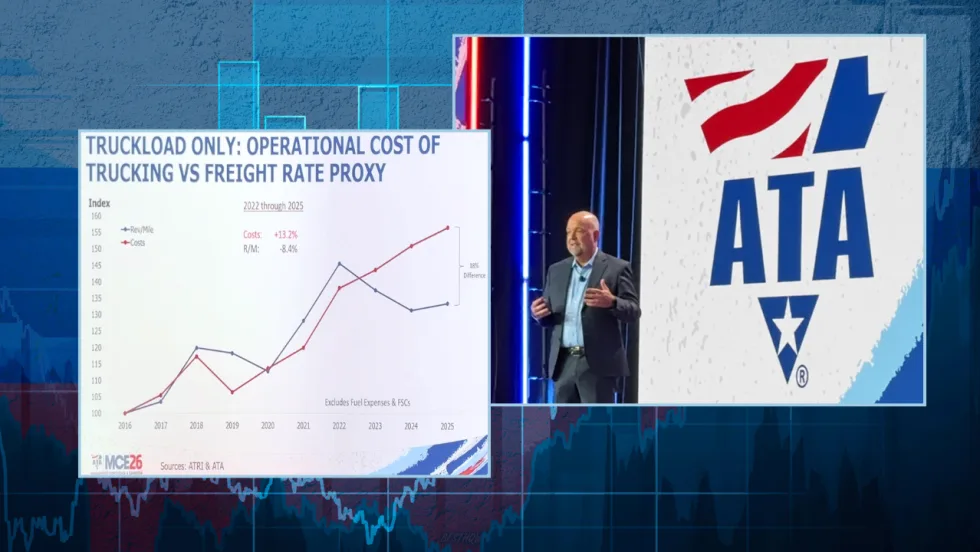
Why This Trucking Recovery Is Different
Freight demand remains sluggish, but rising costs and tougher enforcement have taken enough capacity out of the market to change the outlook for motor carriers.
Read More →
Platform Science Adds Dispatch and Safety Tools
Four additions to PS Fleet help fleets monitor loads, manage driver coaching, share truck locations and adjust video system settings.
Read More →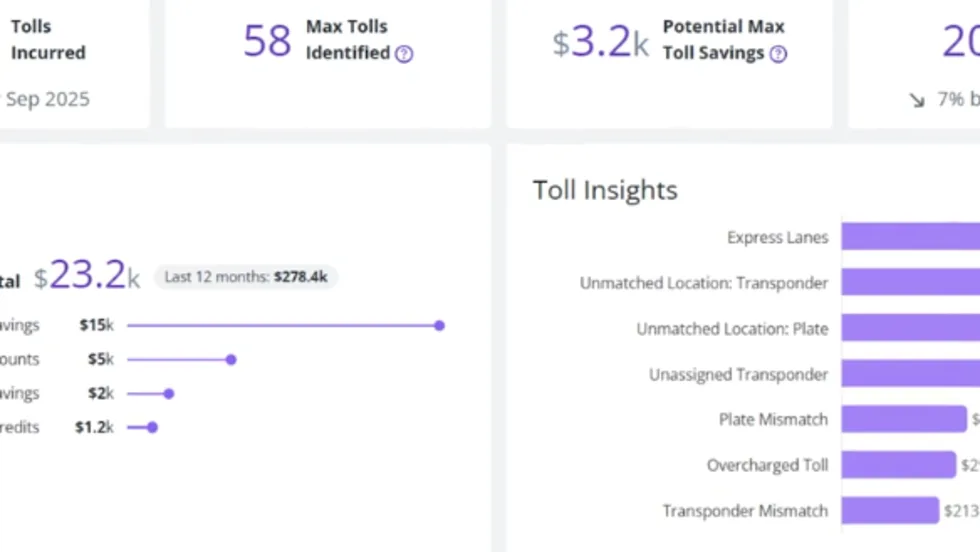
PrePass Intelligence Mines Fleet Bypass, Toll and Safety Data
PrePass Intelligence helps fleets measure bypass savings, flag potential toll overcharges, and spot suspicious transactions by combining data from separate systems.
Read More →
Motive Adds AI Agents for Fleet Operations
New tools automate follow-up on fleet data, from maintenance work orders to driver alerts, with two-way voice conversations planned for later this year.
Read More →
Can You Beat Our Trucking Trivia Challenge?
Test your truck knowledge with 19 trivia questions from Heavy Duty Trucking Exchange. Can you keep up with the fleet pros?
Read More →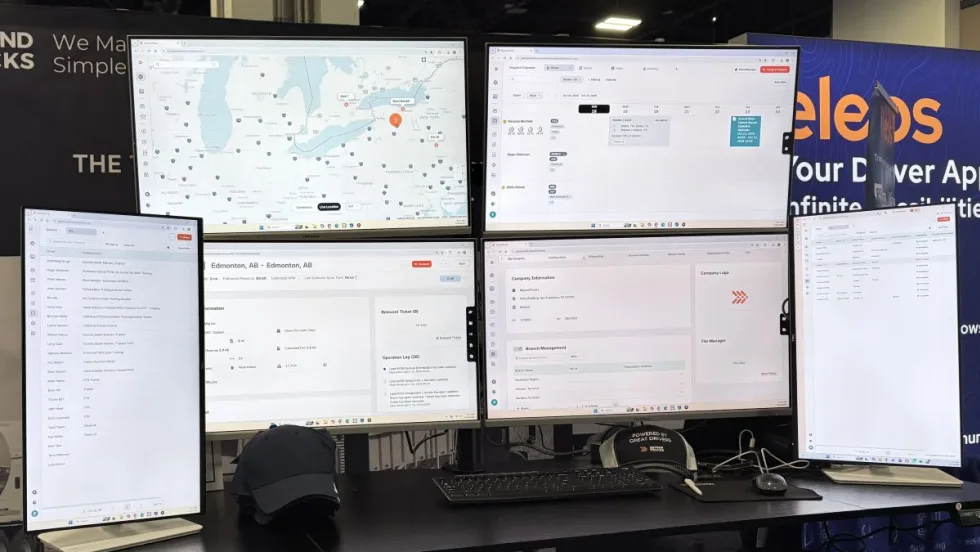
BeyondTrucks Adds Rules Checks to Dispatch
New Compatibility Engine checks driver qualifications, equipment requirements and fleet policies before loads are dispatched.
Read More →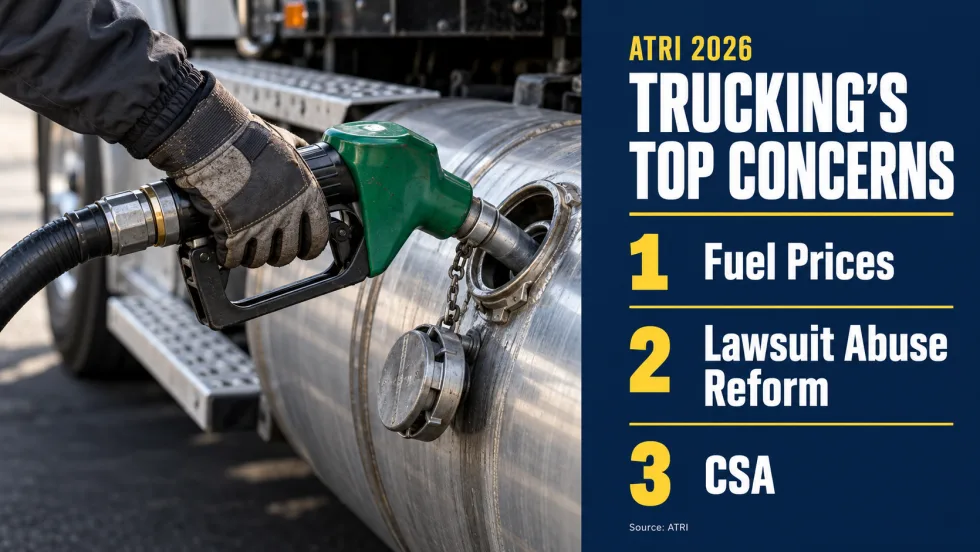
Diesel Prices Hijack Trucking’s Worry List
ATRI’s annual survey finds cautious optimism about freight, but diesel costs, litigation, and insurance continue to squeeze fleets. Drivers have different priorities on several issues.
Read More →
Nomination Deadline Extended for HDT Emerging Leaders
Just a few more days to nominate accomplished trucking fleet professionals under 40 who are making an impact and helping lead the industry forward for the HDT Emerging Leaders award. Deadline extended to October 20!
Read More →
What Will ATA’s New Leader Bring to Trucking's Table?
Incoming President and CEO Mark Colson’s record in Alabama offers clues about his priorities and approach following Chris Spear’s abrupt departure as the head of the American Trucking Associations.
Read More →
Volvo, Waabi Start Commercial Autonomous Operations in Texas
Volvo VNL Autonomous trucks, powered by the Waabi Driver, are hauling freight directly to third-party facilities for a customer in Texas.
Read More →