




Driver in Train-Truck Crash May Have Been Speeding
UPDATED -- More details are surfacing about the driver in Friday's horrific train-truck crash in Nevada, including the possibility he may have been speeding
UPDATED -- More details are surfacing about the driver in Friday's horrific train-truck crash in Nevada, including the possibility he may have been speeding.
About 11:25 a.m. Friday, a double-bottom dump rig plowed into the side of an Amtrak train at a crossing near Miriam, Nev. Six were killed in the fiery crash, including the truck driver, and dozens injured. One passenger remains unaccounted for after the crash.
The Associated Press reports that 43-year-old Lawrence R. Valli had received four speeding tickets since 2008. In one 10-month period, he had three citations for driving a school bus over the posted speed limit in California.
National Transportation Safety Board member Earl Weener said Valli was going "at a considerable speed" in a 70-mph zone before the crash. NTSB investigators are examining the truck's wheels, tires and brakes for details on the exact speed and the truck's braking capacity. The trucking company was permitted to haul oversize and overweight loads.
Valli's cell phone was recovered at the crash site and is being sent to NTSB's laboratory in Washington, D.C., where investigators will look into whether he was on the phone or preparing to send a text message at the time of the crash.
Valli had been working for John Davis Trucking Co. in Battle Mountain, Nev., for about six months and been a professional driver for 10 years, a family member told the AP.
The NTSB also will be looking at his employer, John Davis Trucking. According to published reports, the company has been cited for two crashes in the last two years, and was involved in a fatal single-vehicle accident last month. Much media attention has focused on the fact that the company had a truck put out of service for inadequate tread on the tires.
The company issued a statement, saying it wished to express "deepest condolences and sincerest sympathies to the family members and friends of those who lost their loved ones in the tragic accident of Friday, June 24. ... Please know that we recognize our moral and social obligation to find out how this accident happened, and we intend to cooperate with the authorities in their investigation."
The tractor, which was embedded in the side of the train, is being removed for examination. Investigators expect to find the engine control module, but say it was damaged in the fire and are unsure if they will be able to recover any data from it.
The NTSB originally said there were two co-workers in a three-truck convoy behind Valli, but changed that to one at a news conference Monday, noting that the driver was several vehicles behind.
Updated 5 p.m. EDT to add statement from John Davis Trucking.
More Safety & Compliance
A Camera Isn't a Safety Program. Here's What Brokers Are Screening for Now
Footage alone may not be enough to pass broker vetting processes. Here's what counts as a defensible safety program now.
Read More →
Marijuana and Trucking’s Drug-Testing Dilemma
Marijuana is getting stronger, laws are changing, and drug tests still can’t reliably establish impairment. What does that mean for truck drivers and the fleets that employ them?
Read More →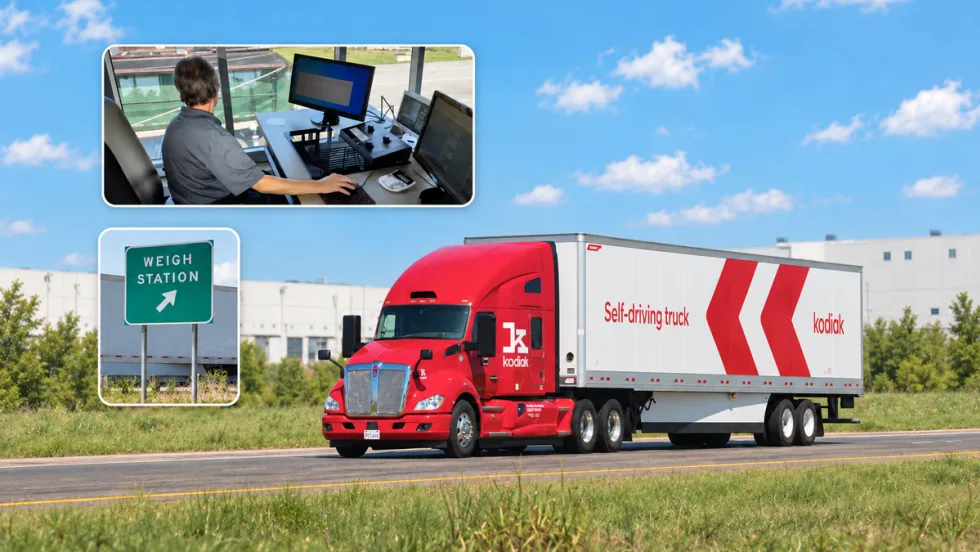
PrePass, Kodiak Connect Driverless Trucks to Roadside Enforcement
The system will allow enforcement agencies to verify Enhanced Inspection information and decide whether Kodiak’s autonomous trucks can bypass roadside screening sites.
Read More →

From One Generation to the Next: How Mentorship Builds Safer Truck Drivers
After three decades in trucking, Harold Perry shares what he's learned about driver safety, mentorship, and helping the next generation build confidence behind the wheel.
Read More →
FMCSA Pauses Biennial-Update Enforcement Amid Motus Transition
Carriers whose updates were due on or after June 1 have more time, while FMCSA works to stabilize its new registration system and warns of phishing sites impersonating its new carrier registration system, Motus.
Read More →
ZF Expands Commercial Vehicle Push in North America
ZF is expanding its North American commercial-vehicle presence with new transmission applications, electrification, trailer technology and autonomous-driving systems.
Read More →
Truck Drivers Need More Than Another Alert
Fleets have more visibility into truck health, safety events, and driver activity than ever. The next challenge is turning all that information into useful guidance for the person who has to decide what to do next.
Read More →
Tesla Wants a Self-Driving Semi. Are Cameras Enough?
Could Tesla’s camera-only autonomous driving technology work on an 80,000-pound Semi? In this commentary, HDT's Deborah Lockridge takes a look at Tesla, Cybercab, and how autonomous trucks see the road.
Read More →
What DOT’s Automated Vehicle Strategy Means for Trucking
The U.S. Department of Transportation issued a new automated-vehicle strategy that outlines plans for driverless-truck regulations, cross-state freight corridors, and federal safety standards.
Read More →
NYC Expands Speed, Pedestrian Safety Tech Across Fleet
New York City is expanding intelligent speed assistance and pedestrian-alert systems across its municipal fleet, moving the technologies from pilot programs into vehicle procurement and retrofit requirements.
Read More →