




DOT Simplifies Stop Sign Regs
The Obama Administration is eliminating 46 regulations on traffic signs to provide more flexibility for state and local governments, including allowing communities to replace traffic signs when they are worn out rather than requiring signs to be replaced by a specific date

Earlier this year, President Obama called for a government-wide review of regulations in order to identify those that needed to be changed or removed because they were unnecessary, out-of-date, excessively burdensome or overly costly.
The Obama Administration is eliminating 46 regulations on traffic signs to provide more flexibility for state and local governments, including allowing communities to replace traffic signs when they are worn out rather than requiring signs to be replaced by a specific date.
"Some of these burdensome deadlines would have cost communities millions of dollars at a time when they can't afford that," says U.S. Transportation Secretary Ray LaHood. "We spoke to state and local officials across the country, and we heard them loud and clear."
Earlier this year, President Obama called for a government-wide review of regulations in order to identify those that needed to be changed or removed because they were unnecessary, out-of-date, excessively burdensome or overly costly.
"Officials at the state and local levels are in the best position to make decisions related to sign replacement and other issues related to traffic management," says Federal Highway Administrator Victor Mendez. "These changes will give them the flexibility they need to make the best use of taxpayer dollars."
The regulations establishing deadlines for street sign replacement came from the Manual on Uniform Traffic Control Devices, which is a compilation of national standards for all pavement markings, street signs and traffic signals. The Federal Highway Administration, which has published the manual since 1971, updates it periodically to accommodate changing transportation needs and address new safety technologies, traffic control tools, and traffic management techniques.
Last August, FHWA issued a Notice of Proposed Amendments to eliminate the 46 deadlines, and a final rule has been sent to the Federal Register for publication. The final rule is available in the docket, FHWA-2010-0159, available here.
The deadlines requiring that certain street name signs be replaced by 2018 to meet minimum retroreflectivity standards and requiring larger lettering on those street name signs are among the deadlines that will be eliminated. The final rule also eliminates deadlines for increasing the size of various traffic signs, such as 'Pass With Care' and 'Low Clearance.' Instead, communities will be able to replace and upgrade these signs when they reach the end of their useful life.
In addition to eliminating the deadlines, FHWA will allow communities to retain historic street-name signs in historic districts.
The DOT has retained 12 deadlines for sign upgrades that are critical to public safety. These safety-critical sign upgrades include installing "One Way" signs at intersections with divided highways or one-way streets and requiring "Stop" or "Yield" signs to be added at all railroad crossings that don't have train-activated automatic gates or flashing lights.
More Drivers
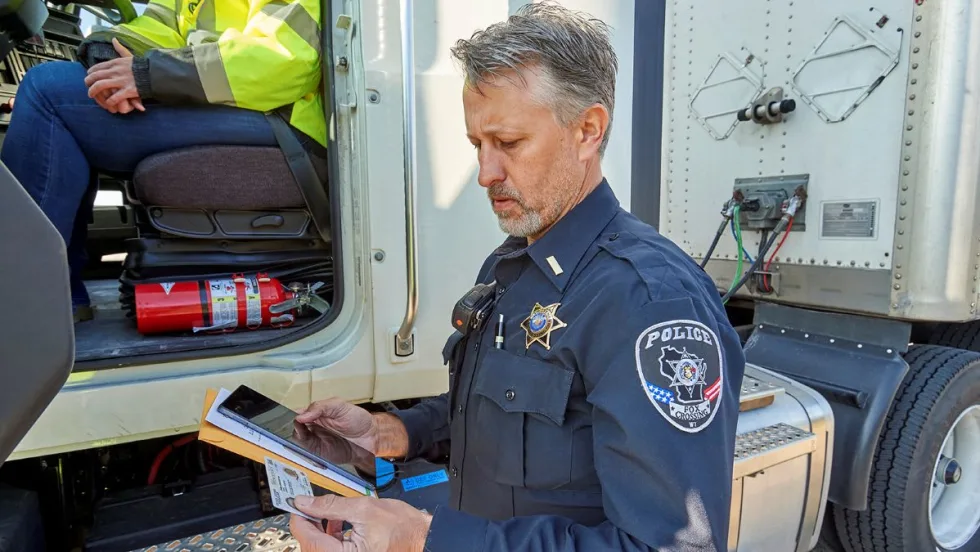
When Language Stops the Truck: The Return of ELP Out-of-Service Orders
English language proficiency rules for commercial drivers aren’t new, but renewed out-of-service enforcement has raised the stakes. Here’s what carriers need to know before a driver reaches a roadside inspection.
Read More →
Samsara Launches Custom AI Agent Builder
Agent Studio lets fleets create AI tools for hours-of-service monitoring, reporting and driver support, including agents that communicate by phone.
Read More →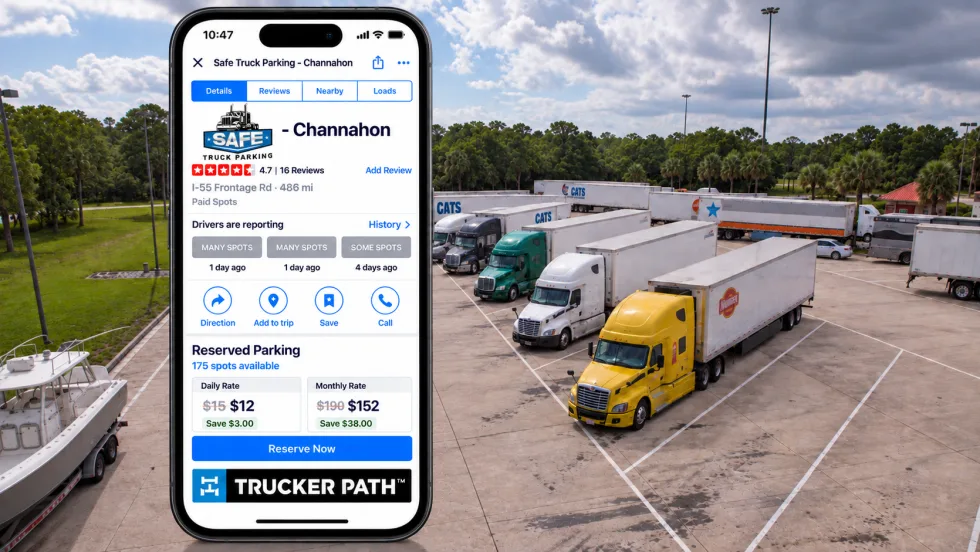
Trucker Path Expands Reserved Parking Network
Trucker Path has added close to 6,000 more truck parking spaces to its Trucker Path Reserved Parking Network with the addition of Safe Truck Parking.
Read More →
EEOC Sues Texas Trucking Company Over Driver Age Limits
The agency says Trancasa USA rejected applicants over 65 and applied tougher driving-record standards to those over 60.
Read More →
Nussbaum, Roehl Announce Second Driver Pay Increase This Year
This year has seen a swath of major truck driver pay increases as freight capacity has tightened.
Read More →
From One Generation to the Next: How Mentorship Builds Safer Truck Drivers
After three decades in trucking, Harold Perry shares what he's learned about driver safety, mentorship, and helping the next generation build confidence behind the wheel.
Read More →
Truck Drivers Need More Than Another Alert
Fleets have more visibility into truck health, safety events, and driver activity than ever. The next challenge is turning all that information into useful guidance for the person who has to decide what to do next.
Read More →
FMCSA Removes 110 Truck Driver Training Schools from Certified ELDT List
Federal regulators also are targeting more than 160 additional training providers and launching a nationwide audit of third-party CDL skills testers as part of a broader crackdown on trucking fraud.
Read More →
Hours of Service Pilot Programs: FMCSA Readies for 2027 Rollout
Two pilot programs could eventually reshape hours-of-service rules, giving truck drivers options to pause their 14-hour clock or use longer split sleeper rest periods.
Read More →
Medical Cards, English Proficiency Reshape Roadcheck Violations
Medical-card violations jumped to the top of the driver out-of-service list during CVSA’s 2026 International Roadcheck, while English-language proficiency violations appeared among the leading violations for the first time.
Read More →