





Related: Safety Board Calls for Action on Collision Avoidance Systems
DOT Considers Mandating Crash Mitigation on Class 3-8 Trucks
The National Highway Transportation Safety Administration said it will consider requiring new trucks to be equipped with forward-collision-mitigation systems that incorporate automatic emergency braking.
October 16, 2015
5 min to read
Image: NHTSA
The National Highway Transportation Safety Administration has acceded to a formal request that it consider requiring that new trucks be equipped with forward-collision-mitigation systems that incorporate automatic emergency braking.
Several highway-safety advocacy groups had petitioned NHTSA earlier this year to formulate a rule to require what they termed “forward collision avoidance and mitigation (FCAM) systems” on commercial vehicles.
On Oct. 16, NHTSA announced that upon “considering information before the agency, including the referenced in the petition,” it will initiate a rulemaking proceeding regarding FCAM systems “on vehicles with a GVWR greater than 10,000 pounds.”
The agency went on to say that granting the petition means it “will continue to conduct research and to evaluate real-world performance of these systems through track testing and field operational testing. NHTSA will determine whether to issue a rule in the course of the rulemaking proceeding.”
In other words, NHTSA has agreed to look into something it is already looking into. It made sure to state that granting the petition “does not mean that the agency will issue a final rule” mandating any such active-safety systems.
The agency also indicated how thoroughly it has been researching such systems for several years. It said this research includes test-track evaluations of “first generation” systems, evaluation of the effectiveness of “driver-warning interface,” and an ongoing field test of production systems.
“Based on this research,” NHTSA stated, “the agency agrees with the petitioners that FCAM systems have the potential to save lives by preventing or reducing the severity of rear-end crashes.”
The agency noted that the “FCAM technologies of focus are the systems that combine forward collision warning (FCW) alert signals with collision mitigation braking (CMB) automatic braking capability.”
Going forward, NHTSA pointed out that industry suppliers have “indicated that next generation automatic emergency braking (AEB) systems for truck tractors will be commercially available later this year” and these will enable the vehicle to warn the driver and automatically brake when confronted with stationary lead vehicles.
The agency also advised that suppliers are “expected to begin production of automatic emergency braking systems on air-braked single unit trucks with a GVWR of more than 26,000 pounds in the near future.”
NHTSA said it plans to test such “next generation” systems as they become available, including “AEB systems that are installed on vehicles with a GVWR greater than 10,000 pounds and less than or equal to 26,000 pounds.” The agency said that if such additional information is available, it will consider it in the rulemaking.
Whether or not the launch of this rulemaking ultimately leads to a mandate remains to be seen. On the other hand, industry suppliers of collision-mitigation systems contend the agency’s action underscores right now the positive impact active-safety technology can have..
“This NHTSA initiative is an incredibly positive step that mirrors the direction of the commercial vehicle fleet thought leaders,” Meritor WABCO President and General Manager Stephen Hampson said in a statement. “This initiative would benefit the entire driving community in saving lives, reducing injuries and mitigating property damage.”
He noted that fleets adopting Meritor WABCO’s OnGuard collision-mitigation system are “clearly leading the way by validating this benefit and meeting their return on investment expectations. Fleets report that OnGuard reduces rear-end collisions by as much as 87%. For rear-end crashes not prevented, the crash cost can be up to 89% less than vehicles without OnGuard due to the amount of energy that OnGuard takes out of the collision.”
Hampson added that “this benefit improves with the introduction of OnGuardActive [an enhanced version slated to be available early next year] and its ability to extend crash mitigation by actively braking on stationary vehicles.”
Fred Andersky, Director of Government & Industry Affairs for Bendix Commercial Systems, told HDT that NHTSA’s action is “a positive," noting that the agency "will continue to move forward with research that builds awareness for and reinforces the value of these technologies.
“Many fleets are realizing this today, as we see strong sales growth [of the Bendix Wingman suite of collision-mitigations systems] …something we wouldn’t see if fleets were not getting an ROI, both in terms of crash reduction and cost savings,” he continued.
Andersky noted that Bendix would “rather let the market decide on technology choices” than have mandates put in place. “That said, the effort by both NHTSA and the petitioning groups (as well as NTSB’s recent comments regarding collision mitigation technologies on light vehicles) does build awareness and insight regarding the value of these technologies to help fleets and owner/operators to reduce crashes and injuries and help save lives,” he stated.
As for when a mandate might emerge, Andersky said that NHTSA’s recently published rulemaking priorities indicate the agency “expects to make a decision regarding potential mandating of the technology on heavy vehicles in 2016. If I were to take a guess, I would suspect that they will decide to move forward and we would see a Notice of Proposed Rulemaking issued in 2017.”
Michael Lambie, Marketing Department Manager for Meritor WABCO Vehicle Control Systems, told HDT that “by granting the petition, NHTSA is acknowledging that AEB technology has merit for vehicles greater than 10,000 pounds.
"However," he continued, "granting the petition does not mean NHTSA will issue a final rule… [In other words] they will study the merits of establishing a final rule and if the study is conclusively positive, a final rule will eventually be issued.”
“Meritor WABCO favors safer roads and any attention that drives the industry to this goal,” Lambie added. “MW assists the achievement of this goal by developing advanced driver assistance systems and believes the installation of AEB systems like OnGuard on commercial vehicles will support this objective.”
More Safety & Compliance
PrePass Intelligence Mines Fleet Bypass, Toll and Safety Data
PrePass Intelligence helps fleets measure bypass savings, flag potential toll overcharges, and spot suspicious transactions by combining data from separate systems.
Read More →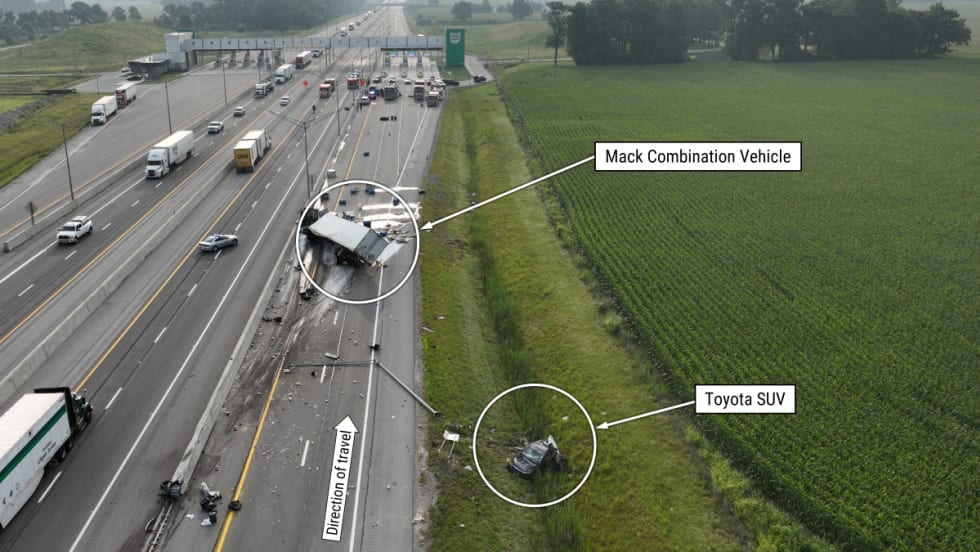
Fatal Crash Exposes Toll Plaza Risks
An NTSB investigation found that last-minute lane changes and large speed differences at an Ohio toll plaza created a hazard the truck driver couldn't avoid in time.
Read More →
When Language Stops the Truck: The Return of ELP Out-of-Service Orders
English language proficiency rules for commercial drivers aren’t new, but renewed out-of-service enforcement has raised the stakes. Here’s what carriers need to know before a driver reaches a roadside inspection.
Read More →
Sponsored•October 6, 2026
A Camera Isn't a Safety Program. Here's What Brokers Are Screening for Now
Footage alone may not be enough to pass broker vetting processes. Here's what counts as a defensible safety program now.
Read More →
Marijuana and Trucking’s Drug-Testing Dilemma
Marijuana is getting stronger, laws are changing, and drug tests still can’t reliably establish impairment. What does that mean for truck drivers and the fleets that employ them?
Read More →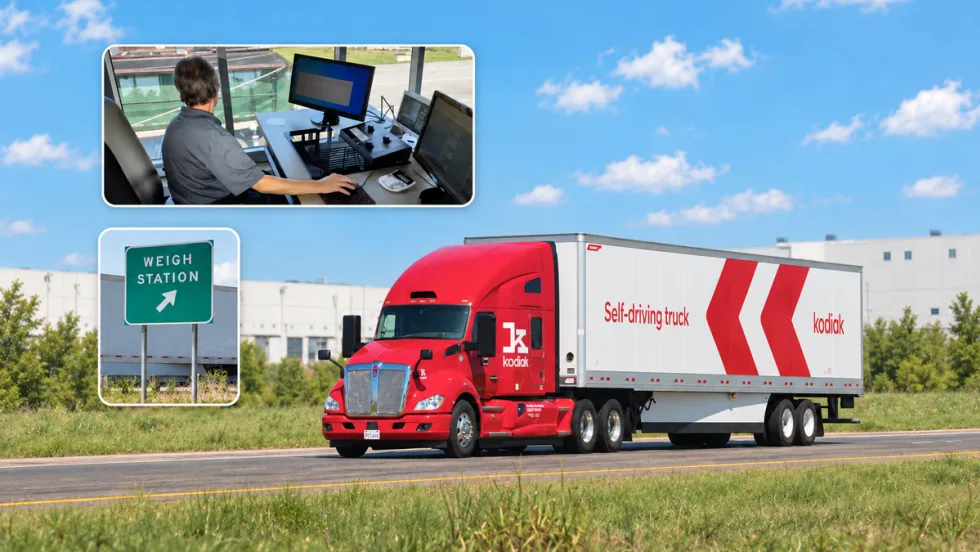
PrePass, Kodiak Connect Driverless Trucks to Roadside Enforcement
The system will allow enforcement agencies to verify Enhanced Inspection information and decide whether Kodiak’s autonomous trucks can bypass roadside screening sites.
Read More →
From One Generation to the Next: How Mentorship Builds Safer Truck Drivers
After three decades in trucking, Harold Perry shares what he's learned about driver safety, mentorship, and helping the next generation build confidence behind the wheel.
Read More →
FMCSA Pauses Biennial-Update Enforcement Amid Motus Transition
Carriers whose updates were due on or after June 1 have more time, while FMCSA works to stabilize its new registration system and warns of phishing sites impersonating its new carrier registration system, Motus.
Read More →
ZF Expands Commercial Vehicle Push in North America
ZF is expanding its North American commercial-vehicle presence with new transmission applications, electrification, trailer technology and autonomous-driving systems.
Read More →
Truck Drivers Need More Than Another Alert
Fleets have more visibility into truck health, safety events, and driver activity than ever. The next challenge is turning all that information into useful guidance for the person who has to decide what to do next.
Read More →