




DOT Aims for Zero Traffic Deaths Within 30 Years
Three DOT agencies and the National Safety Council have teamed up to launch a new initiative with the goal of eliminating traffic deaths on U.S. roads within the next 30 years, and truck safety is one of the targeted areas of the effort.

The NHTSA held a conference to introduce its Road to Zero campaign and to address the increase in traffic deaths over the past year. Screenshot via NHTSA
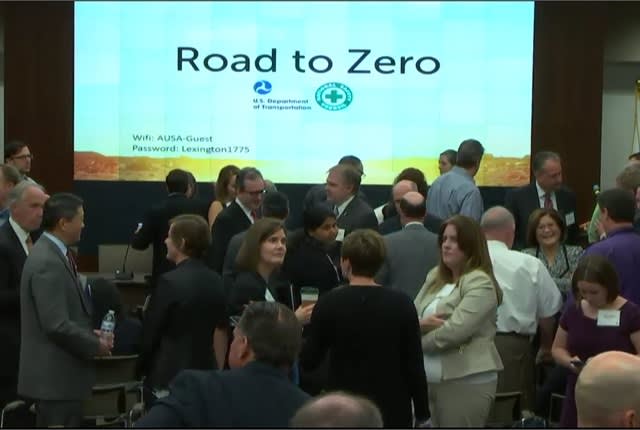
The NHTSA held a conference to introduce its Road to Zero campaign and to address the increase in traffic deaths over the past year.Screenshot via NHTSA
Three DOT agencies and the National Safety Council have teamed up to launch a new initiative with the goal of eliminating traffic deaths on U.S. roads within the next 30 years. Truck safety is one of the targets, and autonomous vehicle technologies envisioned as part of the solution.
The National Highway Traffic Safety Administration, Federal Highway Safety Administration and Federal Motor Carrier Safety Administration are joining with the National Safety Council to launch the Road to Zero Coalition. The Department of Transportation has committed $1 million a year for the next three years to provide grants to organizations working on lifesaving programs.
"Last year, our nation lost over 35,000 lives in fatal traffic crashes, which is a significant increase over the year before," noted Transportation Secretary Anthony Foxx.
"Never before has a coalition of this size and experience been assembled with such an ambitious goal," Foxx said. "Our vision is simple – zero fatalities on our roads. We know that setting the bar for safety to the highest possible standard requires commitment from everyone to think differently about safety – from drivers to industry, safety organizations and government at all levels."
The Road to Zero Coalition will initially focus on promoting "proven lifesaving strategies" including truck safety, seat belt use, installing rumble strips, street design, behavior change campaigns and data-driven enforcement. The coalition will then lead the development of a new scenario-based vision on how to achieve zero traffic deaths based on evidence-based strategies and a systematic approach to eliminating risks.
The coalition is betting on the rapid advancement of autonomous vehicle technologies as a way forward to its goal of zero traffic deaths and will work to accelerate its adoption into infrastructure design, vehicle technology, enforcement and driver behavior. The groups believe that by countering inevitable human mistakes, it can seriously reduce and potentially eliminate fatalities on the road.
"With the rapid introduction of automated vehicle technologies that may prove to be a road safety game changer, our goal of zero deaths is achievable in our lifetimes," Foxx said.
"Reaching zero deaths will be difficult, will take time and will require significant effort from all of us but it is the only acceptable vision," said David Kim, FHWA deputy administrator. "We're not at zero yet, but by working together, the day will come when there are no fatalities on the nation's roadways, sidewalks or bicycle paths."
More Safety & Compliance

FMCSA Pauses Biennial-Update Enforcement Amid Motus Transition
Carriers whose updates were due on or after June 1 have more time, while FMCSA works to stabilize its new registration system and warns of phishing sites impersonating its new carrier registration system, Motus.
Read More →
ZF Expands Commercial Vehicle Push in North America
ZF is expanding its North American commercial-vehicle presence with new transmission applications, electrification, trailer technology and autonomous-driving systems.
Read More →
Truck Drivers Need More Than Another Alert
Fleets have more visibility into truck health, safety events, and driver activity than ever. The next challenge is turning all that information into useful guidance for the person who has to decide what to do next.
Read More →
Tesla Wants a Self-Driving Semi. Are Cameras Enough?
Could Tesla’s camera-only autonomous driving technology work on an 80,000-pound Semi? In this commentary, HDT's Deborah Lockridge takes a look at Tesla, Cybercab, and how autonomous trucks see the road.
Read More →
What DOT’s Automated Vehicle Strategy Means for Trucking
The U.S. Department of Transportation issued a new automated-vehicle strategy that outlines plans for driverless-truck regulations, cross-state freight corridors, and federal safety standards.
Read More →
NYC Expands Speed, Pedestrian Safety Tech Across Fleet
New York City is expanding intelligent speed assistance and pedestrian-alert systems across its municipal fleet, moving the technologies from pilot programs into vehicle procurement and retrofit requirements.
Read More →
FMCSA Removes 110 Truck Driver Training Schools from Certified ELDT List
Federal regulators also are targeting more than 160 additional training providers and launching a nationwide audit of third-party CDL skills testers as part of a broader crackdown on trucking fraud.
Read More →
Beyond DOT Compliance: What Makes a Trucking Fleet Truly Safe?
A trucking fleet can follow every rule and still make unsafe decisions. The real test comes when safety conflicts with freight, productivity, or cost.
Read More →
Hours of Service Pilot Programs: FMCSA Readies for 2027 Rollout
Two pilot programs could eventually reshape hours-of-service rules, giving truck drivers options to pause their 14-hour clock or use longer split sleeper rest periods.
Read More →
New Guide Offers Pet Safety Tips for Truck Drivers
Hundreds of thousands of pets travel in truck cabs. A new safety guide from Volvo Trucks and the Center for Pet Safety offers practical advice for truck drivers who bring dogs and cats along for the ride.
Read More →