





Related: Disaster Doesn't Wait. Is Your Trucking Fleet Ready?
Disaster Readiness Starts Before the Storm [Call for Experts]
Disasters don’t wait — and fleet operations can’t afford to either. The 2026 Disaster Response Guide is now accepting expert insights on preparedness, response, and recovery strategies.
February 13, 2026
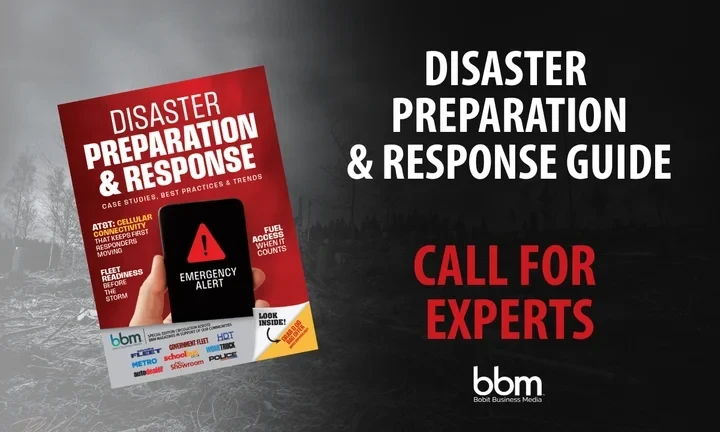
The 2026 Disaster Preparation & Response Guide is now accepting expert insights from across the fleet and transportation industry. Submissions close February 20.
Credit:
Bobit Business Media
3 min to read
If you work with vehicles in any capacity, you already know the truth: Disasters don’t wait for your schedule.
Wildfires. Flooding. Hurricanes. Winter storms. Extreme heat. Tornadoes. Smoke conditions that shut down operations. Even widespread outages that take communication, fuel access, and supply chains offline.
Whether you’re managing a fleet, running a dealership, operating a small business with service vehicles, supporting public sector transportation, or keeping equipment and customers moving, disaster readiness has become part of the job.
That’s why the 2026 Disaster Response Guide is officially underway, and we’re now opening a Call for Insights and Experts. But don't wait - the call for insights closes February 20!
The Disaster Response Guide is an annual resource for fleet, trucking, transportation, public-sector, and vehicle-based business leaders who need real-world guidance on preparing, responding to, and recovering from disasters. It focuses on practical strategies, lessons learned, and tools that help teams stay operational and make smart decisions under pressure.
“This guide is built for the real-world grit of people who keep vehicles moving for work,” said Lauren Fletcher, VP of Content at Bobit Business Media. “It’s not just about having a plan. It’s about knowing what actually works when things go sideways, and sharing that knowledge so others can respond faster and recover stronger.”
Share Your Expertise for the 2026 Guide
We’re looking for insight from people across the vehicle ecosystem, including:
- fleet and transportation leaders
- dealerships and service teams
- small businesses and contractors
- OEMs, upfitters, and maintenance providers
- utilities, infrastructure, public sector, and emergency response
- insurance, risk, technology, and connectivity experts
You can contribute by:
- participating as an expert interview source
- writing an educational article or case study
- sharing a quote or quick insight
- providing data or research we can cite
What Topics Are We Looking for This Year?
We’re interested in insights and lessons learned related to:
- emergency planning and preparedness
- business continuity and operational resilience
- vehicle staging, relocation, and asset protection
- communication planning and backup systems
- fuel and energy readiness
- EV preparedness and charging continuity
- safety and training for drivers and teams
- insurance, risk mitigation, and recovery planning
- technology, telematics, and data readiness
- supply chain disruptions and maintenance planning
- real-world disaster response experiences and takeaways
- and other trends that YOU see happening
Ready to Contribute?
If you have expertise to share, we’d love to hear from you. Submissions will help shape our 2026 coverage, and we’ll be reaching out to select experts as we receive entries, which are due by February 20. All interviews or contributions are due by March 16 and will be available to our readers online around the end of March.
Submit your insights using our Call for Experts form here:
https://forms.office.com/r/nNFy0e7qZq
To explore the 2025 Disaster Response guide and downloadable resources, visit https://www.disasterresponseguide.com/.
More Fleet Management

Geotab Links Fleet Card to Vehicle Data
The new card combines fuel discounts with telematics-based purchase controls. Geotab’s analysis also points to potential savings from choosing lower-priced fuel stops.
Read More →
How MFA Helps Protect Trucking Fleets
Multi-factor authentication adds protection when passwords are stolen. Here’s how it works and where fleets should start.
Read More →
How Better Freight Data Helps Trucking Teams Get Ahead of Disruption
Trucking and logistics teams have plenty of data. The problem is getting the right information in front of the right people soon enough to act. Better-connected data can help teams spot trouble earlier and make smarter decisions before small problems become big ones.
Read More →

Trimble: Taking Artificial Intelligence in Trucking Beyond Faster Tasks
At Insight 2026, Trimble executives argued that fleets may need to redesign workflows to get more from AI as it introduced new products and enhancements. AI’s value will depend on how fleets combine automation with their people's knowledge.
Read More →
Sponsored•September 28, 2026
Build a bulletproof fleet: Uniting ELDs and dash cams for total compliance
An ELD can prove compliance, but it cannot always prove what happened on the road. Discover how uniting accurate ELD data with AI-powered dash cam video can help your fleet strengthen compliance, defend against liability, protect drivers and reduce operational costs.
Read More →
Nominations Open for HDT Emerging Leaders
Heavy Duty Trucking is looking for accomplished trucking fleet professionals under 40 who are making an impact and helping lead the industry forward.
Read More →
Why Private Fleets Are Taking More Freight
Private fleets are putting their own trucks on demanding customers and high-cost lanes as companies seek greater control over service, costs, and capacity.
Read More →
Sponsored•September 16, 2026
Color Match Smarter: Tools That Restore & Perform
For fleet managers and collision repair professionals keeping heavy-duty trucks on the road, getting the color right the first time isn't just about appearance — it's about efficiency, turnaround time, and bottom-line results. Discover how today's digital color tools are transforming the repair process from guesswork to precision.
Read More →
FMCSA Pauses Biennial-Update Enforcement Amid Motus Transition
Carriers whose updates were due on or after June 1 have more time, while FMCSA works to stabilize its new registration system and warns of phishing sites impersonating its new carrier registration system, Motus.
Read More →
Sponsored•September 14, 2026
2026 Blueprint for Countering Smarter Supply Chain Theft
Cargo theft is no longer just the cost of doing business. It's a multi-billion-dollar criminal enterprise exploiting vulnerabilities across your fleet, drivers, and supply chain.
Read More →