





How Nikola Turned its Battery Issues into a Customer-Relations Win
DHL and Diageo North America to Run Nikola Fuel Cell Trucks
DHL Supply Chain and Diago North America have announced plans to deploy two Nikola hydrogen fuel cell trucks in delivery operations in Illinois.
October 23, 2024
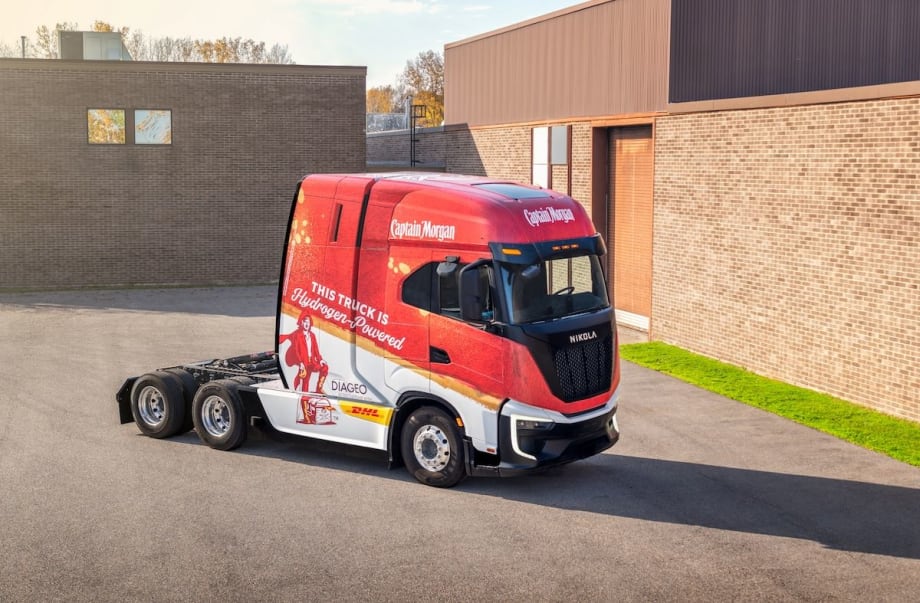
DHL and Diago North America will operate two Nikola hydrogen fuel cell tractors out of Plainfield, Illinois.
Photo: DHL
3 min to read
DHL Supply Chain and Diageo North America, a premium drinks company, have announced plans to incorporate two fuel cell electric trucks into their U.S. operations. The trucks, powered with hydrogen, are Nikola fuel cell electric tractors. They will be deployed and fueled with a Hyla modular refueler at the Diageo campus in Plainfield, Ill.
According to the two companies, the Nikola deployment marks a milestone for the state. The two trucks will be the first Class 8 hydrogen fuel cell electric vehicles operated day-to-day in the state of Illinois
The First Step in a Broader Action Plan
DHL Supply Chain has been Diageo North America’s contract logistics partner for over 20 years. The company said it has been actively working to develop innovative solutions that help to decarbonize its customers’ logistics operations.
According to DHL, the hydrogen fuel cell electric trucks are part of a broader sustainable supply chain strategy that has included use of battery electric vehicles. The company is also optimizing vehicle usage and routes, shifting to a multimodal approach, and increasing use of US EPA SmartWay partner carriers.
These efforts have resulted in year-over-year reductions in carbon dioxide emissions for both Diageo and DHL.
"We are thrilled to integrate Nikola's hydrogen fuel cell electric trucks into our U.S. fleet," said Jim Monkmeyer, president of transportation, DHL Supply Chain. "As a global logistics company with the goal of decarbonizing its business, we’ve integrated sustainability as a fourth strategic bottom line named ‘Green Logistics of Choice’ in our newly announced Strategy 2030. The deployment of these fuel cell electric vehicles is one of many initiatives that demonstrates how we are putting action behind our words.”
A Sustainable Alternative to Diesel
DHL said Nikola's hydrogen fuel cell electric trucks offer a sustainable, and efficient alternative to traditional diesel-powered vehicles.
The trucks utilize fuel cell technology to convert hydrogen into electricity, powering the vehicle's electric motors providing up to 500 miles in range on a single fill.
Replacing two diesel trucks with fuel cell electric vehicles is expected to reduce 80% carbon emissions over the course of a year.
The trucks produce no tailpipe emissions, contributing to cleaner air and reduced greenhouse gas emissions.
The switch from diesel to fuel cell electric vehicles will significantly reduce local emissions including particulate matter and nitrogen oxide emissions.
The trucks also offer significant improvements in driver comfort and safety by reducing noise and vibrations, leading to less driver fatigue. It also enhances visibility with advanced camera support.
“We are extremely excited to be a part of this partnership delivering the first set of heavy-duty hydrogen trucks to Illinois, home to our largest manufacturing hub in North America,” added Marsha McIntosh, president of North America supply at Diageo. “This initiative is part of our continued work to decarbonize our footprint in Plainfield, Illinois making our operations more efficient and sustainable.”
Diageo’s presence in Plainfield, Illinois has expanded significantly over the years, playing a strategic role in its regional operations.
The hub is home to manufacturing, bottling, and warehousing facilities, and it is instrumental in producing some of the company’s most iconic brands, like Captain Morgan and Smirnoff.
Incorporating hydrogen fuel cell trucks into its fleet will contribute to Diageo’s broader efforts to reach net zero carbon emissions across direct operations by 2030 and its value chain by 2050 or sooner, as outlined in its Spirit of Progress action plan, the company said.
More Fuel Smarts

How Volvo Updated Its D13 for EPA 2027 [Watch]
Volvo’s updated D13 promises lower emissions without sacrificing performance or fuel economy. Take a closer look at what changed inside the engine in this HDT Spotlight video.
Read More →
Diesel Price Spike Shortens Payback for Natural Gas Trucks, Report Says
Energy Vision estimates fleets could recover the higher purchase price of an RNG-fueled Class 8 tractor in 1.3 to 2.8 years under current fuel-price scenarios.
Read More →
Calstart Becomes Catalyst Mobility, Reflecting Broader Focus
Calstart is now Catalyst Mobility, reflecting the nonprofit’s growing national role in clean transportation, including zero-emission trucks, infrastructure and incentive programs.
Read More →

Record Diesel Prices Squeeze Trucking Fleets
Average U.S. diesel prices have climbed to nearly $6 a gallon, surpassing the 2022 record as tight refinery capacity and Middle East disruptions keep fuel costs elevated.
Read More →
Sponsored•September 9, 2026
How Fuel Delivery Shapes Engine Performance
Fuel delivery depends on more than what happens at the injector. For fleet, maintenance and technical professionals, looking at the full path from pump to injector can provide useful context for understanding engine performance.
Read More →
East Coast Port Launches $45M Electric Truck Push
The Port Authority of New York and New Jersey announced millions in incentives for zero-emission drayage trucks, yard tractors, and new charging hubs near the port.
Read More →
California Bill Could Shed Light on Electric Truck Prices
Why do battery-electric Class 8 trucks remain so expensive? A California bill headed to Gov. Gavin Newsom would give fleets and state agencies more visibility into what manufacturers charge.
Read More →
Detroit Opens Orders for EPA 2027 Engines
Detroit isn’t starting from scratch to meet EPA 2027 diesel emissions standards. Its Gen 6 DD13 and DD15 engines keep much of today’s platform while updating the fuel and aftertreatment systems.
Read More →
Zero-Emission Truck Corridor Planned for West Coast
California, Oregon, Washington, British Columbia and Baja California are coordinating plans for truck charging and hydrogen fueling from Canada to Mexico.
Read More →
A Closer Look at Kenworth’s Electric T880E Vocational Truck [Video]
Learn more about Kenworth's T880E battery-electric vocational truck at the Paccar Technical Center, including its range, applications, upfitting considerations, and PTO options, in this HDT Spotlight video.
Read More →