




Cummins Westport Introduces 2018 Natural Gas Engines
Cummins Westport announced its model year 2018 lineup of renamed natural gas engines for regional haul, vocational, transit, bus and refuse applications.
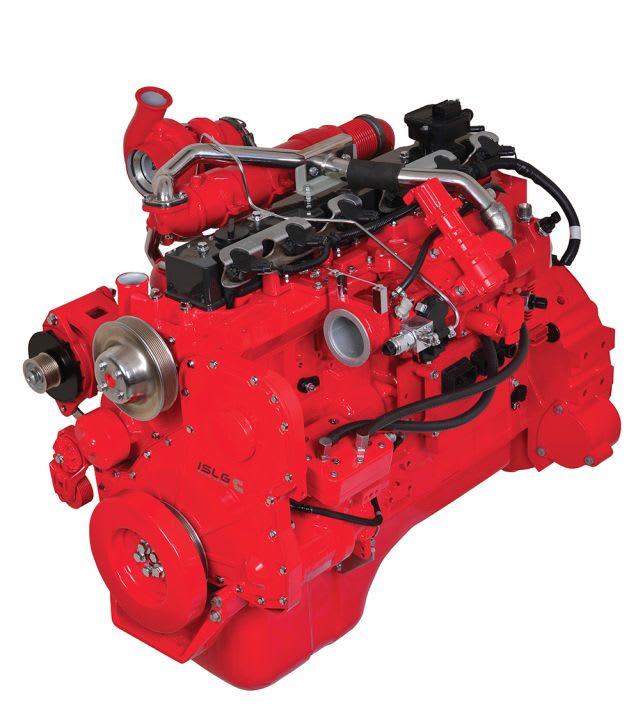
Cummins Westport ISL G Near Zero Engine (Image courtesy of Cumins)
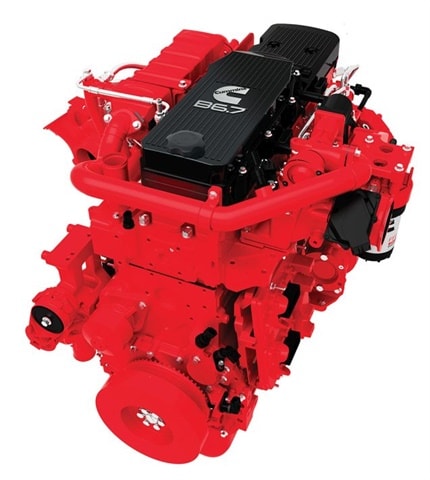
Cummins 2017 B6.7 Engine (Image courtesy of Cummins)
Cummins Westport announced its model-year 2018 lineup of renamed natural gas engines for regional haul, vocational, transit, bus, and refuse applications.
The new lineup comes with a name change. Following Cummins' tradition of using B, L, and X series letters followed by the engine displacement, the new natural gas engines will add an “N” designation.
The new B6.7N, L9N, and ISX12N engines are EPA and California Air Resources Board Low NOx certified and feature onboard diagnostics, closed crankcase ventilation systems, and performance and reliability improvements, according to the company. The new ISX12N also features a redesigned fuel system with fewer parts and improved performance.
Cummins Westport 6.7- to 12.0L engines are designed for truck and bus applications up to 80,000 pounds. Vehicles can be tailored to perform to meet customer requirements with enough range to offer route flexibility without in-route refueling. For example, on-highway natural gas trucks can have over 700-mile range capability, says the company.
Cummins Westport ISL G Near Zero Engine (Image courtesy of Cumins)
All CWI engines offer customers the choice of using compressed natural gas, liquefied natural gas, or renewable natural gas as a fuel. Using a low carbon intensity RNG fuel provides better GHG reductions and is part of the company’s zero emissions strategy.
Cummins Westport engines use proprietary spark-ignited, stoichiometric combustion with cooled exhaust gas recirculation technology, and three-way catalyst aftertreatment, which is packaged as a muffler and does not require scheduled maintenance. No diesel particulate filter or selective catalytic reduction aftertreatment is required.
“Our 2018 product line demonstrates an important milestone in product development for Cummins Westport, creating a move to zero emissions strategy for our customers and industry," said Rob Neitzke, president of Cummins Westport. "We are particularly pleased that the ISX12N will join the L9N in offering our on-highway customers the benefits of performance and reliability at an ultra-low emissions level described by California's South Coast Air Quality Management District as equivalent to an electric vehicle. This move to zero emissions strategy means our customers can choose the most affordable path to zero-equivalent emissions with no commercial constraints on supply or technology readiness."
More Fuel Smarts

How Volvo Updated Its D13 for EPA 2027 [Watch]
Volvo’s updated D13 promises lower emissions without sacrificing performance or fuel economy. Take a closer look at what changed inside the engine in this HDT Spotlight video.
Read More →
Diesel Price Spike Shortens Payback for Natural Gas Trucks, Report Says
Energy Vision estimates fleets could recover the higher purchase price of an RNG-fueled Class 8 tractor in 1.3 to 2.8 years under current fuel-price scenarios.
Read More →
Calstart Becomes Catalyst Mobility, Reflecting Broader Focus
Calstart is now Catalyst Mobility, reflecting the nonprofit’s growing national role in clean transportation, including zero-emission trucks, infrastructure and incentive programs.
Read More →

Record Diesel Prices Squeeze Trucking Fleets
Average U.S. diesel prices have climbed to nearly $6 a gallon, surpassing the 2022 record as tight refinery capacity and Middle East disruptions keep fuel costs elevated.
Read More →
How Fuel Delivery Shapes Engine Performance
Fuel delivery depends on more than what happens at the injector. For fleet, maintenance and technical professionals, looking at the full path from pump to injector can provide useful context for understanding engine performance.
Read More →
East Coast Port Launches $45M Electric Truck Push
The Port Authority of New York and New Jersey announced millions in incentives for zero-emission drayage trucks, yard tractors, and new charging hubs near the port.
Read More →
California Bill Could Shed Light on Electric Truck Prices
Why do battery-electric Class 8 trucks remain so expensive? A California bill headed to Gov. Gavin Newsom would give fleets and state agencies more visibility into what manufacturers charge.
Read More →
Detroit Opens Orders for EPA 2027 Engines
Detroit isn’t starting from scratch to meet EPA 2027 diesel emissions standards. Its Gen 6 DD13 and DD15 engines keep much of today’s platform while updating the fuel and aftertreatment systems.
Read More →
Zero-Emission Truck Corridor Planned for West Coast
California, Oregon, Washington, British Columbia and Baja California are coordinating plans for truck charging and hydrogen fueling from Canada to Mexico.
Read More →
A Closer Look at Kenworth’s Electric T880E Vocational Truck [Video]
Learn more about Kenworth's T880E battery-electric vocational truck at the Paccar Technical Center, including its range, applications, upfitting considerations, and PTO options, in this HDT Spotlight video.
Read More →