




Cummins, Navistar to Develop Fuel-Cell Class 8 Truck
Cummins and Navistar announced they will work together to develop a Class 8 electric truck powered by hydrogen fuel cells.


Cummins touted hydrogen fuel cell technology at its booth at the North American Commercial Vehicle Show in 2019.
Photo: Deborah Lockridge
Cummins and Navistar announced they will work together to develop a Class 8 electric truck powered by hydrogen fuel cells, to be tested in the real world by Werner Enterprises.
The project will be funded in part through an award from the U.S. Department of Energy’s Office of Energy Efficiency and Renewable Energy previously announced in August, as part of DOE’s H2@Scale initiative to develop affordable hydrogen production, storage, distribution and use.
“This vehicle will feature our next-generation fuel cell configuration and provides a springboard for us to advance our hydrogen technology for line haul trucks,” said Amy Davis, vice president and president of New Power at Cummins. “We are also excited to build on our strong relationship with Navistar, which dates back 80 years, and work together to lower costs and make hydrogen-powered vehicles more accessible for fleets to adopt.”
The award is one of two DOE grants awarded to Cummins, totaling more than $7 million. It will aid in the development of an integrated fuel cell electric powertrain for heavy-duty trucks with operational performance and total cost of ownership that supports near-term, rapid, and substantial penetration of the truck markets, according to Cummins. This includes development of a solution that is highly manufacturable and scalable with a proven range of 300 miles or more and improved fuel economy over current heavy-duty trucks.
The powertrain will be integrated into an International RH Series regional truck. It uses two HyPM HD90 power modules, made up of HD45 fuel cell stacks connected in series. Instead of having a single large fuel cell operate at an inefficient partial load, individual HD45 power modules can be turned on/off to provide adequate power at an efficient full load, according to the company.
Darren Gosbee, vice president of engineering at Navistar, called the collaboration “a milestone in learning integrations surrounding the functionality, adoption and scalability of hydrogen fuel cells as a power source for Class 8 vehicles.”
The prototype fuel cell Class 8 truck will ultimately see a year-long field test. The truck will be integrated into Werner Enterprises’ fleet of more than 7,700 tractors and operated in real-world local and/or regional delivery operation out of Fontana, California.
Werner is also testing a battery-electric truck from another company.
Werner on Nov. 10 introduced a new Environmental, Social and Governance program, and this aligns with those initiatives as the company looks for ways to reduce its carbon footprint, said Scott Reed, senior vice president of fleet purchasing and maintenance for Werner.
“Testing the vehicle in real-world conditions will help paint a full picture of how the system performs over challenging road conditions, including both hot and cold climates,” Reed explained. “In addition to that performance data, we are excited about the opportunity to provide feedback from Werner professional drivers, mechanics and fleet management to help the project team develop a comprehensive total cost of ownership analysis."
Major objectives of the DOE award include achieving, meeting or exceeding conventional diesel powertrain performance requirements and reducing the upfront capital costs by 35% to make the adoption of zero-emission fuel cell technologies viable for commercial fleets.
More Fuel Smarts

How GP Transco Builds Fuel Savings a Fraction at a Time
Aerodynamic specs, solar panels, and driver incentives help GP Transco turn small efficiency gains into savings it can reinvest in its people.
Read More →
Trucking’s Diesel Squeeze Isn’t Letting Up
With diesel topping $6 a gallon nationally, ATA's Bob Costello explains why fleets should prepare for continued pressure at the pump.
Read More →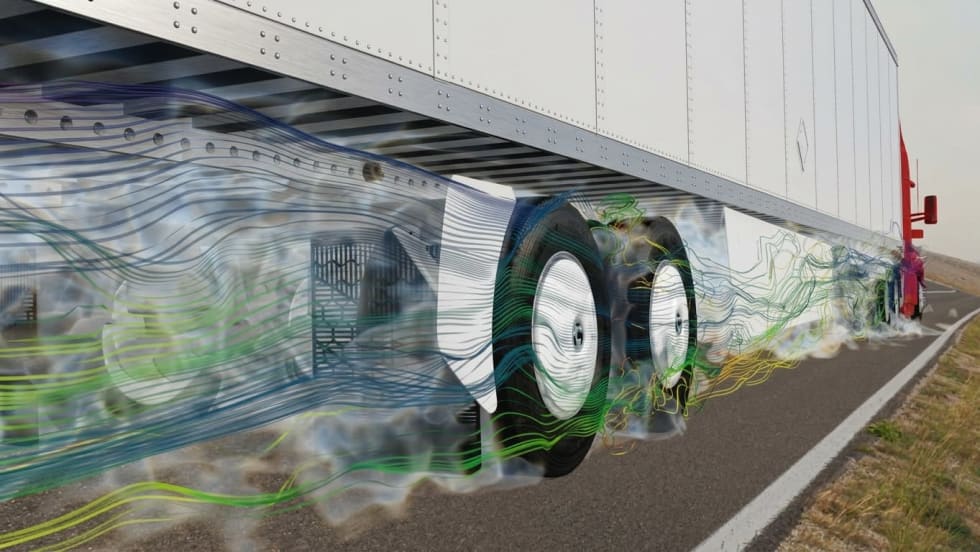
FlowBelow Redesigns Trailer AeroSlider to Cut Fuel Use
The lighter trailer aerodynamic system installs in less than 45 minutes, according to the company, with potential payback in under a year depending on fuel prices and trailer mileage.
Read More →
Why Diesel Price Relief Efforts May Fall Short
Diesel prices have eased from September’s record high, but doubts about additional Russian supply and limits on dyed-diesel tax relief mean trucking fleets still face expensive fuel. And prices could go higher.
Read More →
Why Small Fuel Savings Matter in Trucking
Can better fuel economy help pay for driver raises? In this podcast, GP Transco explains how small efficiency gains create room to reinvest in its people.
Read More →
How GP Transco Cuts Trucking Fuel Costs, a Tenth of a Gallon at a Time
What’s another tenth of a mile per gallon worth? GP Transco shares how equipment upgrades and driver coaching turn small gains into meaningful fuel savings.
Read More →
Electric Yard Tractors Move Beyond Pilots
Operating-cost savings have overtaken sustainability goals as the leading reason surveyed fleets are adopting battery-electric terminal tractors, according to new NACFE research.
Read More →
Geotab Links Fleet Card to Vehicle Data
The new card combines fuel discounts with telematics-based purchase controls. Geotab’s analysis also points to potential savings from choosing lower-priced fuel stops.
Read More →
Fleet Economics Shape Electric Truck Outlook
ACT Research expects costs, charging infrastructure, and technology improvements to drive zero-emission commercial vehicle adoption as federal regulations and incentives retreat.
Read More →
Wex Adds Cardless Fuel Payments for Over-the-Road Customers
A new fuel card feature for Wex customers offers convenience and security.
Read More →