




CRASH Attacks Paperless Logs
The anti-truck "safety" group Citizens for Reliable and Safe Highways is reportedly critical of the automated paperless log system that Werner Enterprises is testing in a federal program — allegations that Werner calls "absurd.
The anti-truck "safety" group Citizens for Reliable and Safe Highways is reportedly critical of the automated paperless log system that Werner Enterprises is testing in a federal program — allegations that Werner calls "absurd."
According to published reports, CRASH has raised concerns in letters to federal officials that the system does not properly record slow speeds or short travel distances.
Officials at CRASH did not return calls. However, in a letter to federal officials posted on its web site (http://www.trucksafety.org) that appears to refer to Werner, CRASH alleges the Office of Motor Carriers and Highway Safety "has permitted a major motor carrier participating in a pilot program to violate commercial driver hours of service limits without public review of the safety consequences and without adhering to any of the statutory requirements of TEA-21 for conducting pilot programs."
According to published reports, CRASH's complaint is that Werner's paperless logs automatically record truck idle time of more than two hours as sleeper berth time. In addition, speeds less than 20 mph are not considered valid and are calculated instead by dividing the distance traveled by the average miles per hour. CRASH says this means a driver could sit in heavy traffic when his logs say he's sleeping, and alleges this is a violation of hours-of-service regulations.
Werner CEO Clarence Werner said in a prepared statement that while it is true that if the truck idles or does not move for more than two hours the program records it as sleeper berth time, "these are default assumptions only. The drivers have been instructed and trained in how to make entries that will correct these assumptions for the true facts."
"Admittedly, there is no camera in the truck to tell us when a driver is actually in the sleeper berth," Werner says. "For that information, we must rely, as do the paper logs, on the information provided by the drivers. … We have over 6,500 trucks on the road each day. If a few of those trucks are caught in a traffic jam where they are forced to spend hours going only a short distance, and that driver fails to accurately record the true facts as he or she is instructed to do, that driver's hours may be recorded inaccurately for that time period. To suggest that somehow that problem would not have arisen under a paper log system is … absurd."
Werner also questioned CRASH's motives: "CRASH has for many years shown itself to be absolutely biased and critical of every aspect of the trucking industry. … It is obvious that CRASH is pursuing its separate agenda of attempting to discredit the Department of Transportation and is willing to sacrifice a program undertaken in the name of highway safety to accomplish its agenda. … If CRASH was actually interested in the issue of highway safety as a paramount objective, it would not only have taken the time to gather the facts and understand the system, but would be supportive of the paperless logs system."
For more information on Werner Enterprises, which has been named by Forbes as one of America's best technology users, visit http://www.werner.com.
More Safety & Compliance

FDA Eases Path for Oral-Fluid Testing
Federal actions could advance oral-fluid drug testing for truck drivers, but lab certification delays and marijuana rescheduling questions remain.
Read More →
Kodiak Lines Up Fleets for Driverless Trucking
An agreement for 75 trucks, a new Texas freight lane, and progress on safety validation move Kodiak closer to its planned driverless highway launch.
Read More →
More Trailer Data Through the Same Seven-Way [Video]
Can trucking’s standard seven-way connector handle more cameras and trailer data? Grote’s Adam Slade shows HDT how the company is using new technology with its 4See trailer system, not only to add a new backup camera but also to expand other capabilities — without adding another connection.
Read More →
PrePass Intelligence Mines Fleet Bypass, Toll and Safety Data
PrePass Intelligence helps fleets measure bypass savings, flag potential toll overcharges, and spot suspicious transactions by combining data from separate systems.
Read More →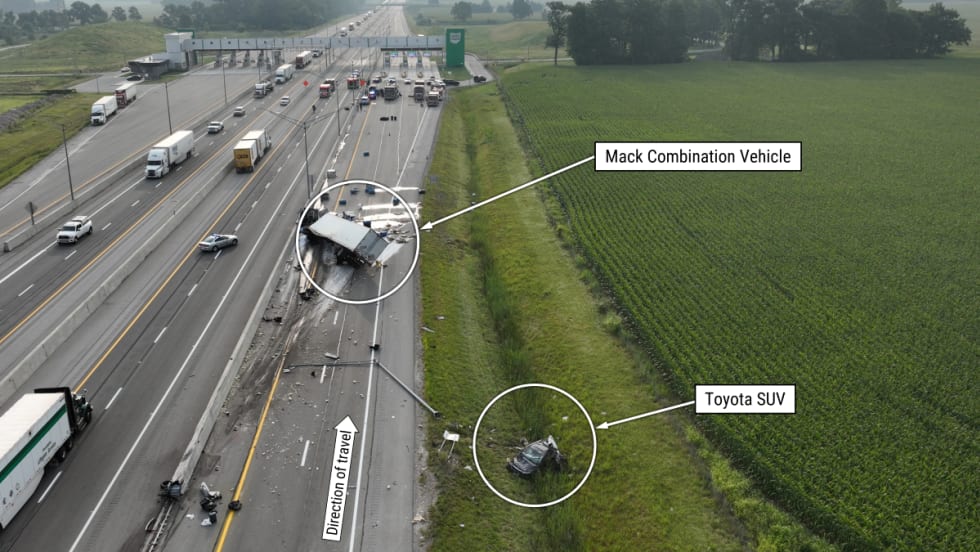
Fatal Crash Exposes Toll Plaza Risks
An NTSB investigation found that last-minute lane changes and large speed differences at an Ohio toll plaza created a hazard the truck driver couldn't avoid in time.
Read More →
When Language Stops the Truck: The Return of ELP Out-of-Service Orders
English language proficiency rules for commercial drivers aren’t new, but renewed out-of-service enforcement has raised the stakes. Here’s what carriers need to know before a driver reaches a roadside inspection.
Read More →
Marijuana and Trucking’s Drug-Testing Dilemma
Marijuana is getting stronger, laws are changing, and drug tests still can’t reliably establish impairment. What does that mean for truck drivers and the fleets that employ them?
Read More →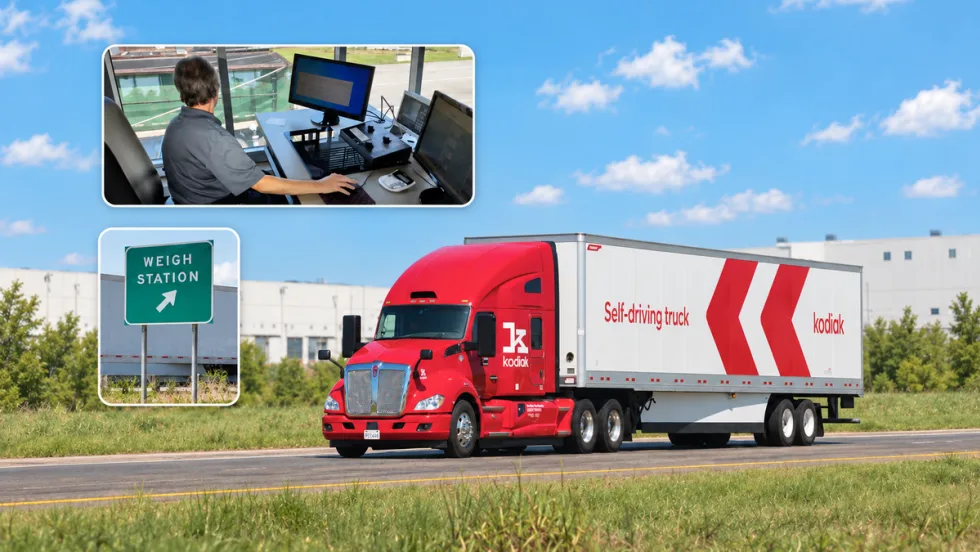
PrePass, Kodiak Connect Driverless Trucks to Roadside Enforcement
The system will allow enforcement agencies to verify Enhanced Inspection information and decide whether Kodiak’s autonomous trucks can bypass roadside screening sites.
Read More →
From One Generation to the Next: How Mentorship Builds Safer Truck Drivers
After three decades in trucking, Harold Perry shares what he's learned about driver safety, mentorship, and helping the next generation build confidence behind the wheel.
Read More →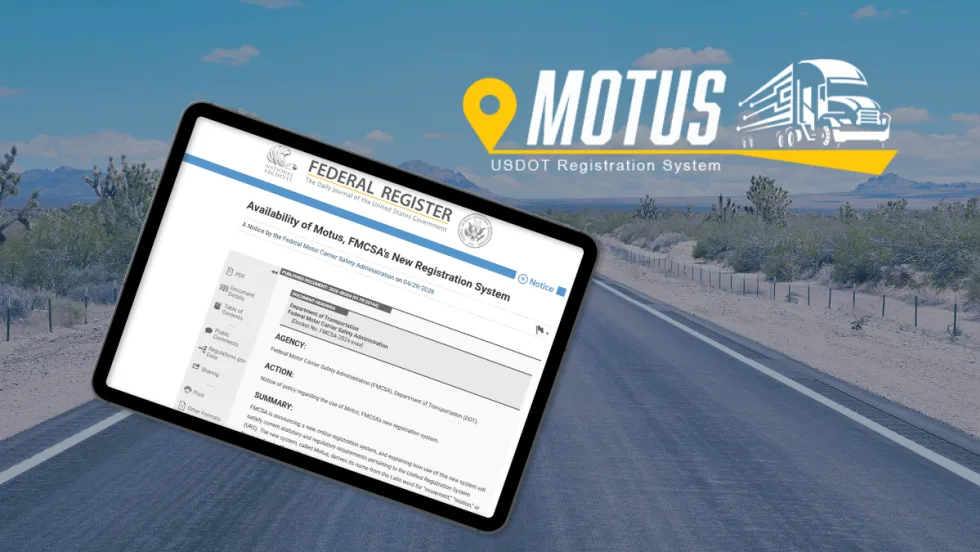
FMCSA Pauses Biennial-Update Enforcement Amid Motus Transition
Carriers whose updates were due on or after June 1 have more time, while FMCSA works to stabilize its new registration system and warns of phishing sites impersonating its new carrier registration system, Motus.
Read More →