




Related: Southern California Ports Plan for Zero-Emission Trucks
Clean Air Action Plan Approved by SoCal Ports
The Clean Air Action Plan, which seeks to aggressively reduce emissions at the Ports of Los Angeles and Long Beach, has been approved by the harbor commissions of both ports.

Steven Martinez・Web Editor
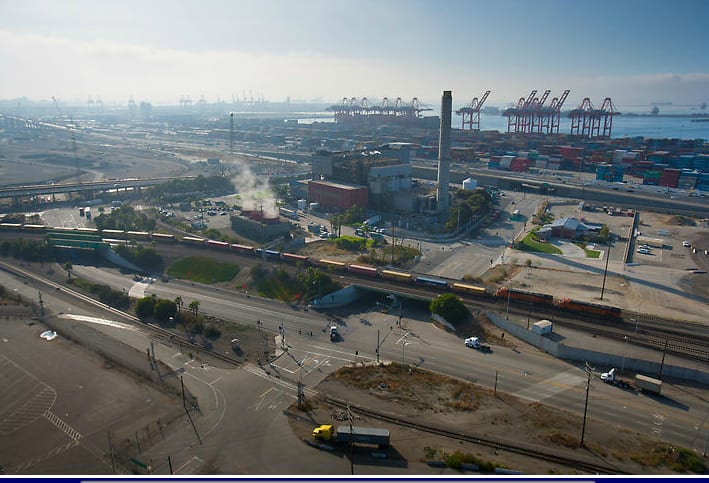
Photo: Port of Long Beach
3 min to read
Photo: Port of Long Beach
By 2035 only zero-emissions vehicles will be able to enter the Ports of Los Angeles and Long Beach without paying a penalty. That's part of the Clean Air Action Plan approved by the harbor commissions of both ports.
The 2017 CAAP Update is designed to push for zero emissions by 2035. The plan to reduce emissions will include cleaner vehicles and equipment, better freight infrastructure and planning, and improved freight efficiency.
For trucking companies servicing the ports, newly registered vehicles will be required to meet stringent environmental regulations or face penalties. By mid-2018, all new trucks on the registry must have at least 2014 model year engines. By 2020, a near-zero emissions standard will be enforced with a fee charged when entering port terminals. By 2023, trucks must meet near-zero emissions to enter the registry, and by 2035 only zero-emissions vehicles will be able to enter the port without being charged.
The ports estimate incremental costs of between $7 billion and $14 billion for new technologies, infrastructure investments, and incentive programs to support the CAAP strategies outlined in the latest version of the plan. The plan was developed with feedback from industry stakeholders, according to port officials.
The Harbor Trucking Association, which represents many of the stakeholders at the affected ports, took a positive but circumspect position on the approved plan.
“The Harbor Trucking Association is very thankful to the Ports of Los Angeles and Long Beach for engaging with us in the development of the Clean Air Action Plan update,” said Weston LaBar, executive director of the association. “While we appreciate the ports' approach, we feel the milestones are very ambitious and will be hard to meet."
The CAAP is one of the most ambitious environmental investments ever undertaken by a port complex and must strike a delicate balance of improving air quality through drastic measures and maintaining competitiveness with other ports.
Strategies to deliver on the plan are expected to place a large financial burden on the ports and goods movement industry, and the plan states that it will only be successful with the financial support of the California and federal governments.
“We look forward to working with the ports through the implementation process and the vetting of the feasibility of deploying new equipment in the market,” said LaBar. “Above all, we need to first ensure the port is economically sustainable and competitive, as we work towards increased environmental sustainability and continuing the journey to improve our region’s air quality.”
Not all industry stakeholders are as cautiously optimistic. Western States Trucking Association Director of Governmental Affairs Joe Rajkovacz expressed concern that requirements for newer, cleaner vehicles would hinder the abilities of small trucking companies to compete.
“In our view, it’s really going to handicap small businesses. It essentially tells small business that you aren’t going to be able to repurpose older vehicles,” Rajkovacz told HDT. “This certainly has the specter of the ports doing the bidding of organized labor to try to do everything they can to screw over small businesses.”
Rajkovacz also said that the regulations could really hurt the Ports of Los Angeles' and the Port of Long Beach's ability to compete with other ports and could ultimately cost them serious business.
For funding, CAAP states that federal, state and regional government incentives can help offset costs of new equipment and subsidize critical infrastructure needed to support new technologies. A request will be made for incentive funding from federal, state, and regional sources to assist with these efforts, and the ports will remain actively involved in these discussions throughout the implementation of the plan.
“When the cost of shipping goods through those ports becomes so high, and they’re already seeing declines in market share, it's going to accelerate,” WSTA's Rajkovacz said. “The self-righteous, sanctimonious people are going to kill the goose that lays the golden egg in Southern California.”
More Fleet Management

Sponsored•September 16, 2026
Color Match Smarter: Tools That Restore & Perform
For fleet managers and collision repair professionals keeping heavy-duty trucks on the road, getting the color right the first time isn't just about appearance — it's about efficiency, turnaround time, and bottom-line results. Discover how today's digital color tools are transforming the repair process from guesswork to precision.
Read More →
FMCSA Pauses Biennial-Update Enforcement Amid Motus Transition
Carriers whose updates were due on or after June 1 have more time, while FMCSA works to stabilize its new registration system and warns of phishing sites impersonating its new carrier registration system, Motus.
Read More →
Sponsored•September 14, 2026
2026 Blueprint for Countering Smarter Supply Chain Theft
Cargo theft is no longer just the cost of doing business. It's a multi-billion-dollar criminal enterprise exploiting vulnerabilities across your fleet, drivers, and supply chain.
Read More →


Sponsored•September 1, 2026
How Telematics Improves Visibility, Control, and Performance in Refrigerated Fleets
Explore how telematics help refrigerated fleets improve visibility, uptime, efficiency, compliance, and cargo protection across connected cold chain operations.
Read More →
What the U.S.-Canada Trade War Means for Trucking
Escalating U.S.-Canada tariffs could disrupt cross-border freight, reduce truck volumes, raise costs, and create new uncertainty for carriers on both sides of the border.
Read More →
What Are Trucking’s Top Concerns for 2026?
The American Transportation Research Institute wants to know what's worrying trucking fleet managers, drivers, and other stakeholders in its annual Industry Issues survey.
Read More →
American Trucking Associations Looks for a New Leader
ATA President and CEO Chris Spear abruptly left his job at the association on August 21, at a pivotal time for the trucking industry.
Read More →
Public Wi-Fi Cybersecurity Risks: How Truck Drivers and Fleets Can Protect Their Data
Public Wi-Fi can expose truck drivers and fleets to credential theft, malware, and other cyber threats. Here’s how to reduce the risk on the road.
Read More →
For Nicky Cupp, Fleet Innovation Starts With Frustration
HDT Truck Fleet Innovator Nicky Cupp turns everyday pain points at Fraley & Schilling into opportunities for better technology and smarter processes.
Read More →
Adam Buttgenbach’s Approach to Electric Trucks: Start With Where They Fit
HDT Truck Fleet Innovator Adam Buttgenbach helped PepsiCo build one of North America’s largest EV fleets by focusing on where electric trucks make operational sense.
Read More →