




ChargeTronix Introduces 480 kW Charging System
The Nexus Distributed Charging System for Fleets can charge up to six electric vehicles simultaneously.

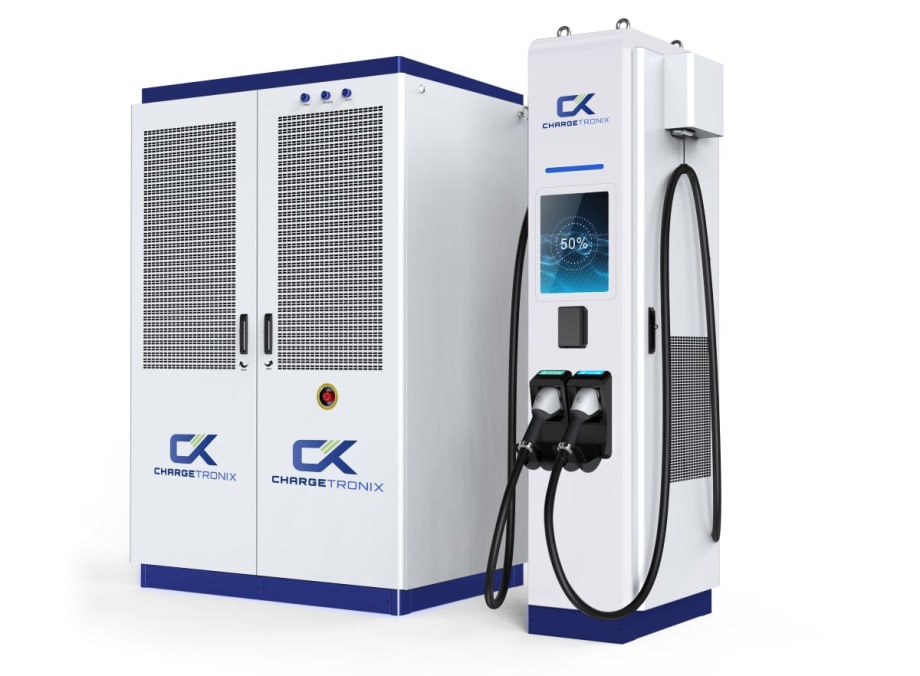
The ChargeTronix 480 kW Distributed Charging System can charge to six electric trucks at once, in as little as 30 minutes.
Photo: ChargeTronix
ChargeTronix, a global provider of intelligent electric vehicle charging infrastructure, introduced its new 480 kW Nexus Distributed Charger. The new charger is designed to support the charging needs for commercial fleets as they shift to electric trucking, the company said.
With up to 480 kW of available power and dynamic power sharing, the company said the Nexus Distributed Charger is the first system to allow charging for up to six commercial vehicles at a time from a single power cabinet.
It can also charge a 300 kWh Class 6 to 8 EV in 30 to 45 minutes or enable longer dwell times for multiple trucks during peak downtime periods.
Scalable Charging Infrastructure Needed for Fleet Electrification
With the electric truck market forecasted to grow by more than 54 percent on average each year between now and 2030, having scalable charging infrastructure will be essential for supporting fleets’ seamless transitions.
“As the demand for electric trucks grows, acquiring an all-electric fleet is only half of the equation for fleet operators,” said Stephen Israel, vice president of operations at ChargeTronix.
“Having charging infrastructure that provides dynamic power sharing in 40 kW power increments enables the operator to optimize charging to align with their duty cycle. With flexible solutions such as our new Nexus Distributed System, operators can share long dwell and opportunity charging assets.”
BEVs and Charging Solutions
ChargeTronix will showcase the Nexus Distributed Charging System alongside its lineup of commercial fleet products during the 2024 ACT Expo, May 20-23 in Las Vegas.
In addition to the 480 kW Nexus Distributed Charger and the accompanying Nexus Dispenser Towers, the list of products being shown include:
180 kW Apex DC Fast Charger, which offers a broad voltage range from 150 to 1,000 VDC, accommodating various EV needs. ChargeTronix also offers Apex chargers that can cover up to 360 kW output, depending on the number of power modules in the unit.
Phoenix Bidirectional Charger: (V2G), which enables two-way electricity flow between electric vehicles and the power grid supporting power ranges from 20 to 60 kW.
Flux AC Chargers, including the 48 Amp and 80 Amp Flux AC single and double chargers. The Flux AC chargers deliver up to 11.52 kW, enabling quick and efficient EV charging for both commercial and residential uses.
More Fuel Smarts

How Volvo Updated Its D13 for EPA 2027 [Watch]
Volvo’s updated D13 promises lower emissions without sacrificing performance or fuel economy. Take a closer look at what changed inside the engine in this HDT Spotlight video.
Read More →
Diesel Price Spike Shortens Payback for Natural Gas Trucks, Report Says
Energy Vision estimates fleets could recover the higher purchase price of an RNG-fueled Class 8 tractor in 1.3 to 2.8 years under current fuel-price scenarios.
Read More →
Calstart Becomes Catalyst Mobility, Reflecting Broader Focus
Calstart is now Catalyst Mobility, reflecting the nonprofit’s growing national role in clean transportation, including zero-emission trucks, infrastructure and incentive programs.
Read More →

Record Diesel Prices Squeeze Trucking Fleets
Average U.S. diesel prices have climbed to nearly $6 a gallon, surpassing the 2022 record as tight refinery capacity and Middle East disruptions keep fuel costs elevated.
Read More →
How Fuel Delivery Shapes Engine Performance
Fuel delivery depends on more than what happens at the injector. For fleet, maintenance and technical professionals, looking at the full path from pump to injector can provide useful context for understanding engine performance.
Read More →
East Coast Port Launches $45M Electric Truck Push
The Port Authority of New York and New Jersey announced millions in incentives for zero-emission drayage trucks, yard tractors, and new charging hubs near the port.
Read More →
California Bill Could Shed Light on Electric Truck Prices
Why do battery-electric Class 8 trucks remain so expensive? A California bill headed to Gov. Gavin Newsom would give fleets and state agencies more visibility into what manufacturers charge.
Read More →
Detroit Opens Orders for EPA 2027 Engines
Detroit isn’t starting from scratch to meet EPA 2027 diesel emissions standards. Its Gen 6 DD13 and DD15 engines keep much of today’s platform while updating the fuel and aftertreatment systems.
Read More →
Zero-Emission Truck Corridor Planned for West Coast
California, Oregon, Washington, British Columbia and Baja California are coordinating plans for truck charging and hydrogen fueling from Canada to Mexico.
Read More →
A Closer Look at Kenworth’s Electric T880E Vocational Truck [Video]
Learn more about Kenworth's T880E battery-electric vocational truck at the Paccar Technical Center, including its range, applications, upfitting considerations, and PTO options, in this HDT Spotlight video.
Read More →