




Carrier Adds Greener Premium Performance Vector Trailer Refrigeration
Two new “premium performance” versions of the Carrier Transicold Vector trailer refrigeration system deliver high efficiency performance and significantly reduced emissions, according to the company.

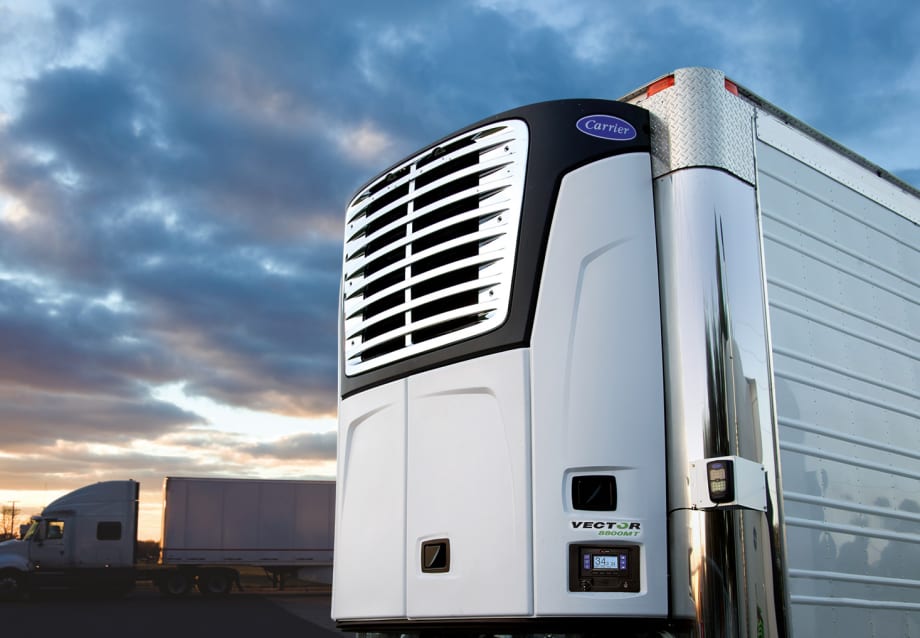
The Vector 8800MT is one of two new Carrier Transicold multi-temperature units based on the company's E-Drive all-electric refrigeration technology.
Photo: Carrier Transicold
Carrier Transicold now offers two premium performance versions of its Vector trailer refrigeration system. The new versions are designed to deliver high efficiencies and significantly reduced emissions for regulatory compliance and improved sustainability, the company said.
The new Vector 8700 single-temperature unit and Vector 8800MT multi-temperature unit build on the legacy of Carrier's E-Drive all-electric refrigeration technology, explained Bill Maddox, senior manager of product management, truck trailer Americas, Carrier Transicold.
“These premium performance units reduce particulate emissions by 96% while adding significant gains in fuel efficiency compared to standard Vector models."
The new units feature an advanced version of the smart engine used throughout Carrier Transicold’s existing trailer platforms. Carrier Transicold said these benefits include:
Enhanced compliance – Under current regulations, the premium performance Vector units provide lifetime compliance with the California Air Resources Board’s stricter emissions rules for trailer refrigeration systems.
Better fuel economy – The advanced engine used in both units features common-rail fuel injection for optimized fuel delivery that reduces consumption by 5% to 10%, according to Carrier. A new third speed, called “eco speed,” automatically decreases engine rpm during intervals where conditions permit, improving operating efficiency compared to normal low-speed operation and providing even more fuel savings.
Greater sustainability – The units use R-452A refrigerant with a global warming potential 45% lower than that of the traditional transport refrigeration unit refrigerant, R-404A. The efficient common rail fuel system and a diesel oxidation catalyst push particulate, hydrocarbon and NOx emissions to new lows, making the units the most environmentally responsible models in the Vector Series for fleets seeking sustainable options.
Built-in electric standby – The units’ refrigeration and freezing capacities remain constant when using integrated plug-in electric standby capability. During use, the Vector units’ electric standby capability eliminates engine fuel consumption, noise and emissions, and reduces operating costs.
Simplified maintenance – E-Drive technology provides a streamlined unit design in which the diesel engine is direct-coupled to a high-output generator that produces power for the all-electric refrigeration system, eliminating many common serviceable components and making the units easier to maintain. Intelligent controls automatically activate individual components, running only what the refrigeration system needs, precisely when needed, so components run less and last longer than traditional counterparts.
The units are equipped with Carrier Transicold’s Lynx Telematics solution for remote monitoring of temperatures, location, movement and system operating performance (subscription required).
More Fuel Smarts

How Volvo Updated Its D13 for EPA 2027 [Watch]
Volvo’s updated D13 promises lower emissions without sacrificing performance or fuel economy. Take a closer look at what changed inside the engine in this HDT Spotlight video.
Read More →
Diesel Price Spike Shortens Payback for Natural Gas Trucks, Report Says
Energy Vision estimates fleets could recover the higher purchase price of an RNG-fueled Class 8 tractor in 1.3 to 2.8 years under current fuel-price scenarios.
Read More →
Calstart Becomes Catalyst Mobility, Reflecting Broader Focus
Calstart is now Catalyst Mobility, reflecting the nonprofit’s growing national role in clean transportation, including zero-emission trucks, infrastructure and incentive programs.
Read More →

Record Diesel Prices Squeeze Trucking Fleets
Average U.S. diesel prices have climbed to nearly $6 a gallon, surpassing the 2022 record as tight refinery capacity and Middle East disruptions keep fuel costs elevated.
Read More →
How Fuel Delivery Shapes Engine Performance
Fuel delivery depends on more than what happens at the injector. For fleet, maintenance and technical professionals, looking at the full path from pump to injector can provide useful context for understanding engine performance.
Read More →
East Coast Port Launches $45M Electric Truck Push
The Port Authority of New York and New Jersey announced millions in incentives for zero-emission drayage trucks, yard tractors, and new charging hubs near the port.
Read More →
California Bill Could Shed Light on Electric Truck Prices
Why do battery-electric Class 8 trucks remain so expensive? A California bill headed to Gov. Gavin Newsom would give fleets and state agencies more visibility into what manufacturers charge.
Read More →
Detroit Opens Orders for EPA 2027 Engines
Detroit isn’t starting from scratch to meet EPA 2027 diesel emissions standards. Its Gen 6 DD13 and DD15 engines keep much of today’s platform while updating the fuel and aftertreatment systems.
Read More →
Zero-Emission Truck Corridor Planned for West Coast
California, Oregon, Washington, British Columbia and Baja California are coordinating plans for truck charging and hydrogen fueling from Canada to Mexico.
Read More →
A Closer Look at Kenworth’s Electric T880E Vocational Truck [Video]
Learn more about Kenworth's T880E battery-electric vocational truck at the Paccar Technical Center, including its range, applications, upfitting considerations, and PTO options, in this HDT Spotlight video.
Read More →