




Canadian Judge Rules Against Speed Limiters
An Ontario trial judge recently tossed out a ticket under the province's speed limiter legislation, ruling that speed limiters are unsafe and violate a truck driver's right to personal safety. However, advocates for the devices say the ruling does not affect Ontario's speed limiter law
An Ontario trial judge recently tossed out a ticket under the province's speed limiter legislation, ruling that speed limiters are unsafe and violate a truck driver's right to personal safety. However, advocates for the devices say the ruling does not affect Ontario's speed limiter law.
The case comes as the U.S. National Highway Traffic Safety Administration NHTSA works on a proposal to require speed limiters in tractors.
The case involved owner-operator Gene Michaud from St. Catharines, Ontario. With funding support from the Owner-Operator Independent Drivers Association, he filed a constitutional challenge last year against the province over the law that requires heavy trucks 1995 and newer to have a working speed limiter set no higher than 105 kilometers per hour, or 65 mph. The court ruled in his favor, with Judge Brett A. Kelly also ruling that the speed limiter law violates the principles of fundamental justice because it does not make the roads safer as the province claimed but instead creates more danger.
OOIDA President Jim Johnston said the association took on the case because the precedent is important to owner-operators on both sides of the border.
"This case will impact our Canadian members and also our U.S. members, both those who travel in Canada and those who may be subject to similar types of regulations in the U.S.," Johnston says. "The real motivation of big-business proponents of speed limiter mandates is to drive up costs for small-business truckers and hurt their ability to compete."
Michaud testified that the speed-limiter law violated his right to security as a person under Canadian law because his vehicle speed was capped below the flow of traffic in many jurisdictions. He recalled numerous situations in which he felt "bound and unsafe."
Other testimony presented also included research showing that uniform speeds are safer than when vehicles travel at different speeds. A forced speed differential, therefore, creates increased danger of collisions.
The Ontario Trucking Association released a statement saying that the ruling "does not change the enforcement of the Highway Traffic Act law whatsoever." Contrary to some reports, the lower court ruling isn't binding and the law hasn't been struck down; nor does it require any amendments to the HTA legislation.
"People challenge traffic tickets every day and sometimes they win," says OTA President David Bradley says. "It means nothing; the law stands."
Related Stories:
3/29/2012 New Study Finds Safety Benefits of Limiting Truck Speeds
3/7/2012 Truckload Carriers to Support Mandatory Speed Limiters
5/17/2012 The Feds' Safety Wish List
More Safety & Compliance
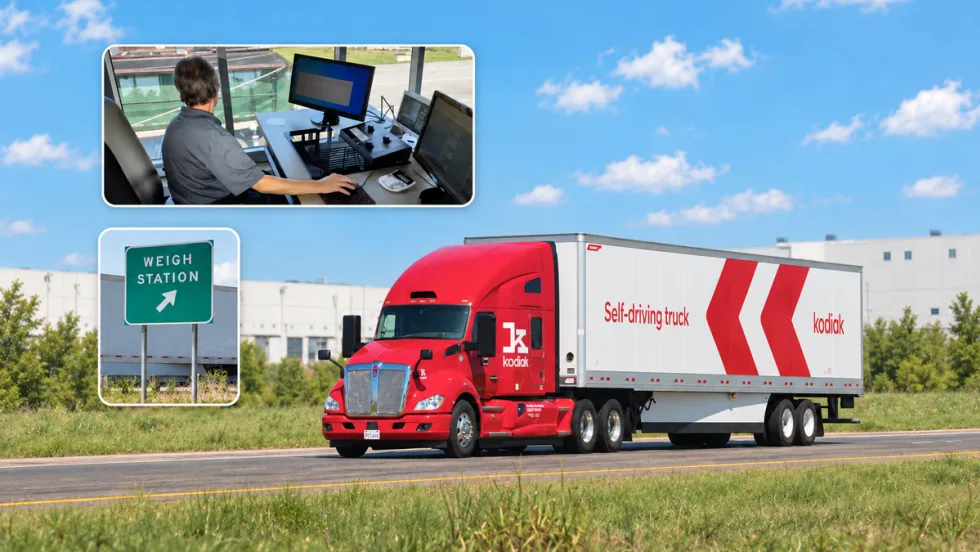
PrePass, Kodiak Connect Driverless Trucks to Roadside Enforcement
The system will allow enforcement agencies to verify Enhanced Inspection information and decide whether Kodiak’s autonomous trucks can bypass roadside screening sites.
Read More →
From One Generation to the Next: How Mentorship Builds Safer Truck Drivers
After three decades in trucking, Harold Perry shares what he's learned about driver safety, mentorship, and helping the next generation build confidence behind the wheel.
Read More →
FMCSA Pauses Biennial-Update Enforcement Amid Motus Transition
Carriers whose updates were due on or after June 1 have more time, while FMCSA works to stabilize its new registration system and warns of phishing sites impersonating its new carrier registration system, Motus.
Read More →
ZF Expands Commercial Vehicle Push in North America
ZF is expanding its North American commercial-vehicle presence with new transmission applications, electrification, trailer technology and autonomous-driving systems.
Read More →
Truck Drivers Need More Than Another Alert
Fleets have more visibility into truck health, safety events, and driver activity than ever. The next challenge is turning all that information into useful guidance for the person who has to decide what to do next.
Read More →
Tesla Wants a Self-Driving Semi. Are Cameras Enough?
Could Tesla’s camera-only autonomous driving technology work on an 80,000-pound Semi? In this commentary, HDT's Deborah Lockridge takes a look at Tesla, Cybercab, and how autonomous trucks see the road.
Read More →
What DOT’s Automated Vehicle Strategy Means for Trucking
The U.S. Department of Transportation issued a new automated-vehicle strategy that outlines plans for driverless-truck regulations, cross-state freight corridors, and federal safety standards.
Read More →
NYC Expands Speed, Pedestrian Safety Tech Across Fleet
New York City is expanding intelligent speed assistance and pedestrian-alert systems across its municipal fleet, moving the technologies from pilot programs into vehicle procurement and retrofit requirements.
Read More →
FMCSA Removes 110 Truck Driver Training Schools from Certified ELDT List
Federal regulators also are targeting more than 160 additional training providers and launching a nationwide audit of third-party CDL skills testers as part of a broader crackdown on trucking fraud.
Read More →
Beyond DOT Compliance: What Makes a Trucking Fleet Truly Safe?
A trucking fleet can follow every rule and still make unsafe decisions. The real test comes when safety conflicts with freight, productivity, or cost.
Read More →