




California Wants Input on Autonomous Truck Regs
The California Department of Motor Vehicles published a draft of what it says are the nation’s most comprehensive standards for the operation of heavy-duty autonomous vehicles, to the consternation of those opposing driverless trucks.

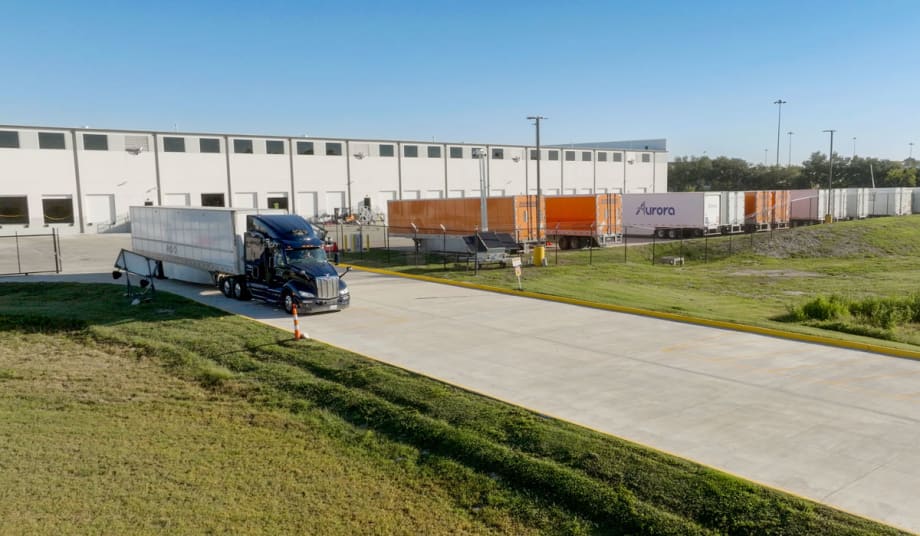
Since California has not even allowed testing of autonomous trucks, other states, such as Texas, have become a center of AV operation. Here, Aurora's autonomous truck facility in Houston.
Photo: Aurora
The California Department of Motor Vehicles published a draft of what it says are the nation’s most comprehensive standards for the operation of heavy-duty autonomous vehicles.
The DMV is asking for input on the draft regulations, which will also update existing rules for the testing and deployment of light-duty AVs on California’s public roads.
The draft regulations remove the current prohibition on operation of autonomous vehicles with a gross vehicle weight rating of 10,001 pounds or greater. They create a regulatory path for manufacturers to test and deploy autonomous commercial motor vehicles on public roads in the state.
Regulations allowing for light-duty autonomous delivery vehicles weighing less than 10,001 pounds were approved in 2019. But current regulations prohibit the testing and deployment of autonomous vehicles (SAE Level 3 and above) weighing 10,001 pounds or more.
“It’s time to take the next step and continue to responsibly advance technology that has the potential to not only enhance safe and sustainable transportation options but also to create new jobs and opportunities for workers within the evolving transportation sector,” said California Transportation Secretary Toks Omishakin.
California State Legislators, Teamsters Against Driverless Trucks
The Teamsters Union blasted the announcement, which came just one day after the state legislature passed Teamsters-backed legislation that would require autonomous trucks to include a human operator (Assembly Bill 2286).
“Autonomous vehicles have brought chaos to California roads, yet Gov. Newsom is welcoming 80,000-pound driverless trucks onto state roadways with open arms,” said a statement from Teamsters President Sean O'Brien.
“These dangerous actions threaten good jobs and public safety and will only serve to enrich the governor’s friends in Big Tech.
“The proposed autonomous trucking regulations are a slap in the face to the legislators who have done right by workers to pass AB 2286 two years in a row. The regulations are an insult to California workers who already fear losing their jobs to automation. The Teamsters will continue to push back on Gov. Newsom’s corporate-first agenda, and we will do everything in our power to protect our members’ good-paying union jobs in California.”
AB 2286, formerly Assembly Bill 316 (AB 316), would require a trained human operator behind the wheel of self-driving trucks weighing more than 10,000 pounds. The bill passed the California legislature with over 90% support in 2024 and as AB 316 in 2023, according to the union. California Gov. Gavin Newsom vetoed last year's bill
“Whether we’re talking about robotaxi companies like Waymo and Cruise or trucking companies like Aurora, it’s clear we cannot trust these profit-hungry businesses to prioritize safety and good jobs. AB 2286 and AB 3061 are vital to the accountability we need,” said Chris Griswold, Teamsters International Vice President At-Large and President of Teamsters Joint Council 42 in Pomona.
Autonomous Vehicle Association Stresses Transparency
The Autonomous Vehicle Industry Association urged Newsom to veto the bill.
“Unfortunately, AB 3061 takes California in the wrong direction by creating contradictory standards and duplication of ongoing efforts by the state that will cause unnecessary confusion about this life-saving technology," said AVIA CEO Jeff Farrah in a statement.
“The autonomous vehicle industry believes that public trust in AVs is essential to their deployment and that transparency with government officials and the public is imperative," he said. "We have deeply engaged on AB 3061 to ensure regulators and the public have important information about AV operations in California.”
Responding to the DMV's release of draft regulatory language, Farrah said, “The AV industry has stressed the importance of releasing these regulations for several years. This announcement further underscores why AB 2286 and AB 3061 are unnecessary and should be vetoed by Governor Newsom.”
What California's Autonomous-Truck Draft Language Says
The draft regulations, located on the DMV website, cover commercial vehicles weighing 10,001 pounds or more. That means it includes medium-duty trucks as low as Class 3 vehicles and up through heavy-duty Class 8.
The proposal would allow for operation of autonomous CMVs on roads where the posted speed limit is 50 mph or more, and on frontage access roads — essentially allowing for long-haul deliveries along hub-to-hub routes and in less complex operational areas.
Certain commercial vehicle operations are excluded, including household movers, commercial vehicles used to transport passengers, oversize loads, hazardous materials, and bulk liquids requiring a tank endorsement.
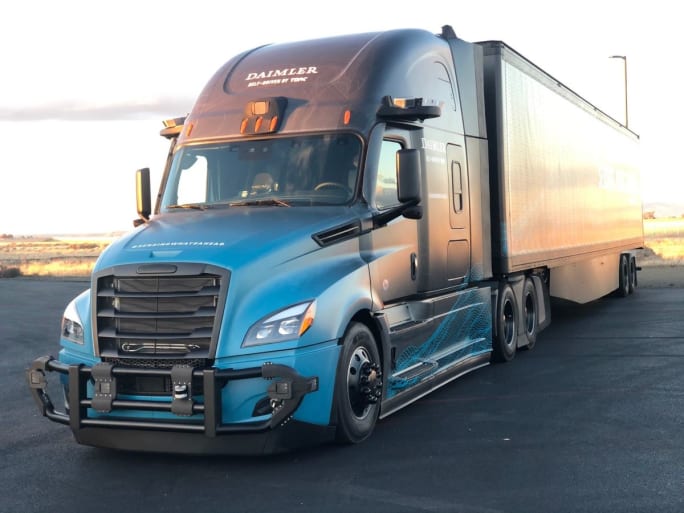
Daimler Trucks North America's latest testing and development platform melds zero emissions with autonomous technology, a day cab eCascadia fitted with Torc Robotics' Virtual Driver.
Photo: Daimler Trucks North America
Manufacturers would be required to meet existing state and federal commercial vehicle requirements for the type of vehicle being operated and the type of commerce being engaged, including compliance with all California weigh-station regulatory signs and devices and vehicle inspections requirements.
Autonomous commercial vehicle test drivers, remote drivers, and remote assistants would need to comply with any applicable state and federal commercial driver requirements, including licensing and hours-of-service restrictions.
Manufacturers would be allowed to receive compensation for transporting freight during testing.
For both light-duty and heavy-duty operations, manufacturers would be required to initially hold a permit to test with a safety driver in the vehicle and then apply in subsequent phases for a Driverless Testing Permit and Deployment Permit.
To further document their overall safety approach, manufacturers would be required to submit a Safety Case with each permit application that describes how they are comprehensively addressing safety at an organizational, operational and vehicle level.
The draft regulations expand both the frequency and type of data reported to the department during testing and deployment. For both light-duty and heavy-duty operations, changes to data reporting requirements could include aligning crash reporting with the National Highway Traffic Safety Administration’s Standing General Order and monthly reporting on disengagements, vehicle immobilizations and hard braking events.
Remote Assistants for Autonomous Trucks
The DMV's draft said remote personnel could provide support to an autonomous vehicle in certain circumstances, such as when the vehicle achieves a minimal risk condition or while interacting with first responders.
The draft regulations apply existing test driver requirements to remote drivers and remote assistants, including holding the proper class of license for the type of vehicle being operated, maintaining a clean driving record, and completion of a training program.
Manufacturers would be required to assess and describe to the department the maximum number of vehicles that each remote driver and remote assistant could safely be assigned to monitor.
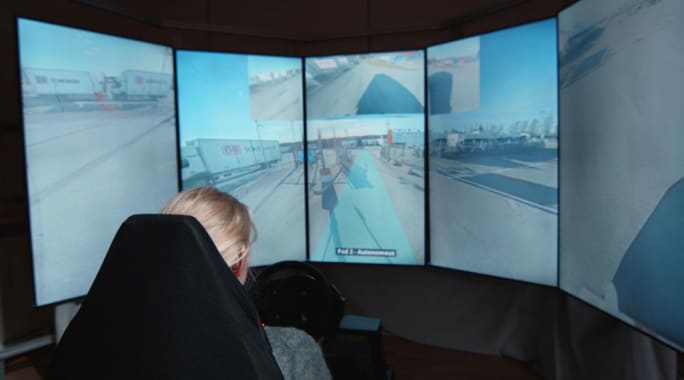
California is proposing that remote operator/assistants of autonomous trucks have the same licensing requirements as drivers in the cab. Here, an Einride remote operator in 2020.
Photo: Einride
Enforcement and First Responder Questions
The draft regulations include provisions regarding interactions between first responders and driverless autonomous vehicles, including the vehicle’s ability to recognize emergency vehicles and respond to directions from first responders.
An external microphone and speakers would be required to enable first responder communication with any remote assistants, and a visual indicator would inform law enforcement of the autonomous vehicle’s operational state.
The department said it recognizes that there are open questions related to law enforcement’s ability to cite autonomous vehicles for moving violations, as well as how other human driver-oriented elements of vehicle operation should be applied to autonomous driving systems. The department anticipates continued discussions on how to best address these other issues.
First Step in Regulating Autonomous Commercial Vehicles in California
The draft language the DMV has published is not a formal regulatory proposal. The DMV is seeking input from the public and stakeholders through October 14, which it will consider before it begins the formal rulemaking process. Input received will be treated as informal feedback.
The formal process will also include notice of proposed regulations and an opportunity for public comment.
How to Submit Input: Input on the draft regulatory language can be submitted by email to AutonomousVehicles@dmv.ca.gov, by October 14, 2024. All submissions must include the commenter’s name and affiliation. Anonymous comments will not be accepted. All input received will become part of the public record and may be publicly accessible.
More Safety & Compliance
When Language Stops the Truck: The Return of ELP Out-of-Service Orders
English language proficiency rules for commercial drivers aren’t new, but renewed out-of-service enforcement has raised the stakes. Here’s what carriers need to know before a driver reaches a roadside inspection.
Read More →
A Camera Isn't a Safety Program. Here's What Brokers Are Screening for Now
Footage alone may not be enough to pass broker vetting processes. Here's what counts as a defensible safety program now.
Read More →
Marijuana and Trucking’s Drug-Testing Dilemma
Marijuana is getting stronger, laws are changing, and drug tests still can’t reliably establish impairment. What does that mean for truck drivers and the fleets that employ them?
Read More →
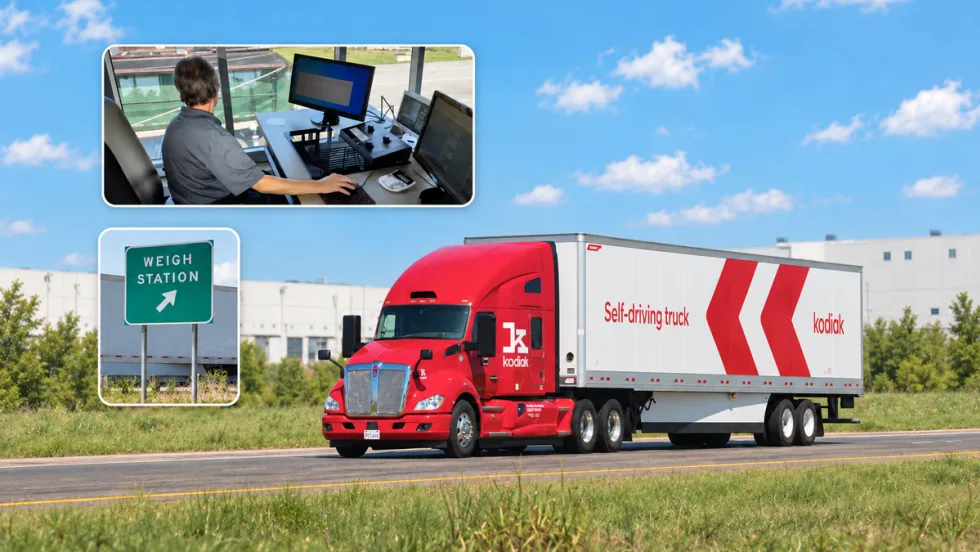
PrePass, Kodiak Connect Driverless Trucks to Roadside Enforcement
The system will allow enforcement agencies to verify Enhanced Inspection information and decide whether Kodiak’s autonomous trucks can bypass roadside screening sites.
Read More →
From One Generation to the Next: How Mentorship Builds Safer Truck Drivers
After three decades in trucking, Harold Perry shares what he's learned about driver safety, mentorship, and helping the next generation build confidence behind the wheel.
Read More →
FMCSA Pauses Biennial-Update Enforcement Amid Motus Transition
Carriers whose updates were due on or after June 1 have more time, while FMCSA works to stabilize its new registration system and warns of phishing sites impersonating its new carrier registration system, Motus.
Read More →
ZF Expands Commercial Vehicle Push in North America
ZF is expanding its North American commercial-vehicle presence with new transmission applications, electrification, trailer technology and autonomous-driving systems.
Read More →
Truck Drivers Need More Than Another Alert
Fleets have more visibility into truck health, safety events, and driver activity than ever. The next challenge is turning all that information into useful guidance for the person who has to decide what to do next.
Read More →
Tesla Wants a Self-Driving Semi. Are Cameras Enough?
Could Tesla’s camera-only autonomous driving technology work on an 80,000-pound Semi? In this commentary, HDT's Deborah Lockridge takes a look at Tesla, Cybercab, and how autonomous trucks see the road.
Read More →
What DOT’s Automated Vehicle Strategy Means for Trucking
The U.S. Department of Transportation issued a new automated-vehicle strategy that outlines plans for driverless-truck regulations, cross-state freight corridors, and federal safety standards.
Read More →