




California Earmarks $83 Million in Alt-Fuel Funding for Small Fleets
California’s Funding Assistance Program is making $82 million in funds available for small, heavy-duty truck fleets looking to transition to zero-emission commercial vehicles.

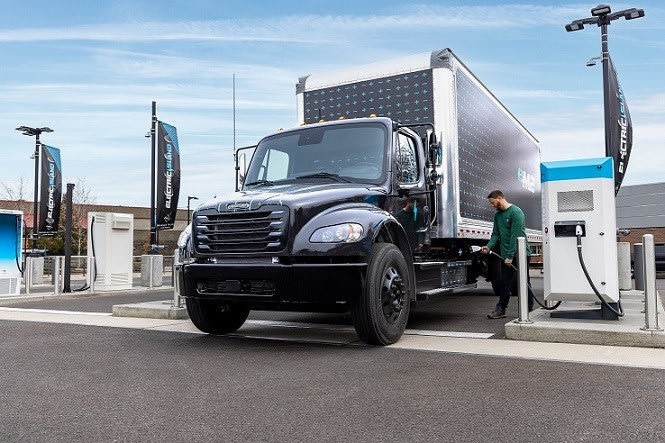
CARB has increased incentive funding for small fleets looking to transition to alternative fuels by an additional $50 million this year.
Photo: Daimler Truck North America
The California Air Resources Board's Innovative Small E-Fleet (ISEF) voucher incentive set-aside will offer $83 million this year. The funds are earmarked for to assist small, heavy-duty truck fleets transition to cleaner vehicles using alternative fuels and powertrains.
The funding assistance program is part of the state’s Clean Truck and Bus Voucher Incentive program (HVIP) and opened for voucher requests on Aug. 30.
An Additional $50 Million in Funding
The ISEF voucher program gives a boost to small fleets that may otherwise have challenges accessing incentive funding, CARB said. The program also provides an opportunity for the agency to gather data about the needs of small fleets to better understand how to support the transition toward zero-emissions technology.
CARB added $50 million to the program this year. Privately owned trucking companies and nonprofits, including independent owner-operators, with 20 or fewer vehicles with a gross vehicle weight rating (GVWR) greater than 8,500 lbs. and less than $15 million in annual revenue are eligible. (Nonprofits are exempt from the revenue cap.)
These fleets can access funding to help cover costs related to the purchase and operation of zero-emission trucks.
Fleets must work with an approved provider to apply for vouchers. These providers will work with eligible equipment dealers to request vouchers on the individual fleet’s behalf.
“Ensuring a clean air future means that no one can be left behind, and the ISEF program is an example of the assistance that CARB is providing to ensure that fleets big and small understand how to do their part to achieve California’s zero-emissions goals, and have the support needed to be successful,” said CARB Executive Officer Steven Cliff. “Every new zero-emissions truck on the road means cleaner air and healthier communities.”
Flexible Funding Options
Eligible participants may request funding vouchers toward the purchase of a new zero-emission truck or for an innovative solution, which includes offerings not traditionally allowed in government-funded programs — flexible financing, fuel-included leases, rentals, and truck-as-a-service options to help offset costs such as charging or other fueling infrastructure, insurance and alternative fuel costs.
ISEF is administered by Calstart, a national clean-transportation nonprofit organization.
“I am so grateful for the ISEF program. As a startup company, it was a game-changer to have the support from this program to help me buy my first two battery-electric semis and make the transition to cleaner vehicle technology,” said Sharmin Watson, owner of Avant Garde Auto Logistics. “We made history as the first fleet of Class 8 all-electric semis to haul finished vehicles in the United States. I appreciate all the help from the Calstart team; they have been easy to work with throughout the process.”
More Fleet Management

Nominations Open for HDT Emerging Leaders
Heavy Duty Trucking is looking for accomplished trucking fleet professionals under 40 who are making an impact and helping lead the industry forward.
Read More →
Why Private Fleets Are Taking More Freight
Private fleets are putting their own trucks on demanding customers and high-cost lanes as companies seek greater control over service, costs, and capacity.
Read More →
Color Match Smarter: Tools That Restore & Perform
For fleet managers and collision repair professionals keeping heavy-duty trucks on the road, getting the color right the first time isn't just about appearance — it's about efficiency, turnaround time, and bottom-line results. Discover how today's digital color tools are transforming the repair process from guesswork to precision.
Read More →


FMCSA Pauses Biennial-Update Enforcement Amid Motus Transition
Carriers whose updates were due on or after June 1 have more time, while FMCSA works to stabilize its new registration system and warns of phishing sites impersonating its new carrier registration system, Motus.
Read More →
2026 Blueprint for Countering Smarter Supply Chain Theft
Cargo theft is no longer just the cost of doing business. It's a multi-billion-dollar criminal enterprise exploiting vulnerabilities across your fleet, drivers, and supply chain.
Read More →
How Telematics Improves Visibility, Control, and Performance in Refrigerated Fleets
Explore how telematics help refrigerated fleets improve visibility, uptime, efficiency, compliance, and cargo protection across connected cold chain operations.
Read More →
What the U.S.-Canada Trade War Means for Trucking
Escalating U.S.-Canada tariffs could disrupt cross-border freight, reduce truck volumes, raise costs, and create new uncertainty for carriers on both sides of the border.
Read More →
What Are Trucking’s Top Concerns for 2026?
The American Transportation Research Institute wants to know what's worrying trucking fleet managers, drivers, and other stakeholders in its annual Industry Issues survey.
Read More →
American Trucking Associations Looks for a New Leader
ATA President and CEO Chris Spear abruptly left his job at the association on August 21, at a pivotal time for the trucking industry.
Read More →
Public Wi-Fi Cybersecurity Risks: How Truck Drivers and Fleets Can Protect Their Data
Public Wi-Fi can expose truck drivers and fleets to credential theft, malware, and other cyber threats. Here’s how to reduce the risk on the road.
Read More →