




California Delays Advanced Clean Fleets Enforcement
Fleets that operate heavy-duty trucks in California will get a reprieve from enforcement of the state’s rules requiring zero-emission trucks that kick in starting Jan. 1.
December 29, 2023

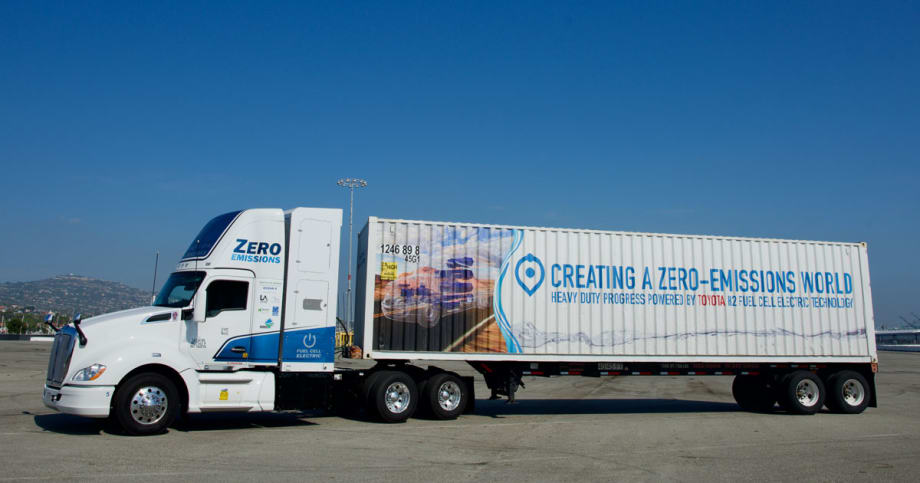
The California Air Resources Board is pushing for trucks in the state to be zero-emissions, battery-electric or fuel-cell electric.
Photo: CARB
3 min to read
Fleets that operate heavy-duty trucks in California will get a reprieve from enforcement of the state’s rules requiring zero-emission trucks that kick in starting Jan. 1.
The California Air Resources Board announced that it does not plan to enforce the drayage or high-priority fleet provisions of the Advanced Clean Fleets regulation until the U.S. Environmental Protection Agency grants a preemption waiver from the federal Clean Air Act or determines a waiver is not necessary.
However, this does not apply to state and local government fleets.
What is the Advanced Clean Fleets Regulation?
The Advanced Clean Fleets regulation was adopted by California Air Resources Board just last April and was effective Oct. 1.
The state’s goal is to have fleets operating in the state be 100% electric by 2035, 2040 or 2045, depending on size and type of truck. The regulation affects medium- and heavy-duty on-road vehicles with a gross vehicle weight rating greater than 8,500 pounds, as well as off-road yard tractors, and light-duty mail and package delivery vehicles, according to the CARB website.
However, many in the trucking industry have been concerned that zero-emission trucks might not be available in time, or the charging infrastructure.
Even some fleets that were committed to embracing ZEV trucks have been having trouble getting the trucks they ordered and the charging infrastructure installed.
HDT Truck Fleet Innovator Brad Bayne, VP of strategic initiatives for 4 Gen Logistics, had expected to have 64 battery-electric Class 8 trucks in its California drayage operations by September, having ordered 40 Volvo VNR Electric trucks and 20 Kenworth T680e electric trucks. Bayne told HDT Jan. 1 that the Volvos just now are starting to be delivered, and charging infrastructure remains a bottleneck.
"We have two [charging] sites built but can’t get them energized because we are waiting on utilities to do their part."
CTA's Lawsuit Challenging Advanced Clean Fleets Rules
In October, the California Trucking Association filed a federal lawsuit seeking to block enforcement of the rules.
The association contends that ACF conflicts with the Federal Clean Air Act and the Federal Aviation Administration Authorization Act of 1994.
“Congress has expressly preempted state and local rules that ‘relate to’ the control of emissions from new motor vehicles and state and local rules that ‘relate to’ a price, route, or service of any motor carrier,” CTA said.
“Because the ACF regulation is aimed at transforming not only the vehicles sold within California’s borders, but virtually any vehicle that enters those borders, CARB has disregarded what the United States Supreme Court has declared to be Congress’s carefully calibrated regulatory scheme,” the lawsuit said.
In November, CARB asked the EPA for a preemption waiver regarding the challenged provisions of the ACF rule.
According to published reports, the California Trucking Association agreed not to file a preliminary injunction motion seeking to enjoin enforcement of the challenged provision of the ACF regulation while the waiver request is pending before U.S. EPA.
More About CARB's ACF Enforcement Delay
In an enforcement notice issued Dec. 28, CARB encouraged fleets to go ahead and voluntarily report and comply with the regulations while the waiver request is pending. CARB said trucks powered by internal-combustion engines that are added to the reporting system after the original deadline may not be allowed to operate once the U.S. Environmental Protection Agency makes its decision on the waiver.
CARB will also accept requests for the extensions and exemptions available under the ACF regulation during this period.
However, CARB is keeping to the enforcement deadline for state and local government fleets, since it doesn’t need a federal Clean Air Act waiver for those fleets. So for state and local fleets, CARB will fully enforce all requirements, including reporting and the ZEV purchasing requirements or the option to comply with the ZEV Milestone Option, beginning Jan. 1, 2024.
Updated 1/2/2024 to add comment from Brad Bayne
More Fuel Smarts

How Volvo Updated Its D13 for EPA 2027 [Watch]
Volvo’s updated D13 promises lower emissions without sacrificing performance or fuel economy. Take a closer look at what changed inside the engine in this HDT Spotlight video.
Read More →
Diesel Price Spike Shortens Payback for Natural Gas Trucks, Report Says
Energy Vision estimates fleets could recover the higher purchase price of an RNG-fueled Class 8 tractor in 1.3 to 2.8 years under current fuel-price scenarios.
Read More →
Calstart Becomes Catalyst Mobility, Reflecting Broader Focus
Calstart is now Catalyst Mobility, reflecting the nonprofit’s growing national role in clean transportation, including zero-emission trucks, infrastructure and incentive programs.
Read More →

Record Diesel Prices Squeeze Trucking Fleets
Average U.S. diesel prices have climbed to nearly $6 a gallon, surpassing the 2022 record as tight refinery capacity and Middle East disruptions keep fuel costs elevated.
Read More →
Sponsored•September 9, 2026
How Fuel Delivery Shapes Engine Performance
Fuel delivery depends on more than what happens at the injector. For fleet, maintenance and technical professionals, looking at the full path from pump to injector can provide useful context for understanding engine performance.
Read More →
East Coast Port Launches $45M Electric Truck Push
The Port Authority of New York and New Jersey announced millions in incentives for zero-emission drayage trucks, yard tractors, and new charging hubs near the port.
Read More →
California Bill Could Shed Light on Electric Truck Prices
Why do battery-electric Class 8 trucks remain so expensive? A California bill headed to Gov. Gavin Newsom would give fleets and state agencies more visibility into what manufacturers charge.
Read More →
Detroit Opens Orders for EPA 2027 Engines
Detroit isn’t starting from scratch to meet EPA 2027 diesel emissions standards. Its Gen 6 DD13 and DD15 engines keep much of today’s platform while updating the fuel and aftertreatment systems.
Read More →
Zero-Emission Truck Corridor Planned for West Coast
California, Oregon, Washington, British Columbia and Baja California are coordinating plans for truck charging and hydrogen fueling from Canada to Mexico.
Read More →
A Closer Look at Kenworth’s Electric T880E Vocational Truck [Video]
Learn more about Kenworth's T880E battery-electric vocational truck at the Paccar Technical Center, including its range, applications, upfitting considerations, and PTO options, in this HDT Spotlight video.
Read More →