




Bird Flu Affecting Trucking in Midwest
The avian flu viruses that have affected more than 33 million turkeys, chickens and ducks in more than a dozen states since December are taking their toll on the trucking companies that serve the poultry industry.

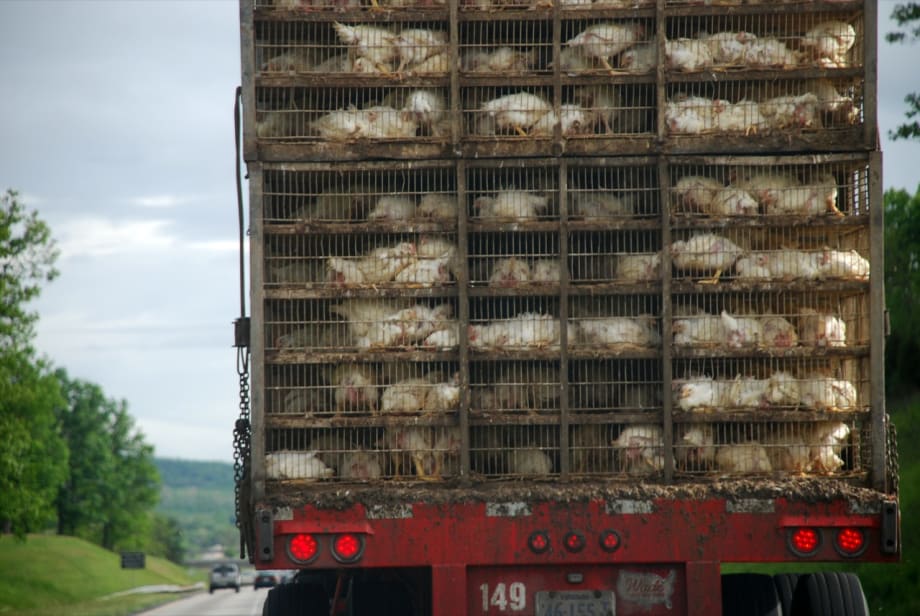
Truckers hauling chickens aren't the only ones being affected by bird flu. Photo by Ben via Wikimedia Commons
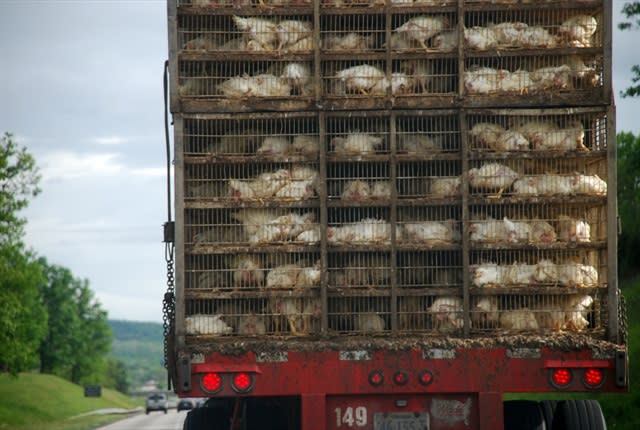
Truckers hauling chickens aren't the only ones being affected by bird flu. Photo by Ben via Wikimedia Commons
The avian flu viruses that have affected more than 33 million turkeys, chickens and ducks in more than a dozen states since December are taking their toll on the trucking companies that serve the poultry industry.
In addition to birds that are dying from the flu, poultry farmers are having to kill and dispose of millions of birds to try to keep the virus from spreading further.
Agriculture economists say bird flu could cost the two states hardest hit, Iowa and Minnesota, nearly $1 billion – and the virus is still spreading. These estimates include not only the affected poultry farmers, but also sales losses to feed suppliers, processing plants – and trucking companies.
Iowa, where one in every five eggs consumed in the country is laid, has been the hardest hit: More than 40% of its egg-laying hens are dead or dying. According to the USDA, nearly 25 million birds are affected there.
The New York Times, reporting from Sioux Center, Iowa, talked to Wayne Meerdink, who with his son runs a trucking business that takes feed to egg farms and other livestock operations, and he's preparing for more competition. “Those trucks that haul chickens and eggs around are going to be looking for other ways to stay busy,” he told the paper.
Minnesota is the next hardest hit, with more than 4 million. Other states include Wisconsin, South Dakota, California, North Dakota, North Dakota, Arkansas, Missouri, Washington, Oregon, Montana, Idaho, Kansas and Indiana.
Brigid Tuck, an economic analyst at the University of Minnesota, estimates that in that state, for every 100 jobs lost in poultry processing, nine jobs in the trucking industry will be affected. For every $1 million in lost poultry production, nearly $24,000 will be lost in economic activity at trucking companies.
John Hausladen, president of the Minnesota Trucking Association, says an informal survey of members indicates that "if you're hauling directly, as input or finished product, it is having a significant impact," he told Truckinginfo.com. "We're seeing reduced volumes; we're seeing trucks that were hauling for those customers soliciting other business trying to replace loads, so it creates some price pressure as it relates to overall freight."
Some members, he says, are facing route restrictions, as customers don't want them to travel through an area where there has been an infection, even if they're not going onto any farms in the affected area.
It's not just companies that are hauling chicken and eggs that are affected, but also those hauling things like chicken feed, grain and medicine on the input side, and wrappings, boxes and the like on the output side.
As those companies struggle to find other freight to replace what they've lost, Hausladen notes, that also means totally different routes and lanes than what they are used to. "It is certainly one thing to have the freight go away, but that lane you've built into your business model is now disrupted, so it has a ripple effect on how you manage the whole fleet."
Private fleets involved in areas such as foodservice will also be affected, he notes. They have to replace eggs or chicken or turkey they may be used to sourcing from the Midwest source it from other parts of the country, which means disruption in their logistics and routing as well.
If there's a bright spot for anyone in the trucking business, it's for those companies that deal in areas such as waste disposal or truck washing, which are in high demand.
More Fleet Management

Color Match Smarter: Tools That Restore & Perform
For fleet managers and collision repair professionals keeping heavy-duty trucks on the road, getting the color right the first time isn't just about appearance — it's about efficiency, turnaround time, and bottom-line results. Discover how today's digital color tools are transforming the repair process from guesswork to precision.
Read More →
FMCSA Pauses Biennial-Update Enforcement Amid Motus Transition
Carriers whose updates were due on or after June 1 have more time, while FMCSA works to stabilize its new registration system and warns of phishing sites impersonating its new carrier registration system, Motus.
Read More →
2026 Blueprint for Countering Smarter Supply Chain Theft
Cargo theft is no longer just the cost of doing business. It's a multi-billion-dollar criminal enterprise exploiting vulnerabilities across your fleet, drivers, and supply chain.
Read More →


How Telematics Improves Visibility, Control, and Performance in Refrigerated Fleets
Explore how telematics help refrigerated fleets improve visibility, uptime, efficiency, compliance, and cargo protection across connected cold chain operations.
Read More →
What the U.S.-Canada Trade War Means for Trucking
Escalating U.S.-Canada tariffs could disrupt cross-border freight, reduce truck volumes, raise costs, and create new uncertainty for carriers on both sides of the border.
Read More →
What Are Trucking’s Top Concerns for 2026?
The American Transportation Research Institute wants to know what's worrying trucking fleet managers, drivers, and other stakeholders in its annual Industry Issues survey.
Read More →
American Trucking Associations Looks for a New Leader
ATA President and CEO Chris Spear abruptly left his job at the association on August 21, at a pivotal time for the trucking industry.
Read More →
Public Wi-Fi Cybersecurity Risks: How Truck Drivers and Fleets Can Protect Their Data
Public Wi-Fi can expose truck drivers and fleets to credential theft, malware, and other cyber threats. Here’s how to reduce the risk on the road.
Read More →
For Nicky Cupp, Fleet Innovation Starts With Frustration
HDT Truck Fleet Innovator Nicky Cupp turns everyday pain points at Fraley & Schilling into opportunities for better technology and smarter processes.
Read More →
Adam Buttgenbach’s Approach to Electric Trucks: Start With Where They Fit
HDT Truck Fleet Innovator Adam Buttgenbach helped PepsiCo build one of North America’s largest EV fleets by focusing on where electric trucks make operational sense.
Read More →