




Biodiesel Board Goal: 10% of Diesel Market in 10 Years
The National Biodiesel Board announced a new goal Tuesday during the Biodiesel Conference & Expo in Las Vegas: 10% of the on-road diesel market by 2022. The Diesel Technology Forum has signed on to help the industry get there while making sure engines are protected.
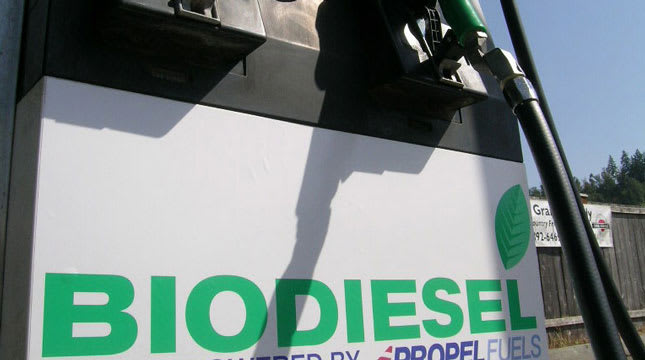
The National Biodiesel Board announced a new goal Tuesday during the Biodiesel Conference & Expo in Las Vegas: 10% of the on-road diesel market by 2022.
"It is not about replacing every drop of petroleum; it is about continuing to diversify transportation energy so we can meet our needs affordably and sustainably," said National Biodiesel Board CEO Joe Jobe. "Biodiesel will play an increasing role to help protect fuel consumers and the U.S. economy from unstable energy markets that are grossly distorted by political factors in the most politically unstable region in the world and by nationalized oil companies of totalitarian regimes."
Eight years ago, NBB set a goal to be 5% of the diesel fuel supply by 2015, a goal then viewed as aggressive. With a billion gallons produced in 2011 and 2012, the biodiesel industry is well on its way to achieve that goal and possibly hit it earlier than expected, says the NBB.
"No one could have predicted the changes and challenges of this industry, but we have been deliberate and intentional as we map our potential," Jobe continued. "This year, biodiesel marks 20 years for the trade association, 10 years for the conference and lays out the vision for the next ten years to come."
The goal is intended to be a stretch but yet attainable, says the NBB.
The NBB is getting help from the Diesel Technology Forum, which is participating in the Biodesel Conference. In 2012, the National Biodiesel Board joined the DTF as an Allied Member.
“Clean diesel vehicle and equipment manufacturers and biodiesel producers share a future destiny – all which is linked to the diesel engine," explained Ezra Finkin, DTF’s director of policy and external relations. "Billions of dollars has been invested in research to advance diesel technology, meet customer demand and achieve EPA’s near zero emissions standards. Biodiesel producers have made similar investments anticipating a future with expanded use of domestically produced biofuels in diesel engines of all kinds."
“Advancements in biodiesel refining and record production last year along with a great interest in second generation renewable fuels are all exciting topics at this gathering," Finkin said. "There is no question that the use of high quality renewable biofuels will help assure that diesel can compete alongside natural gas, ethanol, or electricity.
"To be successful, however, we must work together to ensure that car and truck owners and all users of biodiesel fuels have a positive experience, within the manufacturers' recommendations on fuel specifications."
More Fuel Smarts

How Volvo Updated Its D13 for EPA 2027 [Watch]
Volvo’s updated D13 promises lower emissions without sacrificing performance or fuel economy. Take a closer look at what changed inside the engine in this HDT Spotlight video.
Read More →
Diesel Price Spike Shortens Payback for Natural Gas Trucks, Report Says
Energy Vision estimates fleets could recover the higher purchase price of an RNG-fueled Class 8 tractor in 1.3 to 2.8 years under current fuel-price scenarios.
Read More →
Calstart Becomes Catalyst Mobility, Reflecting Broader Focus
Calstart is now Catalyst Mobility, reflecting the nonprofit’s growing national role in clean transportation, including zero-emission trucks, infrastructure and incentive programs.
Read More →

Record Diesel Prices Squeeze Trucking Fleets
Average U.S. diesel prices have climbed to nearly $6 a gallon, surpassing the 2022 record as tight refinery capacity and Middle East disruptions keep fuel costs elevated.
Read More →
How Fuel Delivery Shapes Engine Performance
Fuel delivery depends on more than what happens at the injector. For fleet, maintenance and technical professionals, looking at the full path from pump to injector can provide useful context for understanding engine performance.
Read More →
East Coast Port Launches $45M Electric Truck Push
The Port Authority of New York and New Jersey announced millions in incentives for zero-emission drayage trucks, yard tractors, and new charging hubs near the port.
Read More →
California Bill Could Shed Light on Electric Truck Prices
Why do battery-electric Class 8 trucks remain so expensive? A California bill headed to Gov. Gavin Newsom would give fleets and state agencies more visibility into what manufacturers charge.
Read More →
Detroit Opens Orders for EPA 2027 Engines
Detroit isn’t starting from scratch to meet EPA 2027 diesel emissions standards. Its Gen 6 DD13 and DD15 engines keep much of today’s platform while updating the fuel and aftertreatment systems.
Read More →
Zero-Emission Truck Corridor Planned for West Coast
California, Oregon, Washington, British Columbia and Baja California are coordinating plans for truck charging and hydrogen fueling from Canada to Mexico.
Read More →
A Closer Look at Kenworth’s Electric T880E Vocational Truck [Video]
Learn more about Kenworth's T880E battery-electric vocational truck at the Paccar Technical Center, including its range, applications, upfitting considerations, and PTO options, in this HDT Spotlight video.
Read More →