




Autocar, GM to Produce Fuel-Cell Electric Vocational Trucks
GM will supply Autocar with its Hydrotech power cubes to power fuel-cell-electric trucks in applications ranging from cement mixers to terminal tractors.

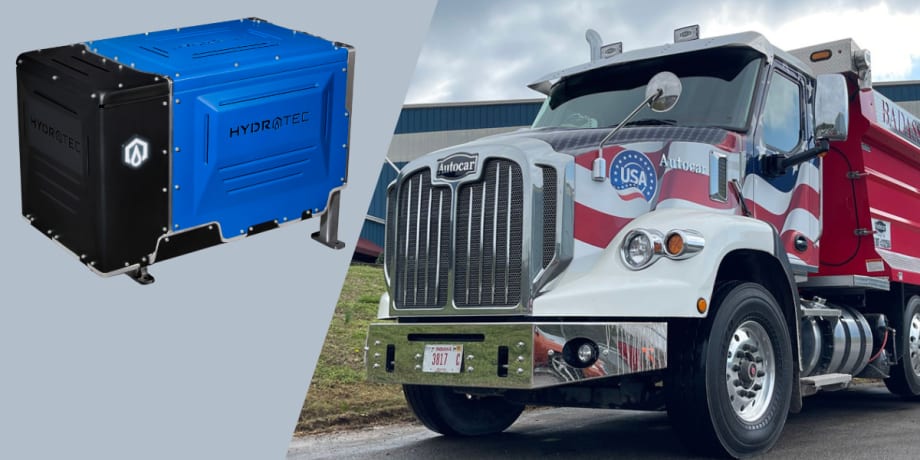
Autocar and GM say Hydrotec fuel cells offer zero-tailpipe-emissions options for heavy-duty vocational trucks.
HDT graphic
General Motors and Autocar are teaming up to create a range of zero-tailpipe-emissions vocational vehicles powered by GM’s Hydrotec power cubes.
Autocar, which already makes battery-electric terminal tractors, said in a statement that this initiative is an important expansion in offering zero-emissions solutions. Fuel-cell technology offers an additional energy propulsion option to support Autocar vocational customers’ move toward EPA requirements, the company added.
Hydrogen-Fueled Electric Power
Hydrogen fuel cells are a key component of GM’s electrification strategy extending beyond battery-powered passenger vehicles. Fuel cells combine hydrogen and oxygen to generate electricity through an electrochemical reaction. The fuel cell enables the conversion of energy stored in hydrogen into electricity to power a vehicle.
Each power cube contains more than 300 hydrogen fuel cells, along with thermal and power management systems and proprietary controls to maximize fuel cell and battery life and performance while optimizing cold start capability. The Hydrotec power cube provides 77 kilowatts of power and is much quieter than a conventional diesel propulsion system. Multiple power cubes can be arrayed in a vehicle for even higher power ratings.
Since fuel cells are lightweight and enable large payloads, long range, quiet operation and rapid refueling, they can meet the needs of heavy-duty applications where battery-electric technology is not a good option.
“EV propulsion systems like GM’s Ultium Platform are great solutions for electrifying passenger vehicles, but larger vehicles such as Autocar’s Class 8 trucks, refuse trucks and terminal tractors require robust solutions that enable significant energy carrying capacity and fast refueling times,” said Charlie Freese, GM executive director, Global Hydrotec.
“We want to enable zero-tailpipe-emissions solutions for the largest, highest-energy consuming vehicles, and fuel cells are ideal for the most energy-intensive applications.”
These jointly developed trucks will be powered by GM’s Hydrotec power cubes. The company said these power cubes are compact, easy to package, scalable, and can electrify vehicles and applications across a variety of industries, from trucking, aerospace and locomotives to power generation.
Built to Order by Autocar
The first of these vehicles is expected to go into production in 2026 at the Autocar Truck Plant in Birmingham, Alabama. Vehicles with Hydrotec technology will be built to order by Autocar and will be sold directly to customers. Cement mixers, roll-off and dump trucks, which all share a common architecture, will be built first, followed by refuse trucks and terminal tractors.
“Autocar provides customized vocational trucking solutions, and as regulations change, we see Hydrotec fuel cells as an additional avenue for our customers to meet their EPA requirements with zero-tailpipe-emissions vehicles,” said Eric Schwartz, president, Autocar, in a statement.
Triz Engineering will provide integration support for power distribution between the fuel cell and batteries, which store electricity that is captured from regenerative braking or is created by the Hydrotec power cubes. Triz Engineering is a commercial vehicle engineering company owned by GVW Group, which also owns Autocar.
“We have carefully studied existing severe-duty vocational trucks to understand their specific demands and requirements,” said Johann Vorster, president of Triz Engineering. “With GM and Autocar, we have built a fuel cell application that is unique within vocational vehicles — giving severe-duty trucking more options to be truly rugged and capable of achieving zero tailpipe emissions.”
More Fuel Smarts

How Volvo Updated Its D13 for EPA 2027 [Watch]
Volvo’s updated D13 promises lower emissions without sacrificing performance or fuel economy. Take a closer look at what changed inside the engine in this HDT Spotlight video.
Read More →
Diesel Price Spike Shortens Payback for Natural Gas Trucks, Report Says
Energy Vision estimates fleets could recover the higher purchase price of an RNG-fueled Class 8 tractor in 1.3 to 2.8 years under current fuel-price scenarios.
Read More →
Calstart Becomes Catalyst Mobility, Reflecting Broader Focus
Calstart is now Catalyst Mobility, reflecting the nonprofit’s growing national role in clean transportation, including zero-emission trucks, infrastructure and incentive programs.
Read More →

Record Diesel Prices Squeeze Trucking Fleets
Average U.S. diesel prices have climbed to nearly $6 a gallon, surpassing the 2022 record as tight refinery capacity and Middle East disruptions keep fuel costs elevated.
Read More →
How Fuel Delivery Shapes Engine Performance
Fuel delivery depends on more than what happens at the injector. For fleet, maintenance and technical professionals, looking at the full path from pump to injector can provide useful context for understanding engine performance.
Read More →
East Coast Port Launches $45M Electric Truck Push
The Port Authority of New York and New Jersey announced millions in incentives for zero-emission drayage trucks, yard tractors, and new charging hubs near the port.
Read More →
California Bill Could Shed Light on Electric Truck Prices
Why do battery-electric Class 8 trucks remain so expensive? A California bill headed to Gov. Gavin Newsom would give fleets and state agencies more visibility into what manufacturers charge.
Read More →
Detroit Opens Orders for EPA 2027 Engines
Detroit isn’t starting from scratch to meet EPA 2027 diesel emissions standards. Its Gen 6 DD13 and DD15 engines keep much of today’s platform while updating the fuel and aftertreatment systems.
Read More →
Zero-Emission Truck Corridor Planned for West Coast
California, Oregon, Washington, British Columbia and Baja California are coordinating plans for truck charging and hydrogen fueling from Canada to Mexico.
Read More →
A Closer Look at Kenworth’s Electric T880E Vocational Truck [Video]
Learn more about Kenworth's T880E battery-electric vocational truck at the Paccar Technical Center, including its range, applications, upfitting considerations, and PTO options, in this HDT Spotlight video.
Read More →