





Related: ATRI Data Shows Ongoing COVID-19 Impacts on Trucking
ATRI, OOIDA Research Identifies COVID-19 Impacts
The American Transportation Research Institute and the Owner-Operator Independent Driver Association Foundation have released research on the impacts of the COVID-19 pandemic on all aspects of trucking operations.
May 6, 2020
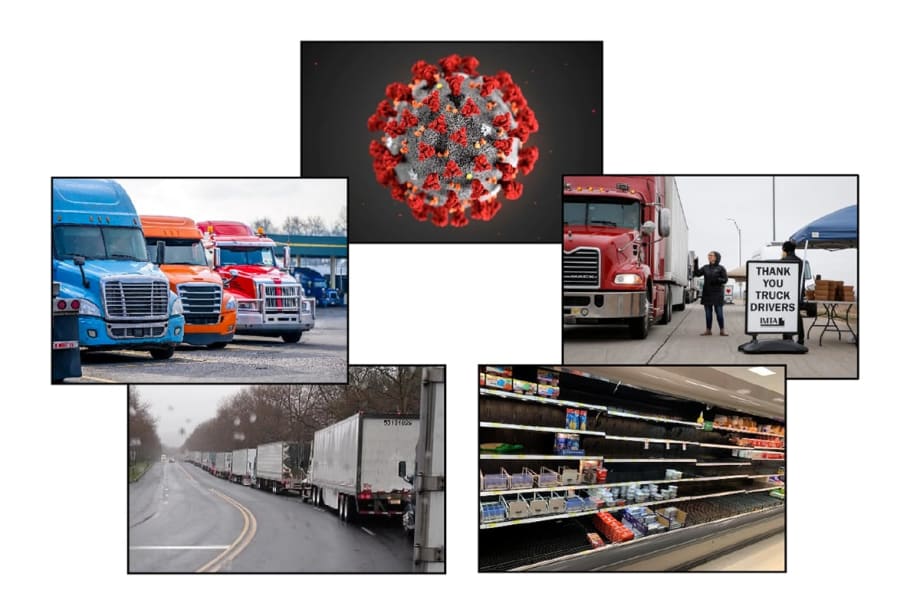
Image: ATRI, OOIDA
2 min to read
The American Transportation Research Institute and the Owner-Operator Independent Driver Association Foundation have released research on the impacts of the COVID-19 pandemic on all aspects of trucking operations, including deliveries, travel times, detention and truck parking. The joint research also provides recommendations and guidance on future strategies should similar disaster occur.
“The trucking industry has weathered national disasters in the past and is doing so again through the current COVID crisis,” said ATRI President and COO Rebecca Brewster. “However, this latest data quantifies the challenges motor carriers and drivers are facing during this pandemic to keep essential goods moving.”
Key findings from the research include:
Long-haul trips are down considerably as container imports at ports dried up. At the same time, local trips under 100 miles increased by more than 100%.
While certain segments of the industry, such as medical devices, perishable foods and paper products, saw solid COVID-related increases in truck traffic – nearly 50% of respondents described freight levels as “somewhat” to “much lower” due to COVID-19.
Nearly 70% of specialized and tank truck operations were negatively impacted. In nearly every instance, smaller fleets reported greater negative impacts than larger fleets.
More than 40% of respondents said that truck parking was not any worse due to the COVID-19 pandemic, but by fleet size, the larger fleets did describe truck parking as more difficult to find during the pandemic.
The research confirmed that driver detention generally did not change due to COVID-19; however, owner-operators and small fleets experienced much worse detention delays relative to larger fleets.
In terms of disaster planning, almost 80% of owner-operators and small fleets do not have any plan in place for managing operations during natural disasters.
The trucking industry generally has a favorable attitude towards state and federal responses, policies and programs set up to address the pandemic, with the federal response viewed as more favorable than the state responses.
The trucking industry’s perceptions about the country’s economic situation over the next several months leans slightly pessimistic – both in terms of freight movement and consumer spending.
“This research puts solid numbers to what we otherwise only suspected,” said Andrew King, research analyst for the OOIDA Foundation. “While we may be turning the corner on the COVID pandemic, we’re not out of the economic woods yet.”
You can download the full report here.
More Safety & Compliance

FMCSA Pauses Biennial-Update Enforcement Amid Motus Transition
Carriers whose updates were due on or after June 1 have more time, while FMCSA works to stabilize its new registration system and warns of phishing sites impersonating its new carrier registration system, Motus.
Read More →
ZF Expands Commercial Vehicle Push in North America
ZF is expanding its North American commercial-vehicle presence with new transmission applications, electrification, trailer technology and autonomous-driving systems.
Read More →
Truck Drivers Need More Than Another Alert
Fleets have more visibility into truck health, safety events, and driver activity than ever. The next challenge is turning all that information into useful guidance for the person who has to decide what to do next.
Read More →
Tesla Wants a Self-Driving Semi. Are Cameras Enough?
Could Tesla’s camera-only autonomous driving technology work on an 80,000-pound Semi? In this commentary, HDT's Deborah Lockridge takes a look at Tesla, Cybercab, and how autonomous trucks see the road.
Read More →
What DOT’s Automated Vehicle Strategy Means for Trucking
The U.S. Department of Transportation issued a new automated-vehicle strategy that outlines plans for driverless-truck regulations, cross-state freight corridors, and federal safety standards.
Read More →
NYC Expands Speed, Pedestrian Safety Tech Across Fleet
New York City is expanding intelligent speed assistance and pedestrian-alert systems across its municipal fleet, moving the technologies from pilot programs into vehicle procurement and retrofit requirements.
Read More →
FMCSA Removes 110 Truck Driver Training Schools from Certified ELDT List
Federal regulators also are targeting more than 160 additional training providers and launching a nationwide audit of third-party CDL skills testers as part of a broader crackdown on trucking fraud.
Read More →
Beyond DOT Compliance: What Makes a Trucking Fleet Truly Safe?
A trucking fleet can follow every rule and still make unsafe decisions. The real test comes when safety conflicts with freight, productivity, or cost.
Read More →
Hours of Service Pilot Programs: FMCSA Readies for 2027 Rollout
Two pilot programs could eventually reshape hours-of-service rules, giving truck drivers options to pause their 14-hour clock or use longer split sleeper rest periods.
Read More →
New Guide Offers Pet Safety Tips for Truck Drivers
Hundreds of thousands of pets travel in truck cabs. A new safety guide from Volvo Trucks and the Center for Pet Safety offers practical advice for truck drivers who bring dogs and cats along for the ride.
Read More →