




ATA: Truckers Need Priority Access to COVID-19 Vaccine
The American Trucking Associations called on policymakers to remember the trucking industry’s essential status as a national COVID-19 vaccine distribution strategy is being formulated.

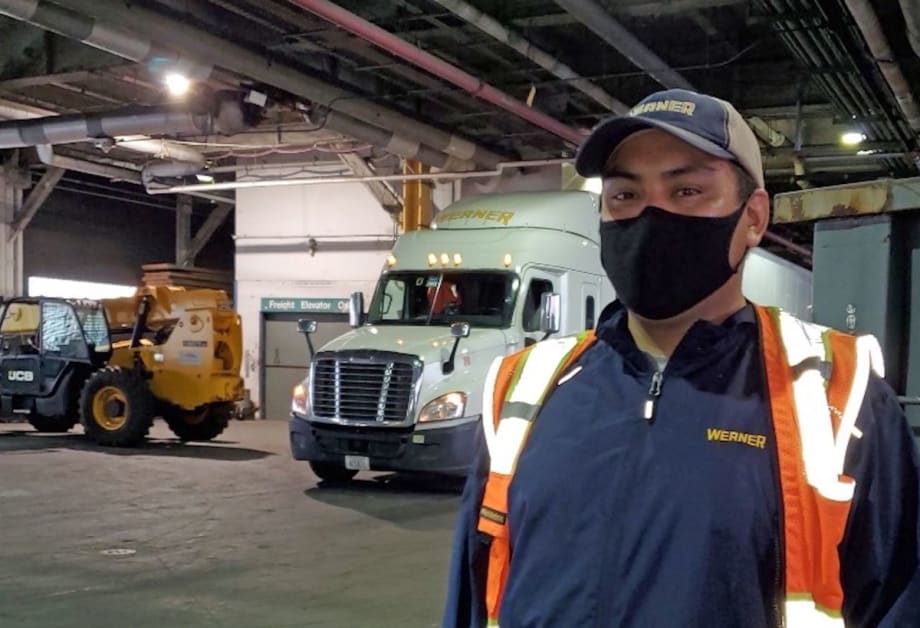
Trucking workers should have priority access to COVID-19 vaccines as essential workers, says ATA.
Photo: Werner
The American Trucking Associations has called on policymakers to remember the trucking industry’s essential status as a national COVID-19 vaccine distribution strategy is being formulated.
In letters sent to the White House, the CDC Advisory Committee on Immunization Practices, President-elect Biden, and the National Governors Association, ATA asked that the trucking industry’s workforce be included in prioritized access pools along with other essential workers.
The letters point out the industry’s designation as essential by the Department of Homeland Security’s Cybersecurity and Infrastructure Security Agency, noting that more than 80% of U.S. communities rely exclusively on trucks to receive necessary goods.
The U.S. Food and Drug Administration is expected to approve emergency use of Pfizer’s coronavirus vaccine soon, possibly as early as next week. The agency is then expected to approve one from Moderna. Others are in the pipeline, as well.
Some 40 million doses of coronavirus vaccine are already being produced and can start shipping as soon as the Food and Drug Administration approves them. An independent panel advising the Centers for Disease Control and Prevention recommended this week that the first vaccines go to residents and employees of nursing homes as well as health care workers who are especially at risk of being exposed to the virus. It will be left up to each state to determine how they distribute the vaccine, but they typically follow the CDC recommendations.
The Department of Transportation announced it has taken regulatory measures to help ensure the safe, rapid transportation of the COVID-19 vaccine, including expanding the emergency exemption for trucking operations involved in the effort.
“Our workforce represents a central and critical link in the nation’s supply chain and will play an essential role in the imminent COVID-19 vaccine distribution process,” wrote Bill Sullivan, ATA’s executive vice president for advocacy. “As the trucking industry is called upon to deliver vaccines across the country, it is imperative that truck drivers have prioritized access to the vaccine to minimize the potential for supply chain delays and disruptions.”
“Just as efforts were necessary to support prioritized distribution of PPE to the dedicated professionals who ensure the continuity of our nation’s supply chain, we must now focus our efforts to ensure that these same critical infrastructure workers have prioritized access to the COVID-19 vaccine as it becomes available.”
More Safety & Compliance

A Camera Isn't a Safety Program. Here's What Brokers Are Screening for Now
Footage alone may not be enough to pass broker vetting processes. Here's what counts as a defensible safety program now.
Read More →
Marijuana and Trucking’s Drug-Testing Dilemma
Marijuana is getting stronger, laws are changing, and drug tests still can’t reliably establish impairment. What does that mean for truck drivers and the fleets that employ them?
Read More →
PrePass, Kodiak Connect Driverless Trucks to Roadside Enforcement
The system will allow enforcement agencies to verify Enhanced Inspection information and decide whether Kodiak’s autonomous trucks can bypass roadside screening sites.
Read More →

From One Generation to the Next: How Mentorship Builds Safer Truck Drivers
After three decades in trucking, Harold Perry shares what he's learned about driver safety, mentorship, and helping the next generation build confidence behind the wheel.
Read More →
FMCSA Pauses Biennial-Update Enforcement Amid Motus Transition
Carriers whose updates were due on or after June 1 have more time, while FMCSA works to stabilize its new registration system and warns of phishing sites impersonating its new carrier registration system, Motus.
Read More →
ZF Expands Commercial Vehicle Push in North America
ZF is expanding its North American commercial-vehicle presence with new transmission applications, electrification, trailer technology and autonomous-driving systems.
Read More →
Truck Drivers Need More Than Another Alert
Fleets have more visibility into truck health, safety events, and driver activity than ever. The next challenge is turning all that information into useful guidance for the person who has to decide what to do next.
Read More →
Tesla Wants a Self-Driving Semi. Are Cameras Enough?
Could Tesla’s camera-only autonomous driving technology work on an 80,000-pound Semi? In this commentary, HDT's Deborah Lockridge takes a look at Tesla, Cybercab, and how autonomous trucks see the road.
Read More →
What DOT’s Automated Vehicle Strategy Means for Trucking
The U.S. Department of Transportation issued a new automated-vehicle strategy that outlines plans for driverless-truck regulations, cross-state freight corridors, and federal safety standards.
Read More →
NYC Expands Speed, Pedestrian Safety Tech Across Fleet
New York City is expanding intelligent speed assistance and pedestrian-alert systems across its municipal fleet, moving the technologies from pilot programs into vehicle procurement and retrofit requirements.
Read More →