




ATA Pushes Funding For Speed Limit Enforcement, Motorist Education
Congress should devote more money to speed limit enforcement and educating motorists about how to drive safely around trucks, said an American Trucking Associations representative in Congressional testimony Tuesday
Congress should devote more money to speed limit enforcement and educating motorists about how to drive safely around trucks, said an American Trucking Associations representative in Congressional testimony Tuesday.
Barbara Windsor, CEO of Hahn Transportation, a New Market, Maryland bulk and petroleum transporter, told the U.S. House Subcommittee on Highways and Transit that improving the safety of truck drivers and all motorists should be the highest priority of Congress in the current round of federal highway program funding.
"We are proud that our truck-related fatal accident rate is at an all time low, but the trucking industry believes that much more can be done to improve highway safety,” Windsor said. “We can best accomplish this by carefully targeting our limited resources at those activities which will yield the most safety improvements."
Windsor listed excessive speeding as target number one for strong, visible law enforcement. She called it one of the most pervasive and dangerous violations of the law that drivers encounter every day, citing it as a factor in nearly one third of all fatal highway crashes, with a toll of nearly 12,000 deaths annually. On behalf of ATA, Windsor asked that Congress provide additional funding to the states for increased speed limit enforcement for all motorists, including professional truck drivers. "The time has come to combat excessive speeding," she said.
As important as enforcement, said Windsor, is the education of drivers. With federal safety studies indicating that up to 70 percent of all fatal car-truck crashes begin with an action on the part of the car driver, Windsor said it is important for Congress to authorize additional funding for programs that teach motorists how to drive safely around large trucks. She said while good information is available to motorists, the lack of resources has hindered distribution of key safety materials.
Windsor also highlighted the very real lack of safe parking spaces for truck drivers. "Too often," she said, "a driver has to make the choice between parking illegally or continuing to drive, even though the driver is fatigued and in possible violation of federal hours-of-service rules. The federal government must allocate specific resources for this very serious safety crisis."
Other key ATA recommendations included more funding for the Highway Watch program, through which ATA trains truck drivers, or "America's Trucking Army", assists law enforcement and emergency personnel in spotting and reporting highway safety and national security situations.
The ATA also asked for more funding of research that explores better highway design, for the states to be given greater authority to set size and weight limits on highways in their jurisdictions, and for the U.S. Department of Transportation to enforce current laws designed to assure the safe condition of intermodal carriages and chassis.
"While we are a large and highly diverse industry," Windsor concluded, "all ATA members agree that highway safety is job one for our motor carriers and our industry. It makes good business sense, it is the right thing to do."
More Safety & Compliance
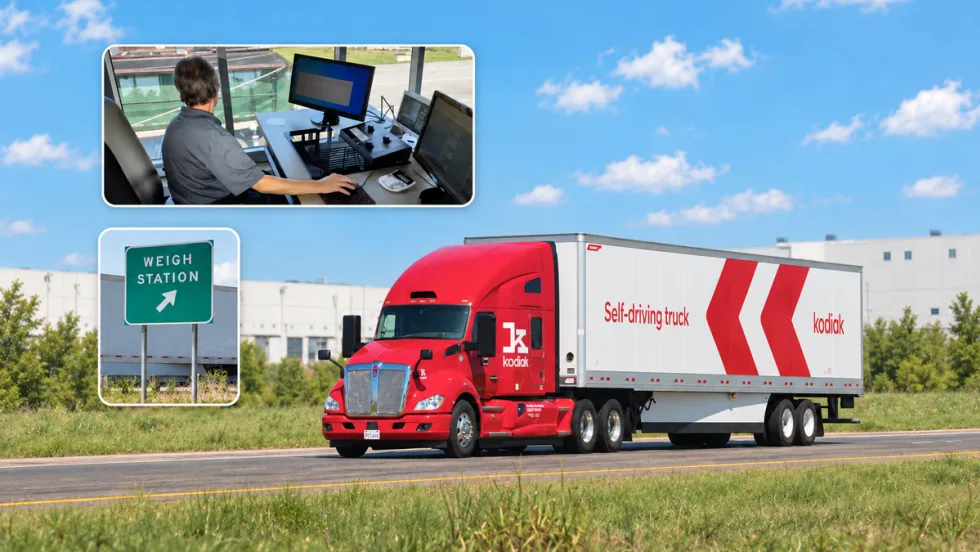
PrePass, Kodiak Connect Driverless Trucks to Roadside Enforcement
The system will allow enforcement agencies to verify Enhanced Inspection information and decide whether Kodiak’s autonomous trucks can bypass roadside screening sites.
Read More →
From One Generation to the Next: How Mentorship Builds Safer Truck Drivers
After three decades in trucking, Harold Perry shares what he's learned about driver safety, mentorship, and helping the next generation build confidence behind the wheel.
Read More →
FMCSA Pauses Biennial-Update Enforcement Amid Motus Transition
Carriers whose updates were due on or after June 1 have more time, while FMCSA works to stabilize its new registration system and warns of phishing sites impersonating its new carrier registration system, Motus.
Read More →
ZF Expands Commercial Vehicle Push in North America
ZF is expanding its North American commercial-vehicle presence with new transmission applications, electrification, trailer technology and autonomous-driving systems.
Read More →
Truck Drivers Need More Than Another Alert
Fleets have more visibility into truck health, safety events, and driver activity than ever. The next challenge is turning all that information into useful guidance for the person who has to decide what to do next.
Read More →
Tesla Wants a Self-Driving Semi. Are Cameras Enough?
Could Tesla’s camera-only autonomous driving technology work on an 80,000-pound Semi? In this commentary, HDT's Deborah Lockridge takes a look at Tesla, Cybercab, and how autonomous trucks see the road.
Read More →
What DOT’s Automated Vehicle Strategy Means for Trucking
The U.S. Department of Transportation issued a new automated-vehicle strategy that outlines plans for driverless-truck regulations, cross-state freight corridors, and federal safety standards.
Read More →
NYC Expands Speed, Pedestrian Safety Tech Across Fleet
New York City is expanding intelligent speed assistance and pedestrian-alert systems across its municipal fleet, moving the technologies from pilot programs into vehicle procurement and retrofit requirements.
Read More →
FMCSA Removes 110 Truck Driver Training Schools from Certified ELDT List
Federal regulators also are targeting more than 160 additional training providers and launching a nationwide audit of third-party CDL skills testers as part of a broader crackdown on trucking fraud.
Read More →
Beyond DOT Compliance: What Makes a Trucking Fleet Truly Safe?
A trucking fleet can follow every rule and still make unsafe decisions. The real test comes when safety conflicts with freight, productivity, or cost.
Read More →