




ATA Outlook: Cautious Optimism
The American Trucking Associations delivered its second quarter report Tuesday, outlining an industry, and an economy, struggling to overcome recession. Chief Economist Bob Costello pulled no punches about our precarious recovery, yet offered a generally bright look toward the future in the webinar. "In terms of a summary, I am cautiously optimistic that we can have a better second half of the year," Costello said. "But it is not a given.
The American Trucking Associations delivered its second quarter report Tuesday, outlining an industry, and an economy, struggling to overcome recession.
Chief Economist Bob Costello pulled no punches about our precarious recovery, yet offered a generally bright look toward the future in the webinar.
"In terms of a summary, I am cautiously optimistic that we can have a better second half of the year," Costello said. "But it is not a given."
The first half of 2011 has been an uphill battle for the trucking industry, with the economy seemingly stalling mid-recovery and manufacturing hitting a significant soft patch. But Costello noted it's been an uncommonly eventful spring, in the negative sense. The so-called Arab-Spring struck fear into the hearts of oil markets, the Japan earthquake/tsunami combo caused major disruptions in the supply chain, and plain old bad weather slowed shipping.
However, the tide is receding in some important respects. Most importantly perhaps, oil prices have gone down and are predicted to remain at $100 per barrel average for 2011 - not great by any stretch, but certainly better than prices in the high $120s. Japan is recovering from the natural disaster, and the supply chain along with, which has in turn caused manufacturing to pick up again.
According to Costello, the remainder of 2011 probably won't be great, but it will be at least good. In numerical terms, real GDP growth was 1.9% in the first half of the year. Costello expects that growth to be 3% in the second half, which is fairly close to the normal economic growth rate.
Headwinds
Despite the overall good vibes, Costello was quite frank about strong economic headwinds.
Housing, already limping, did some backsliding in the first half of the year. In April of this year, housing prices were down nearly 4% in 19 of 20 largest metropolitan areas, and they are still falling. Costello doesn't expect housing starts to return to pre-recession levels until 2014.
The job market is terrible. In June, the economy created only 18,000 jobs, even fewer than May's 25,000. While creating jobs is certainly better than losing them, Costello said the numbers are way too low to get the economy going in again in any real fashion. Similarly, unemployment is once again over 9%, which is causing much commotion in the mainstream media.
However, Costello cautioned that the numbers may be misleading. Unemployment counts only those actively searching for job, so those of working age who have simply given up don't actually count toward unemployment, and when the job market is really bad, more people opt to stay home. Now that things are turning around, albeit slowly, some of those people may start looking again, which can drive the unemployment rate higher. All in all, a quirk in the head-counting system.
On the softer side, Costello said that post-financial bloodbath, people are simply lacking in confidence. It isn't an important a factor as the others, but it has a real effect in a recovering economy.
"It has been a choppy, tough couple of years, and we are starting to doubt ourselves," said Costello. "The majority of Americans think we are still in a recession."
But of course not all is dark.
Manufacturing, despite the soft patch, is up 5.3%, an undeniably good sign. Exports are now higher than they were before the recession, and inventories are lean.
Wages are at their highest levels since late 2008. However it should be noted that spending not going up correspondingly, as Americans are paying off their pre-recession debts, which is both good and bad. Also, as mentioned before, oil prices have gone down and seem to be stabilizing, which is great news for the trucking industry.
On the whole, Costello predicts the macro economy to grow throughout the rest of the year. Not robust growth, mind you, but growth nonetheless.
Demand going up, capacity tightening
The good news is that motor carrier demand is up across the board. Seasonally adjusted, truckload shipments are up 9.6% percent from the bottom, and less-than-truckload is up 15%, although it was a bit slow going for LTL at first.
Breaking these numbers up, however, performance is far from uniform in the industry. ATA's for-hire TL load index for large carriers, those with more than $30 million annual revenues, is up 10.2% from the low in January 2009. Small carriers are actually down 3.8% over the same period. This is mainly because small carriers tend to rely on the spot market instead of contracts and are generally in for a rougher ride in slow periods.
Different TL freight segment volumes are also all over the place. Tank trucks are up more than 15% from January through May of this year compared to the same five months last year. Short-haul, under 500 miles, is up nearly 10% percent over the same period. Growth in manufacturing, specifically of chemicals, is thought to be fueling those numbers as it increases demand for both tank and short haul.
On the other hand, flatbed, long-haul (over 1,000 miles), dryvan and reefer are all down slightly over the same period. Keep in mind that although that doesn't look too good, much of it is due to lost supply/capacity. Many carriers have downsized in the recession, and that lost capacity is not coming back.
The most recent peak for Class 8 truck sales was 2006 with 284,000 new trucks sold; that was also the last year the industry meaningfully added to capacity. Sales, of course, dropped off very steeply during the recession and carriers methodically got rid of trucks. Although truck sales have been rebounding since the low in 2009, the industry is not at all adding to capacity. Nearly all new trucks are replacements.
At this point, loads are only slightly higher than capacity. The industry is not very tight, but that could change quickly.
"We are not far off," said Costello. "If we see the economy turn around this fall and things start to pick up, I think you will see the supply situation get much tighter in our industry."
There are many factors limiting expansion of capacity: Pending government regulations, such as HOS, rising economic barriers to entry in the industry (including higher truck costs) and the driver shortage. Costello says the driver shortage is coming back, and he expects it to be worse than ever.
"Bottom line, there is nothing to me that suggests that a large amount of capacity will be entering this industry any time soon," Costello said.
Watch out for costs
Costs in the trucking industry are high and generally on the rise. According to Costello, inflation in this industry is a lot higher than in the macro economy. Going forward, fleets will have to spend more time managing these costs than in the past.
"Unlike like past cycles, you are not going to have the luxury as a motor carrier to take your eye off the cost ball," Costello said.
First and foremost is fuel. While it has dipped off the high point this year, it is very likely to stay expensive. Costello predicts the industry spending $138 billion dollars on fuel this year. It is a huge expense, and in the case of some large carriers, it is even surpassing labor as the principle cost.
Equipment is going up. Despite the upward movement in Class 8 purchases, equipment is getting older, and new trucks are more expensive. Costello said many fleets are finding themselves between a rock and a hard place, choosing between maintaining aging equipment, which is older than ever, and purchasing new tractors, which are more expensive than ever.
Upward pressure on wages will likely intensify. Carriers are competing with construction companies, which pay more, and manufacturing, which despite paying slightly less, afford the opportunity to come home every night. To top it off, drivers haven't seen real wage increases in decades, a problem for nearly all American workers. In fact, when inflation is account
More Fleet Management
Why This Trucking Recovery Is Different
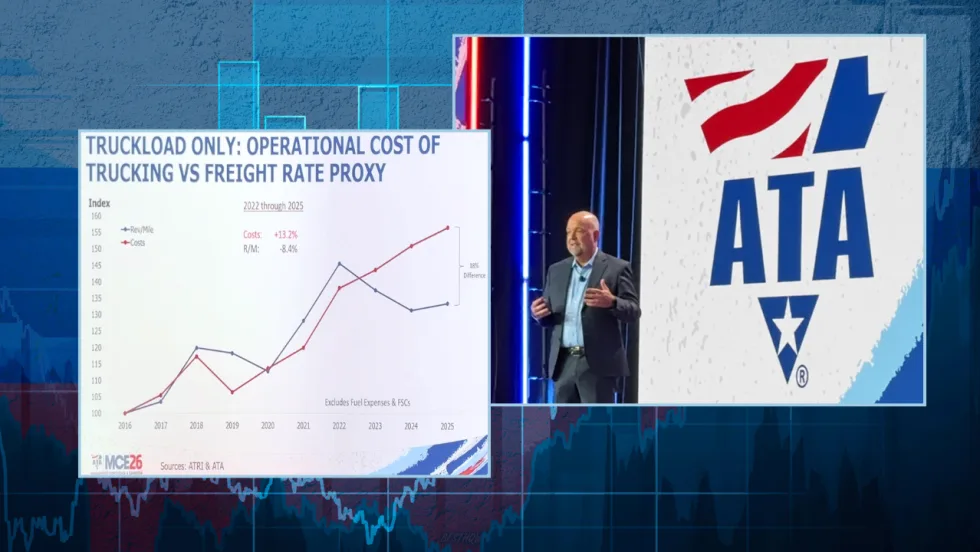
Freight demand remains sluggish, but rising costs and tougher enforcement have taken enough capacity out of the market to change the outlook for motor carriers.
Read More →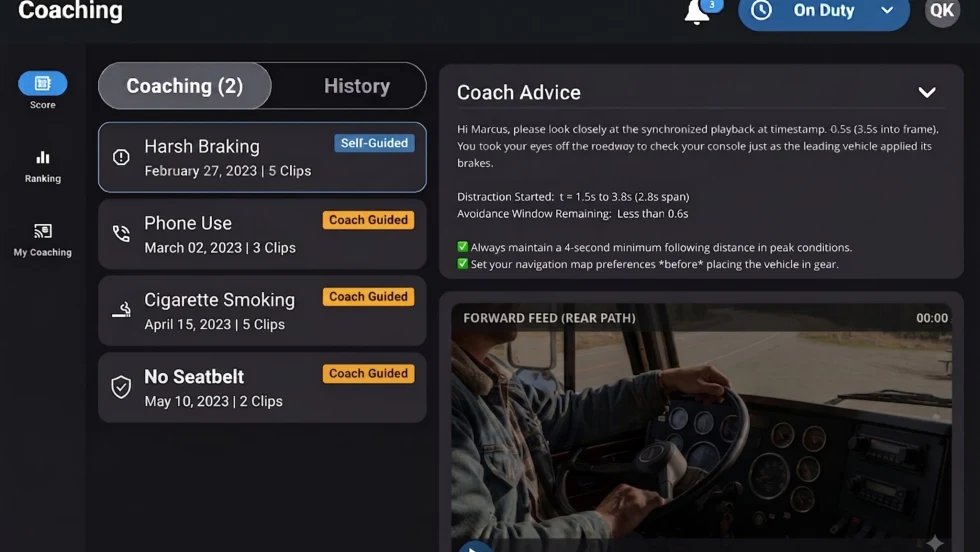
Platform Science Adds Dispatch and Safety Tools
Four additions to PS Fleet help fleets monitor loads, manage driver coaching, share truck locations and adjust video system settings.
Read More →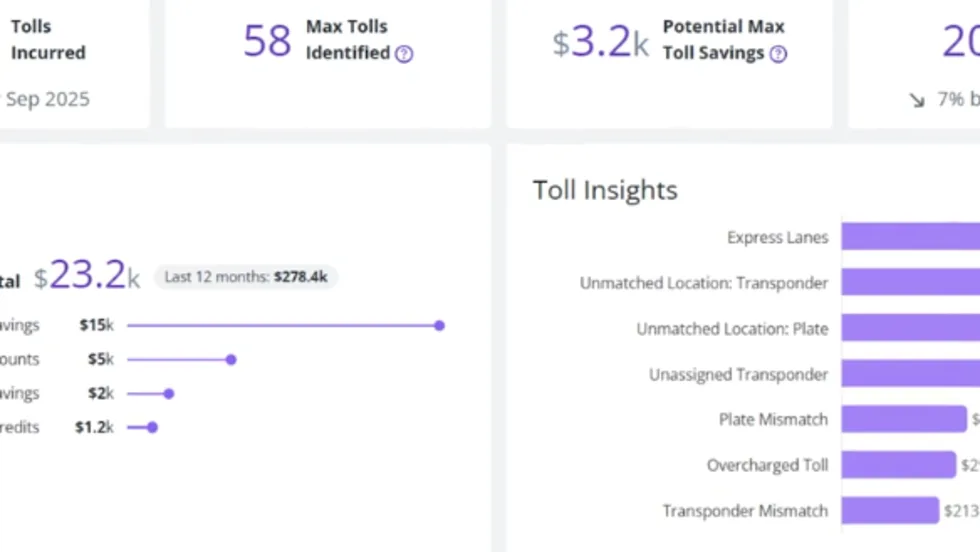
PrePass Intelligence Mines Fleet Bypass, Toll and Safety Data
PrePass Intelligence helps fleets measure bypass savings, flag potential toll overcharges, and spot suspicious transactions by combining data from separate systems.
Read More →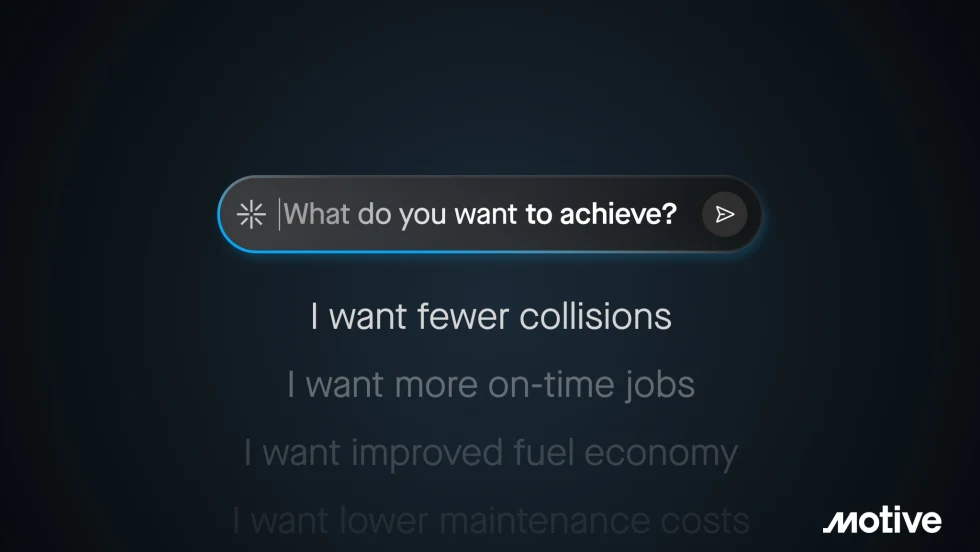
Motive Adds AI Agents for Fleet Operations
New tools automate follow-up on fleet data, from maintenance work orders to driver alerts, with two-way voice conversations planned for later this year.
Read More →
Can You Beat Our Trucking Trivia Challenge?
Test your truck knowledge with 19 trivia questions from Heavy Duty Trucking Exchange. Can you keep up with the fleet pros?
Read More →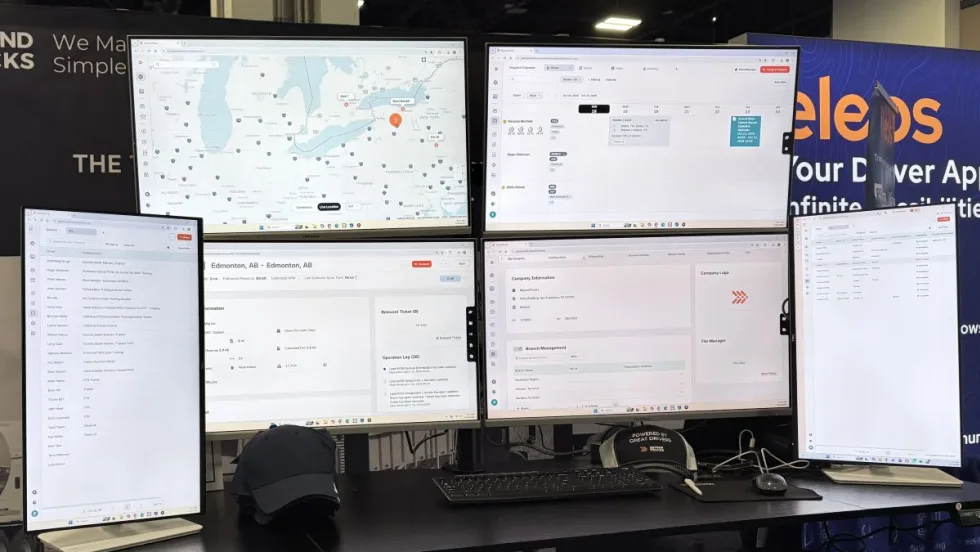
BeyondTrucks Adds Rules Checks to Dispatch
New Compatibility Engine checks driver qualifications, equipment requirements and fleet policies before loads are dispatched.
Read More →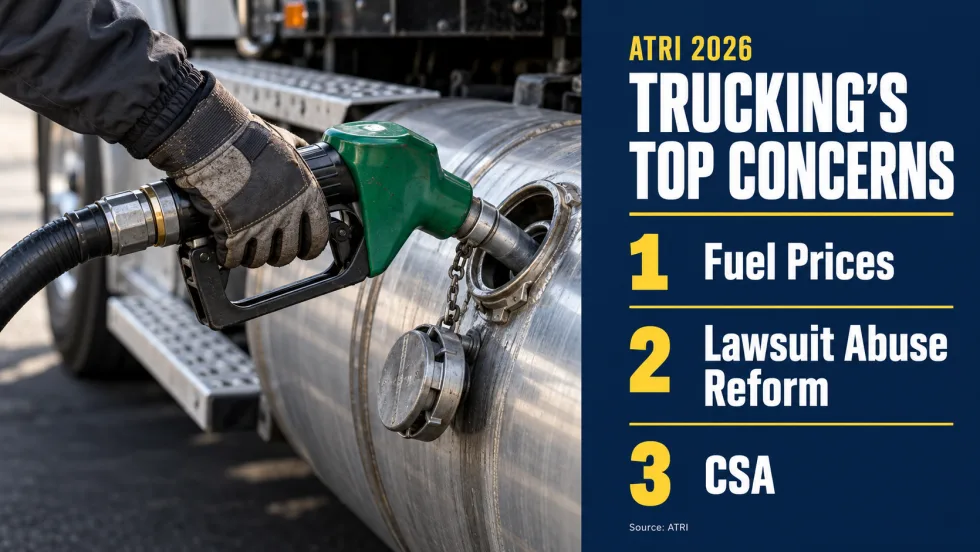
Diesel Prices Hijack Trucking’s Worry List
ATRI’s annual survey finds cautious optimism about freight, but diesel costs, litigation, and insurance continue to squeeze fleets. Drivers have different priorities on several issues.
Read More →
Nomination Deadline Extended for HDT Emerging Leaders
Just a few more days to nominate accomplished trucking fleet professionals under 40 who are making an impact and helping lead the industry forward for the HDT Emerging Leaders award. Deadline extended to October 20!
Read More →
What Will ATA’s New Leader Bring to Trucking's Table?
Incoming President and CEO Mark Colson’s record in Alabama offers clues about his priorities and approach following Chris Spear’s abrupt departure as the head of the American Trucking Associations.
Read More →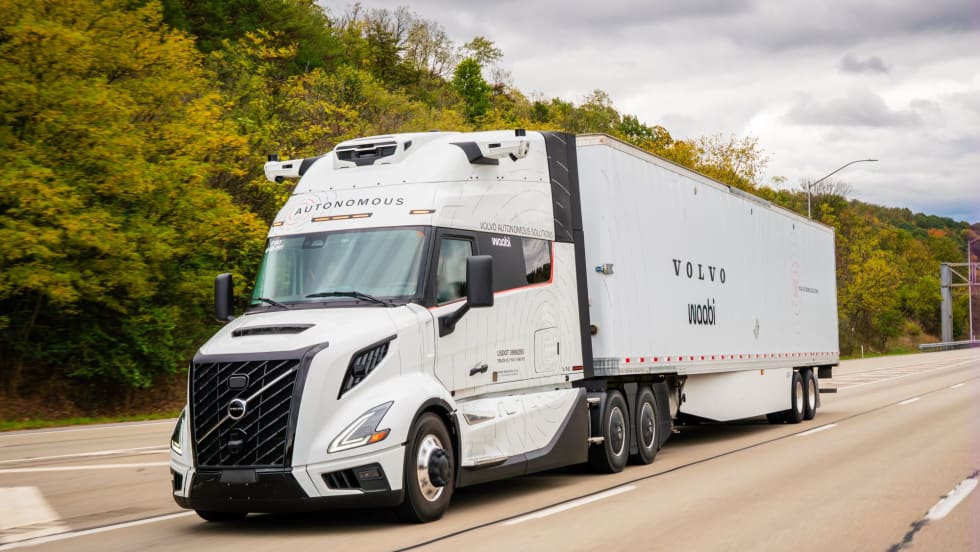
Volvo, Waabi Start Commercial Autonomous Operations in Texas
Volvo VNL Autonomous trucks, powered by the Waabi Driver, are hauling freight directly to third-party facilities for a customer in Texas.
Read More →