




ABI Research: Fleets Getting Safer, Saving Money
All new technology costs money, and fleet managers are constantly faced with deciding whether to pay for the latest safety systems or hope that their drivers do not get involved in accidents. But now test result
All new technology costs money, and fleet managers are constantly faced with deciding whether to pay for the latest safety systems or hope that their drivers do not get involved in accidents.
But now test results
are in for a variety of new applications, and the news is good. Typical ROI calculations show break-even in as little as nine months. Even the more conservative analyses deliver payback in less than two years. These numbers mean that the market is poised for significant growth.
"Fleet managers have an advantage over individual operators or consumers because they can deal with average accident costs rather than trying to estimate whether an individual vehicle is likely to be in a crash," says ABI Research principal analyst David Alexander. "Because the combined cost of the vehicle and its cargo is typically high, avoiding even a small number of accidents in a year will pay to equip an entire fleet with one of the latest active safety systems."
The key for fleet managers is to decide which of the technology offerings can best deliver the desired results. Are most accidents caused by unintended lane change, leaving the road, rear-ending a slower vehicle in front, or missing an obstacle in the blind spot? Systems are available for blind-spot detection (BSD), lane departure warning (LDW), or adaptive cruise control (ACC)/headway warning.
"Some of the systems are integrated into the vehicle build, which is essential for an application such as ACC that can control the vehicle speed," says Alexander. "But many of the warning systems are self-contained and can operate in isolation. They are available as a new truck option or in the aftermarket, so the benefits can be extended to existing fleets as well as being rolled out in replacement vehicles."
The latest systems take advantage of developments in the consumer vehicle and consumer electronics markets, and are bringing some healthy competition. Healthy growth bodes well for companies such as Cognex, Delphi, Eaton, Iteris, Knorr Bremse, Meritor, Mobileye and Transportation Safety Technologies.
A new research brief from ABI Research, "Commercial Vehicle Driver Assistance" examines the growth potential through 2012 for three of the main driver assistance applications: blind spot detection, lane departure warning, and adaptive cruise control. It is a component of the firm's Driver Assistance Research Service, which includes other briefs, full-length Research Reports, ABI Insights, and analyst inquiry support.
ABI Research is a market research firm focused on the impact of emerging technologies on global consumer and business markets. For information, visit www.abiresearch.com or call (516) 624-2500.
More Safety & Compliance
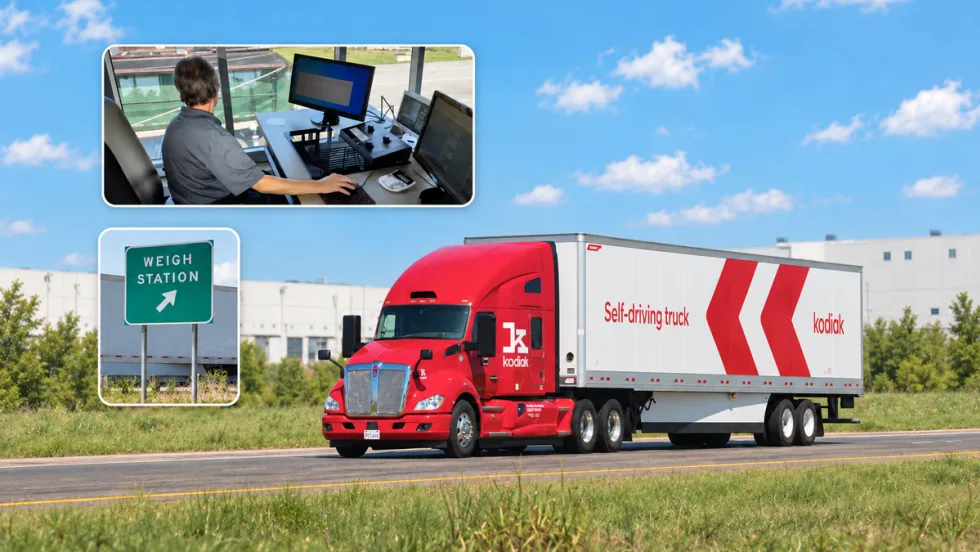
PrePass, Kodiak Connect Driverless Trucks to Roadside Enforcement
The system will allow enforcement agencies to verify Enhanced Inspection information and decide whether Kodiak’s autonomous trucks can bypass roadside screening sites.
Read More →
From One Generation to the Next: How Mentorship Builds Safer Truck Drivers
After three decades in trucking, Harold Perry shares what he's learned about driver safety, mentorship, and helping the next generation build confidence behind the wheel.
Read More →
FMCSA Pauses Biennial-Update Enforcement Amid Motus Transition
Carriers whose updates were due on or after June 1 have more time, while FMCSA works to stabilize its new registration system and warns of phishing sites impersonating its new carrier registration system, Motus.
Read More →
ZF Expands Commercial Vehicle Push in North America
ZF is expanding its North American commercial-vehicle presence with new transmission applications, electrification, trailer technology and autonomous-driving systems.
Read More →
Truck Drivers Need More Than Another Alert
Fleets have more visibility into truck health, safety events, and driver activity than ever. The next challenge is turning all that information into useful guidance for the person who has to decide what to do next.
Read More →
Tesla Wants a Self-Driving Semi. Are Cameras Enough?
Could Tesla’s camera-only autonomous driving technology work on an 80,000-pound Semi? In this commentary, HDT's Deborah Lockridge takes a look at Tesla, Cybercab, and how autonomous trucks see the road.
Read More →
What DOT’s Automated Vehicle Strategy Means for Trucking
The U.S. Department of Transportation issued a new automated-vehicle strategy that outlines plans for driverless-truck regulations, cross-state freight corridors, and federal safety standards.
Read More →
NYC Expands Speed, Pedestrian Safety Tech Across Fleet
New York City is expanding intelligent speed assistance and pedestrian-alert systems across its municipal fleet, moving the technologies from pilot programs into vehicle procurement and retrofit requirements.
Read More →
FMCSA Removes 110 Truck Driver Training Schools from Certified ELDT List
Federal regulators also are targeting more than 160 additional training providers and launching a nationwide audit of third-party CDL skills testers as part of a broader crackdown on trucking fraud.
Read More →
Beyond DOT Compliance: What Makes a Trucking Fleet Truly Safe?
A trucking fleet can follow every rule and still make unsafe decisions. The real test comes when safety conflicts with freight, productivity, or cost.
Read More →