




AAA Study: Behind-the-Wheel Cell Phone Users More Likely to Speed and Drive Drowsy
Motorists who use cell phones while driving are more likely to engage in additional dangerous behaviors such as speeding, driving drowsy, driving without a seatbelt and sending texts or e-mails, according to a survey conducted by the AAA Foundation for Traffic Safety.


Motorists who use cell phones while driving are more likely to engage in additional dangerous behaviors such as speeding, driving drowsy, driving without a seatbelt and sending texts or e-mails, according to a survey conducted by the AAA Foundation for Traffic Safety.
Additionally, more than two-thirds (69%) of licensed drivers reported talking on a cell phone while driving within the past month, despite the fact that nearly nine in 10 respondents (89%) believe other drivers using cell phones are a threat to their personal safety.
"Ninety percent of respondents believe that distracted driving is a somewhat or much bigger problem today than it was three years ago, yet they themselves continue to engage in the same activities," said Peter Kissinger, president and CEO of the AAA Foundation for Traffic Safety.
"More work clearly is needed to educate motorists on the risks associated with using a cell phone while driving, especially given that most Americans believe this problem is becoming worse."
Motorists who fairly often or regularly used their cell phones over the past month also reported that they engaged in additional risky behaviors. The research shows:
- 65% also reported speeding.
- 44% also reported driving while drowsy.
- 53% also reported sending a text or e-mail.
- 29% also drove without a seatbelt.
Conversely, drivers that reported never using a cell phone were much less likely to report additional risky behaviors:
- 31% reported speeding.
- 14% reported driving drowsy.
- 3% reported sending a text or email.
- 16% drove without a seatbelt.
Despite the near-universal disapproval of texting and e-mailing while driving (95%), more than one in four licensed drivers (27%) reported sending a text or e-mail at least once in the past 30 days, and more than one-third (35%) said they read a text or e-mail while driving.
Young drivers age 16-24 were even more likely, with more than half (61%) reporting having read a text or e-mail while driving in the past month, while more than one in four (26%) reported checking or updating social media while driving.
"What concerns AAA is this pattern of risky behavior that even goes beyond cell phone use," said Kathleen Bower, AAA vice president of public affairs. "These same cell phone-using drivers clearly understand the risk of distraction, yet are still likely to engage in a wide range of dangerous driving activities."
Driver use of cell phones impairs reaction times and roughly quadruples crash risk. Additionally, the National Highway Traffic Safety Administration reports that more than 3,000 people are killed and nearly half a million are injured each year in crashes involving distraction.
This is likely an underestimate, given the challenges associated with determining the role of distraction in crashes.
AAA and the AAA Foundation for Traffic Safety have long been leading advocates in educating motorists about the risks of distracted driving. AAA recommends that motorists turn off their phone before driving or pull over to a safe place to talk, send texts or use e-mail.
AAA also has launched a legislative campaign to advocate for a text messaging ban in all 50 states. To date, 39 states and the District of Columbia have adopted this key traffic safety measure and AAA expects all 11 remaining states to consider this legislation in 2013.
The distraction data were collected as part of the AAA Foundation's "2012 Traffic Safety Culture Index," a nationally representative, probability-based survey of 3,896 U.S. residents ages 16 and older.
The sample is representative of all U.S. households reachable by telephone or by regular mail. The questionnaire was made available in English and Spanish, and respondents were able to complete it in the language of their choice.
The AAA Foundation for Traffic Safety provides additional details in the "2012 Traffic Safety Culture Index," and as part of a report called "Distracted and Risk-Prone Drivers."
More Safety & Compliance
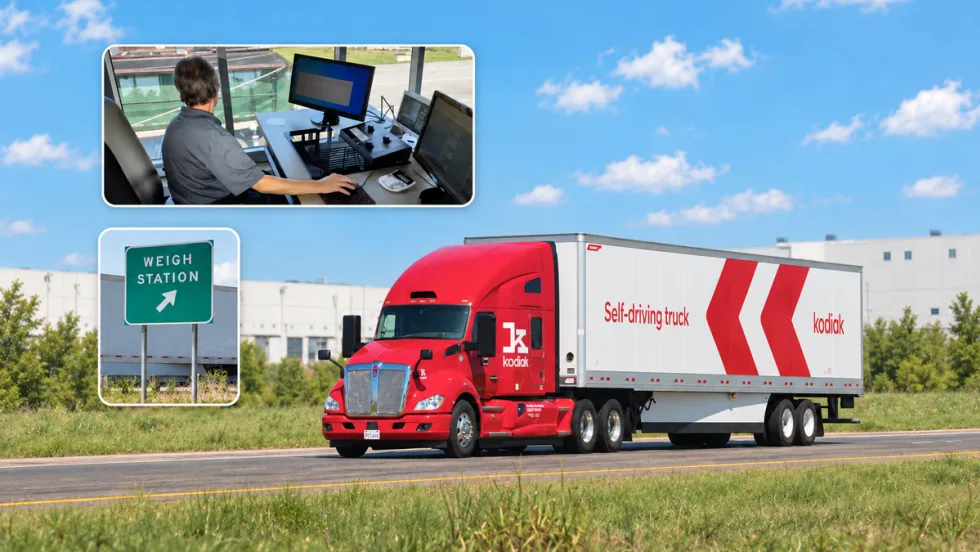
PrePass, Kodiak Connect Driverless Trucks to Roadside Enforcement
The system will allow enforcement agencies to verify Enhanced Inspection information and decide whether Kodiak’s autonomous trucks can bypass roadside screening sites.
Read More →
From One Generation to the Next: How Mentorship Builds Safer Truck Drivers
After three decades in trucking, Harold Perry shares what he's learned about driver safety, mentorship, and helping the next generation build confidence behind the wheel.
Read More →
FMCSA Pauses Biennial-Update Enforcement Amid Motus Transition
Carriers whose updates were due on or after June 1 have more time, while FMCSA works to stabilize its new registration system and warns of phishing sites impersonating its new carrier registration system, Motus.
Read More →
ZF Expands Commercial Vehicle Push in North America
ZF is expanding its North American commercial-vehicle presence with new transmission applications, electrification, trailer technology and autonomous-driving systems.
Read More →
Truck Drivers Need More Than Another Alert
Fleets have more visibility into truck health, safety events, and driver activity than ever. The next challenge is turning all that information into useful guidance for the person who has to decide what to do next.
Read More →
Tesla Wants a Self-Driving Semi. Are Cameras Enough?
Could Tesla’s camera-only autonomous driving technology work on an 80,000-pound Semi? In this commentary, HDT's Deborah Lockridge takes a look at Tesla, Cybercab, and how autonomous trucks see the road.
Read More →
What DOT’s Automated Vehicle Strategy Means for Trucking
The U.S. Department of Transportation issued a new automated-vehicle strategy that outlines plans for driverless-truck regulations, cross-state freight corridors, and federal safety standards.
Read More →
NYC Expands Speed, Pedestrian Safety Tech Across Fleet
New York City is expanding intelligent speed assistance and pedestrian-alert systems across its municipal fleet, moving the technologies from pilot programs into vehicle procurement and retrofit requirements.
Read More →
FMCSA Removes 110 Truck Driver Training Schools from Certified ELDT List
Federal regulators also are targeting more than 160 additional training providers and launching a nationwide audit of third-party CDL skills testers as part of a broader crackdown on trucking fraud.
Read More →
Beyond DOT Compliance: What Makes a Trucking Fleet Truly Safe?
A trucking fleet can follow every rule and still make unsafe decisions. The real test comes when safety conflicts with freight, productivity, or cost.
Read More →