




400 Trucking and Warehousing Companies On OSHA's Priority List
Over 400 companies in trucking or related business may soon get a special visit from OSHA safety inspectors. The Occupational Safety and Health Administration last week notified some 13,000 businesses that their work related accident and illness rates were too high and corrective action would have to be taken.
Over 400 companies in trucking or related business may soon get a special visit from OSHA safety inspectors. The Occupational Safety and Health Administration last week notified some 13,000 businesses that their work related accident and illness rates were too high and corrective action would have to be taken.
The national average in 1998 was three injuries or illnesses per 100 workers. These companies has eight or more incidents per 100 workers. Approximately 4,200 work sites with the highest number of incidents will be targeted for comprehensive inspections. The rest have been advised to step up safety programs and even seek assistance from safety consultants or state OSHA agencies.
OSHA will not disclose exactly which of the 13,000 companies are on the priority inspection list. It’s also difficult to determine the precise types of operations included in truck-related classifications. The agency looked at statistics from approzimately 80,000 businesses in 24 Standard Industrial Classification Codes including trucking and courier services (except air), trucking terminal facilities and public warehousing and storage -- all lumped generally as truck-related.
An earlier analysis by the American Trucking Assn’s in fact indicates that occupational injuries and illnesses in the trucking industry are declining. Based on statistics compiled by the Bureau of Labor Statistics the accident and illness rate for the trucking and warehouse industry was 5.4 per 100,000 workers in 1997 and 4.6 in 1998. Accidents for trucking are generally injuries due to slips, falls, and improper use of equipment. Injuries are due mainly to cumulative trauma disorders such as noise induced hearing loss and repetitive stress injuries. The rates used here are for accidents or illnesses that result in lost workdays, a criteria also used in the OSHA site targeting program.
More Safety & Compliance
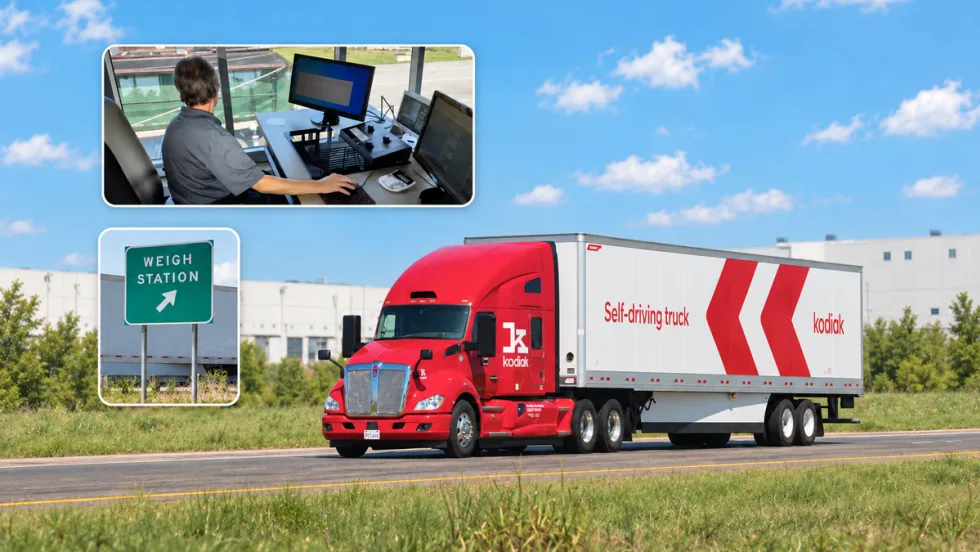
PrePass, Kodiak Connect Driverless Trucks to Roadside Enforcement
The system will allow enforcement agencies to verify Enhanced Inspection information and decide whether Kodiak’s autonomous trucks can bypass roadside screening sites.
Read More →
From One Generation to the Next: How Mentorship Builds Safer Truck Drivers
After three decades in trucking, Harold Perry shares what he's learned about driver safety, mentorship, and helping the next generation build confidence behind the wheel.
Read More →
FMCSA Pauses Biennial-Update Enforcement Amid Motus Transition
Carriers whose updates were due on or after June 1 have more time, while FMCSA works to stabilize its new registration system and warns of phishing sites impersonating its new carrier registration system, Motus.
Read More →
ZF Expands Commercial Vehicle Push in North America
ZF is expanding its North American commercial-vehicle presence with new transmission applications, electrification, trailer technology and autonomous-driving systems.
Read More →
Truck Drivers Need More Than Another Alert
Fleets have more visibility into truck health, safety events, and driver activity than ever. The next challenge is turning all that information into useful guidance for the person who has to decide what to do next.
Read More →
Tesla Wants a Self-Driving Semi. Are Cameras Enough?
Could Tesla’s camera-only autonomous driving technology work on an 80,000-pound Semi? In this commentary, HDT's Deborah Lockridge takes a look at Tesla, Cybercab, and how autonomous trucks see the road.
Read More →
What DOT’s Automated Vehicle Strategy Means for Trucking
The U.S. Department of Transportation issued a new automated-vehicle strategy that outlines plans for driverless-truck regulations, cross-state freight corridors, and federal safety standards.
Read More →
NYC Expands Speed, Pedestrian Safety Tech Across Fleet
New York City is expanding intelligent speed assistance and pedestrian-alert systems across its municipal fleet, moving the technologies from pilot programs into vehicle procurement and retrofit requirements.
Read More →
FMCSA Removes 110 Truck Driver Training Schools from Certified ELDT List
Federal regulators also are targeting more than 160 additional training providers and launching a nationwide audit of third-party CDL skills testers as part of a broader crackdown on trucking fraud.
Read More →
Beyond DOT Compliance: What Makes a Trucking Fleet Truly Safe?
A trucking fleet can follow every rule and still make unsafe decisions. The real test comes when safety conflicts with freight, productivity, or cost.
Read More →