




19 States Challenging EPA Waivers for California Plan
Missouri has joined a coalition of 19 states that are challenging an Environmental Protection Agency decision on California’s Advanced Clean Trucks regulation.


Missouri and Iowa are the latest states to join a coalition challenging the EPA's approval of waivers for California’s Advanced Clean Trucks regulation.
Photo: Canva
The Missouri attorney general this week announced his state has joined a coalition, comprising the attorney generals of 19 states, that is challenging an Environmental Protection Agency decision on California’s Advanced Clean Trucks regulation.
In March, the EPA granted two requests for “waivers of preemption.” Those enable the California Air Resources Board to drastically tighten its heavy-duty vehicle and engine emission standards beyond those of the federal government.
The Advanced Clean Trucks rule has two components — a manufacturer sales requirement and a reporting requirement:
Zero-Emission Truck Sales
Manufacturers who certify Class 2b to Class 8 chassis or complete vehicles with combustion engines will be required to sell zero-emission trucks as an increasing percentage of their annual California sales from 2024 to 2035. By 2035, zero-emission truck/chassis sales would need to be 55% of Class 2b to Class 3 truck sales, 75% of Class 4 to Class 8 straight truck sales, and 40% of truck tractor sales.
Company and Fleet Reporting
Large employers, including retailers, manufacturers, brokers, and others, will be required to report information about shipments and shuttle services. Fleet owners with 50 or more trucks will be required to report about their existing fleet operations.
Opposition
Seventeen states filed a petition for review in the U.S. Court of Appeals for the District of Columbia Circuit, in May, challenging the EPA’s decision to reinstate California’s Clean Air Act waivers. Petitioners now include the states of Alabama, Arkansas, Georgia, Indiana, Iowa, Kansas, Kentucky, Louisiana, Mississippi, Missouri, Montana, Nebraska, North Dakota, Ohio, Oklahoma, South Carolina, Utah, West Virginia, and Wyoming.
Missouri is the latest to join the list of plaintiffs.
“I will always fight to protect Missouri businesses, and that includes the trucking community that is vital to the success of our state,” said Missouri Attorney General Andrew Bailey, in a press release. “Joe Biden is partnering with California to attempt to upend Missouri’s economy through the federal administrative state, and my office isn’t going to stand for it."
Bailey’s press release also called the California ban part of the Biden Administration’s “aggressive climate change agenda,” adding that electric trucks are costly. The press release also stated California’s new regulations are setting the standard for the rest of the country; eight other states have already adopted California’s truck ban under EPA’s permission and more are considering it.
Iowa Attorney General Breanna Bird led the coalition pushing back against EPA’s waiver approvals and the California plan.
“The EPA and California have no right or legal justification to force truckers to follow their radical climate agenda,” said Bird in a press release. “America would grind to a halt without truckers who deliver our food, clothes, and other necessities. But rather than support our hard-working truckers, Biden continues to empty their wallets and force them to drive electric trucks for his radical climate change agenda. Iowa isn’t going to take a backseat as the EPA and California try to regulate truckers out of business. We’re pushing back.”
Read the full petition for review here.
More Equipment

Tesla Wants a Self-Driving Semi. Are Cameras Enough?
Could Tesla’s camera-only autonomous driving technology work on an 80,000-pound Semi? In this commentary, HDT's Deborah Lockridge takes a look at Tesla, Cybercab, and how autonomous trucks see the road.
Read More →
Kodiak: Driverless Long-Haul Truck Launch on Track for 2026
Kodiak AI says its driverless long-haul safety case is 93% complete and it remains on track to begin commercial operations by year-end 2026.
Read More →
What DOT’s Automated Vehicle Strategy Means for Trucking
The U.S. Department of Transportation issued a new automated-vehicle strategy that outlines plans for driverless-truck regulations, cross-state freight corridors, and federal safety standards.
Read More →
East Coast Port Launches $45M Electric Truck Push
The Port Authority of New York and New Jersey announced millions in incentives for zero-emission drayage trucks, yard tractors, and new charging hubs near the port.
Read More →
PlusAI Going Public to Fund Autonomous Truck Launch
A SPAC deal could provide PlusAI with up to $300 million as it works toward a 2027 commercial launch of factory-built autonomous trucks.
Read More →
NHTSA Moves to Rewrite Truck Fuel-Economy Rules
The National Highway Traffic Safety Administration says it lacks authority to regulate medium- and heavy-duty truck engines separately from complete vehicles, but the existing standards have not yet been eliminated.
Read More →
Detroit Opens Orders for EPA 2027 Engines
Detroit isn’t starting from scratch to meet EPA 2027 diesel emissions standards. Its Gen 6 DD13 and DD15 engines keep much of today’s platform while updating the fuel and aftertreatment systems.
Read More →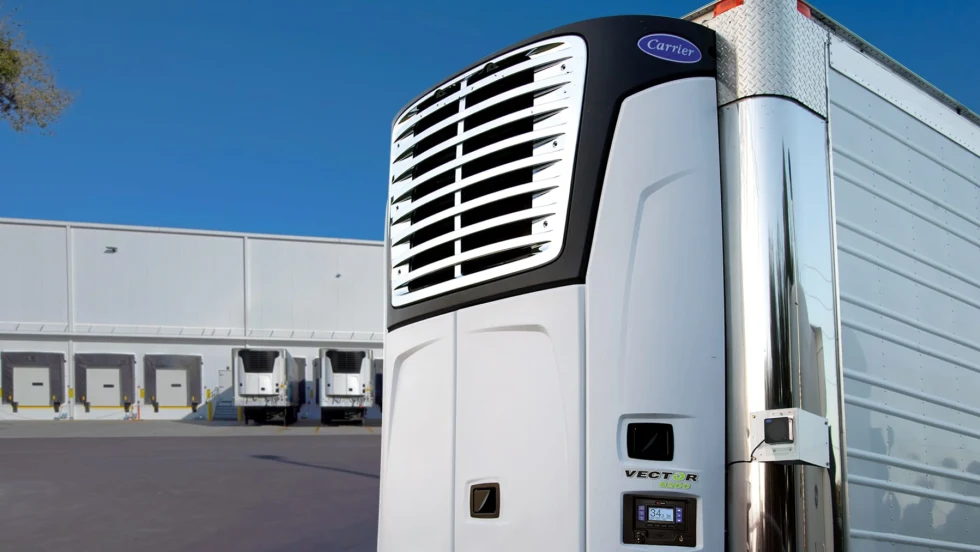
Carrier Transicold Adds All-Electric TRU for Stationary Cold Storage
Carrier Transicold’s new Vector 8200 all-electric transport refrigeration unit gives fleets a diesel-free option for temporary refrigerated and frozen trailer storage.
Read More →
A Closer Look at Kenworth’s Electric T880E Vocational Truck [Video]
Learn more about Kenworth's T880E battery-electric vocational truck at the Paccar Technical Center, including its range, applications, upfitting considerations, and PTO options, in this HDT Spotlight video.
Read More →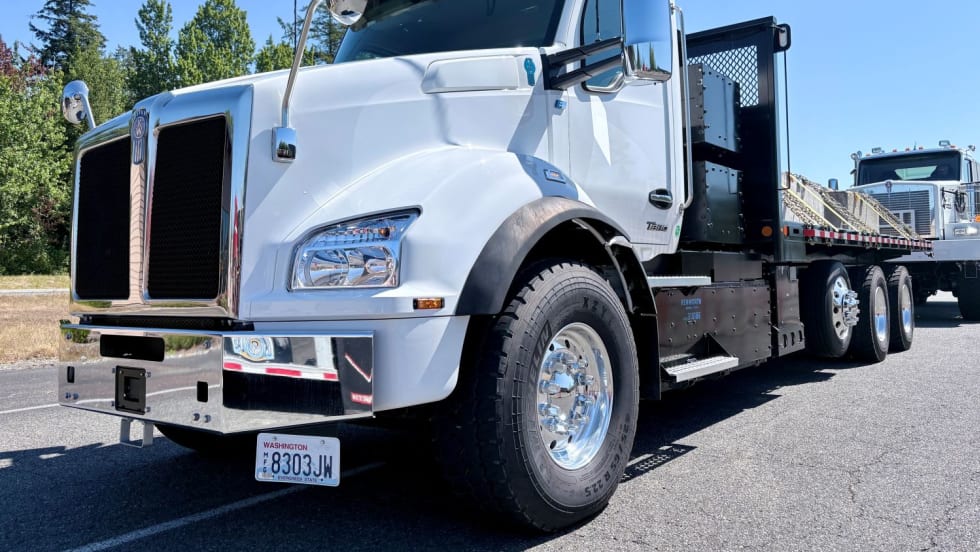
Kenworth T880E Brings EV Power to Vocational Trucks
A closer look at the Kenworth T880E’s range, charging, powertrain and upfit options — and where fleets are showing the most interest.
Read More →