




5 Ways to Improve Vehicle Underperformance
Underperforming vehicles are even more of a drag to a fleet's bottom line than downtime, contends this author. What can you do about it?

Without the right combination of vehicle specs, digital tools, and advanced analytics, underperformance often lingers undiagnosed and unaddressed.
Photo: Uptake
When fleets consider the deadweight on their bottom line, chief among them is downtime. Whether it’s because of a roadside breakdown or scheduled service, downtime is typically a visible and addressable problem for fleets.
But underperformance — when a vehicle, component, or shop falls below expected levels of productivity — is just as much of a challenge. And its subtlety often makes it more difficult and costly for carriers to uncover and correct.
Recent data from the American Trucking Associations shows just how much of a difference proactive intervention in underperformance can make. The top-performing truck fleet ran three times as many miles between breakdowns as the average carrier. Without the right combination of vehicle specs, digital tools, and advanced analytics, underperformance often lingers undiagnosed and unaddressed. Fleet management has a critical role to play in maximizing the lifetime return of their vehicles.
Two sources of these performance efficiencies are through repair networks and replacement parts inventory. While they don’t directly address issues with vehicle underperformance, both offer downstream opportunities to keep trucks up and running. Shops in the right places with the necessary parts available can lead to a repair instead of a replacement, enabling maintenance teams to limit the severity of downtime events and get out ahead of pending vehicle failures at the proper time.
But proactively identifying issues with underperformance, or preventing them in the first place, provides fleets with definitive ways to improve fleet efficiency.
Here are five ways to directly combat vehicle underperformance.
1. Aerodynamic devices
While nose cones, wheel covers, gap closure devices, and the like are not viable add-ons for every
vehicle, they are resulting in better fuel mileage on the road for many fleets. Adding various trailer skirts, for example, can realize savings of nearly 900 gallons per year for an average Class 8 truck logging 100,000 miles each year, according to the North American Council for Freight Efficiency, translating into a couple thousand dollars in savings per truck annually. And those drag reductions are over and above the sleeker, cleaner, more efficient vehicles coming off production lines in recent years, which are generating just about 1/60th of the emissions of a truck manufactured three decades ago.
2. Idle reduction
Roughly 3 billion gallons of fuel are burned each year in the United States by medium- and heavy-duty vehicles that are not moving, according to Argonne National Laboratory. Whether a driver is taking a break or sitting at the dock, just one hour of idling per day for a year tacks on the equivalent of 64,000 miles in engine wear.
Engine wear leads to vehicle underperformance and shortens the mean time between failure.
Incentivizing driver behavior, including through such means as in-cab video-based coaching platforms and bonus programs, is helping many fleets to reduce idling. Beyond driver-based methods, predictive analytics can detect excessive idling and alert fleet managers to persistent challenges with idling.
3. Telematics-backed driver coaching
Leveraging telematics data as a driver coaching tool, in addition to improving fuel economy, pushes fleet managers to make smarter vehicle utilization and capacity decisions. When paired with contextual information such as weather, road grade, and traffic speed, as well as work order history, telematics data can illustrate optimal driving for a specific route. The combination of that data provides further insight and feedback for driver training programs to bolster vehicle performance.
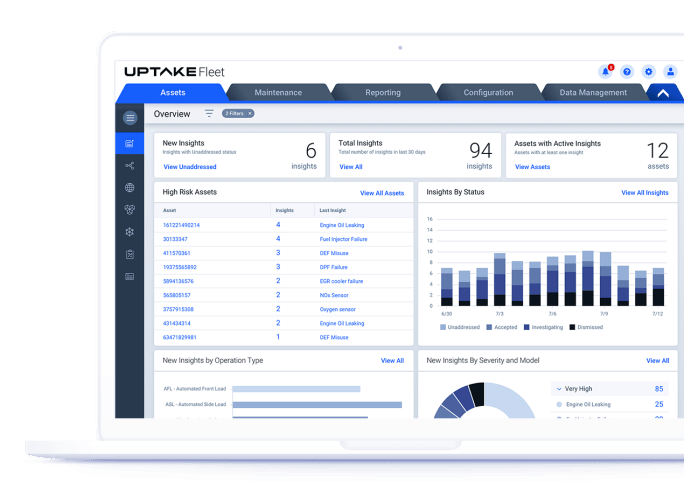
Proactively identifying issues with underperformance, or preventing them in the first place, helps improve fleet efficiency.
Photo: Uptake
Because predictive analytics may recommend a vehicle undergo service before an issue is clear to a driver, many drivers may initially be wary that analytics are cutting into their time on the road. Over time, though, the value to drivers of maximizing their drive time becomes more apparent. Mitigated or prevented breakdowns convert events that would otherwise result in unscheduled (and unpaid) downtime into planned service events, ensuring driver safety and greater vehicle availability.
4. Regular vehicle performance benchmarks
Enhanced vehicle performance through improved efficiency, reduced idling, and better aerodynamics all rest on a standard metric of comparison between current and optimal performance.
Fault-code diagnostics can point fleet managers to pending vehicle issues, but dirty data, insufficient supporting evidence, and imprecise notifications are often not able to provide enough lead time for shops.
Predictive analytics advance enough lead time to evaluate vehicle underperformance before it results in extended downtime or derates that put delivery at risk. With a mixed fleet, a cross-asset view provided by many digital fleet management systems can provide precise, vehicle-specific data signatures that correspond with regular thresholds set by fleets themselves. As a result, many fleets can treat issues before they sideline a vehicle.
5. Standardized maintenance practices
Across individual technicians, shops, and regions, a single real-time view provided by digital fleet management solutions can also empower fleets to promote best maintenance practices.
For fleets with many different shops and their own data input customs, data cleansing and organization can provide a normalized view of all maintenance activities. That maintenance benchmark offers proof for standard technician performance across a fleet and can indicate which specific shops may need more training.
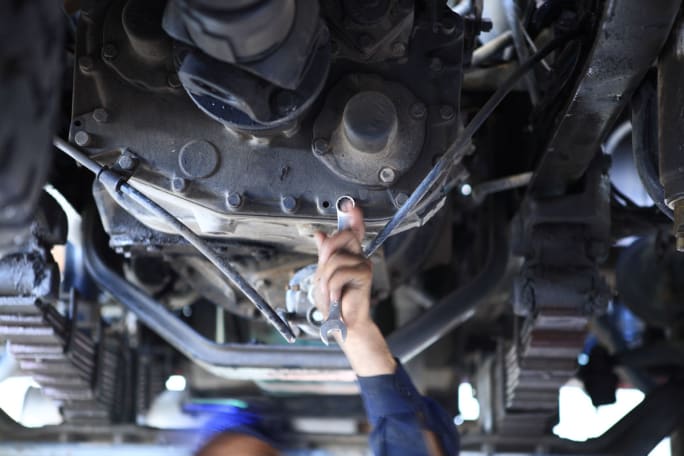
Mitigated or prevented breakdowns convert events that would otherwise result in unscheduled (and unpaid) downtime into planned service events, ensuring driver safety and greater vehicle availability.
Photo: Uptake
In turn, standardizing best maintenance practices also becomes a training aid. Especially for a newer generation of technicians, digital tools such as virtual diagnostics and predictive analytics make expertise accessible on-demand. Many shops short on expert technicians are leveraging digital tools to supplement traditional on-the-job training and lighten the coaching burden on trainers.
When expertise is the price of optimal vehicle performance, both in the cab and in the shop, tools such as aerodynamics devices and video-based driver coaching platforms can paper over those years of experience and improve vehicle underperformance.
Though often more challenging to address, persistent issues with vehicle availability and productivity are costly for drivers, technicians, and fleets. With coordination between drivers and shops, fleets can determine how best to meet their capacity demands and customer needs.

Braden Pastalaniec, VP of Transportation and Logistics at Uptake
Photo: Uptake
Braden Pastalaniec is vice president of transportation and logistics at Uptake, a provider of industrial artificial intelligence and analytics for trucking and other industries. This article was authored and edited according to HDT editorial standards and style to provide useful information to our readers. Opinions expressed may not reflect those of HDT.
More Blog Posts

Fragmented AI: Why Trucking Must Take Security More Seriously
As AI becomes embedded throughout transportation operations, the result can be a tech environment that looks more advanced on paper, but isn't necessarily more efficient, secure, or manageable in practice.
Read More →
We've Been Thinking About Truck Uptime Backward
The truck repair operations that minimize downtime aren’t necessarily the ones with the fastest technicians. They’re the ones who have the part.
Read More →
The Real Cost of Trailer Tires: Why It's Not Just a Maintenance Problem Anymore
Tire wear isn't random. The trucking fleet with a tire program that knows which trailers, positions, and routes are punishing tires the hardest is the one that buys fewer of them.
Read More →
A New Argument for Electrification: Managing Fuel Volatility
As oil prices surge amid Middle East conflict and a blocked Strait of Hormuz, fleets are feeling the squeeze in real time. In this guest column, Geotab's Neil Cawse argues electrification is no longer just about sustainability or ROI — it’s about insulating operations from what he calls a "volatility tax."
Read More →
The Time is Now to Expand Longer Combination Vehicles [Opinion]
The reauthorization of the federal highway bill offers a rare chance to advance double 53-foot LCVs. Industry leaders shouldn’t miss it, says a longtime trailer industry professional in this Guest Voices blog post.
Read More →
The Hidden Costs of 'Free' Smart Trailer Tech Installations [Commentary]
Free installation of smart trailer technologies may sound good on paper, but you could end up paying down the road.
Read More →
Protecting Small Trucking Fleets from Scammers: Lessons from the Insurance Frontlines
Hijacked DOT numbers, fake invoices, and high-tech cargo theft are on the rise. A veteran trucking insurance broker shares how to spot trouble early — and why a trusted advisor may be your strongest defense.
Read More →
Tire Retreading Makes Sense for Trucking Fleets. H.R. 3401 Could Make It Even Smarter.
Retreaded tires offer trucking fleets cost savings, sustainability gains, and supply chain security. New legislation, H.R. 3401, could make retreads even more attractive and support U.S. jobs.
Read More →
Hydrogen Fuel Cell Trucks Are Ready for the Long Haul. Now Policymakers Must Act
Accelerating the growth of hydrogen-fuel-cell-truck adoption would help make zero-emission trucking is not only possible, but practical and profitable, argues the Center for Transportation and the Environment in this Guest Voices blog.
Read More →
A New Definition for Long-Haul Heavy-Duty Trucking
Understanding the various routes that make up long haul is important as we move through trucking’s Messy Middle — a time when fleets have a variety of powertrain solutions to choose from, writes NACFE's Mike Roeth.
Read More →