




Dig Deeper: Everything You Need to Know About Renewable Diesel
Why These Fleets Use Renewable Diesel Fuel
Fleets using renewable diesel fuel say it has reduced operating costs while cutting greenhouse emissions.
by Ronnie Wendt, Contributing Editor
April 19, 2022
Titan Freight Systems, a regional less-than-truckload carrier in the Pacific Northwest, found renewable diesel was the key to meeting its emissions goals.
Photo: Neste
7 min to read
Titan Freight Systems has provided overnight services across the Pacific Northwest since 1968. Today, the fleet has 45 trucks, 120 trailers, and 55 drivers on the road. Combined, these vehicles put on thousands of miles, consume volumes of fuel, and push out greenhouse gases as they move across Oregon, Washington and Idaho.
When Titan decided to reduce its emissions by 20% in 2010, the company saw reducing miles per gallon as the best way to achieve this goal. They installed air deflectors, side skirts, low-rolling-resistance tires, and other aerodynamic improvements to improve fuel efficiency.
Even with these efforts, by 2019, their investments had only reduced emissions by 6%. “We missed our goal by a mile,” says Keith Wilson, president and CEO. “We had to rethink what we were doing and instead look at emissions reduction. Miles per gallon is a symptom, not a solution.”
Titan discovered its solution in renewable diesel, which is chemically similar to petroleum but is 100% renewable and generates fewer emissions.
The switch paid off in spades. It led to a 36% emissions reduction over the entire three-state fleet and lowered its overall costs. Oregon, where Titan is based, has a low-carbon fuels program that results in renewable diesel fuel costing the same as petroleum diesel — and it has the added benefit of cutting fleet maintenance costs.
Titan’s story plays out in other fleets that have switched to renewable diesel. These fleets report using renewable diesel:
Reduces emissions.
Uses the same infrastructure as diesel with no additional costs.
Has no performance issues.
Reduces or eliminates regeneration.
Is cost-competitive in certain areas of the country.
What is Renewable Diesel?
Often, people use the terms renewable diesel and biodiesel interchangeably. But they are not the same, Wilson says.
Refiners make biodiesel from vegetable oils and/or animal fats, which they process through a method called transesterification. But this process can introduce oxygen into the fuel, which causes issues with freezing temperature, separation during storage, and algae growth. Biodiesel gets blended with petroleum diesel at a 5% to 20% ratio to mitigate these concerns.
Renewable diesel also uses renewable sources, but that’s where its similarities with biodiesel end. Refiners process fats, vegetable oils, and greases to make the product chemically similar to petroleum diesel. Because it’s hydrogenated, renewable diesel does not contain oxygen, eliminating the challenges of freezing temperatures and storage faced by biodiesel. With the same chemical structure as petroleum diesel, fleets don’t have to use blends; they can use 100% renewable diesel in engines that run on conventional diesel fuel.

"We haven’t had a single DPF issue since we switched," says Bill Crotinger, Argent Materials president and founder.
Photo: Neste
Renewable diesel, compared to petroleum diesel, offers a 60% emissions reduction on a gallon-to-gallon ratio, which is what first attracted President and founder Bill Crotinger. Argent Materials, a concrete and asphalt recycling center in Oakland, California, has used the fuel in its trucks and heavy equipment for two years. “We sought a product that would help our entire fleet move toward carbon neutrality,” he says.
Wilson says Titan found the fuel attractive because it has the same chemical composition as petroleum diesel. “Both renewable and petroleum diesel have the same ASTM D975 chemical code, which means it’s a drop-in replacement for petroleum.”
Now, when Titan trucks leave Portland at midnight, they do so with a full tank of renewable diesel. If they drive to an area where renewable diesel is unavailable, they can simply fill up with petroleum diesel. “I can mix and match to any amount I want,” Wilson says. “I have zero engine modifications, too. Nothing needs to change in my fleet.”
Renewable Sources Everywhere
The industry manufactures petroleum and renewable diesel using the same process. The difference is that one uses below-ground crude and the other uses above-ground oils. Both get refined the same way.
“Renewable diesel, much like biodiesel, is derived from waste agricultural products, particularly waste vegetable oils and waste animal fats,” says Allen Schaeffer, executive director of the Diesel Technology Forum. “As long as we grow soybeans and produce livestock, the waste derived after these products have been processed into food can be refined into a clean, low-carbon fuel.”
With renewable diesel, states can use their most plentiful renewable sources for fuel. Oregon, for instance, is developing processes to convert wood waste into renewable diesel. Iowa could use decaying corn husks for the same purpose. Companies in California are developing ways to use agricultural waste, such as almond shells. Large cities can convert biomass (or garbage) into fuel.
The City of Oakland, California, which started using renewable diesel in 2015, is working with renewable diesel provider Neste and its local fuel distributor to gather waste cooking oils from restaurants and cafeterias in the Oakland metropolitan area and converting it to fuel the city’s fleet.
“There’s a huge opportunity in the U.S., but not until we value renewables,” Wilson says. “Not until we value our waste.”
Improved Operations
When trucks run on renewable diesel, their operating characteristics remain the same or better, Wilson says.
The fuel offers oxidative stability for unlimited shelf life. “Renewable diesel never goes bad. It never has microbial issues like biodiesel,” Wilson says.
Titan reports operations are similar, while Argent Materials reports a slight improvement, which Crotinger attributes to the cleanliness of the fuel.

“There’s a huge opportunity in the U.S., but not until we value renewables,” says Keith Wilson, Titan president and CEO.
Photo: Neste
Reducing maintenance costs are where the fuel really shines, Wilson says. “Our fuel economy is the same with the product, but maintenance needs are vastly improved.”
Titan no longer must winterize its fleet to handle 20-below-zero temperatures in the Pacific Northwest. “I no longer blend it in the winter. We use straight renewable,” he says. “The Pacific Northwest is one of the coldest climates in the U.S., but we have had no cold flow plugging issues with renewable diesel.”
Renewable fuel produces 30% less soot and black carbon. Wilson says this means his exhaust systems never fail, drivers no longer must perform regens on the road, and the need for oil changes is reduced, he adds.
“We haven’t had to do a regeneration since we went to renewable fuel,” he says. “Before, regenerations were a common occurrence on the road and in the shop. We no longer replace diesel particulate filters. Now mechanics sample the oil and only change the oil if the sample shows a need. There is so little soot in the crankcase, we don’t need to change it” otherwise.
Crotinger agrees. “We haven’t had a single DPF issue since we switched. It’s cleaner fuel that just runs through the machines better.”
All this adds up to significant savings. Titan saves 1.1 cents per mile and operates 2 million miles a year, saving $20,000 with renewable diesel. Argent Materials sees lower operating costs as well. DPF replacement on large machinery equates to three days of downtime and costs about $10,000. Two years have passed since its equipment needed DPF replacements.
And as for carbon emissions? Titan would have produced 1,700 metric tons of carbon in 2021 with petroleum fuel. Instead it produced just 711. “If the industry did this across Oregon, we could reduce emissions and cut consumer costs by $65 million without taxing anyone,” he says. “We could have an almost 10% reduction in carbon emissions statewide, overnight.”
Safeguarding Health & Safety
An unsung gain is the health benefits renewable diesel offers. Petroleum diesel releases up to 40 poisons in its exhaust. By switching to renewable diesel, Titan reduced workplace toxins by 24% in key pollutants. The cleaner exhaust smells less noxious and contains less visible particulate matter, Crotinger says.
“Our drivers report fewer headaches, and smells are at a minimum,” Wilson adds.
Oregon expects to lose 460 people to diesel exhaust per year, he says. Using renewable diesel will prevent respiratory cancers and other diseases. “From a workplace safety standpoint alone, I’m thrilled to provide improved health outcomes for our team at Titan,” he says. “Our industry is laser-focused on safety. To improve, we also must deal with our energy sources.”
Low Adoption Rates
With all the positives, why have so few fleets adopted renewable diesel? Supply is projected to grow from 1 billion gallons a year in 2022 to 3 billion gallons a year by 2024 as renewable diesel attracts the attention of traditional fuel producers such as Marathon and Phillips66 that announced investments to retool petroleum refineries to produce renewable diesel fuel.

Argent Materials, a concrete and asphalt recycling center in Oakland, California, has used renewable diesel in its trucks and heavy equipment for two years.
Photo: Neste
Price is a major barrier in parts of the country. It takes $2.90 to produce a gallon of petroleum diesel but $3.75 to produce a gallon of renewable diesel. States with a Clean Fuels Program such as California and Oregon offset the higher cost, but states without this program pass costs on to consumers.
But if everyone sits on their hands and waits for electric trucks, Wilson says, air pollution continues.
“Our air is a finite resource,” he says. “We must address emissions today. We can control a lot of global warming by addressing the energy sources we use locally.”
Subscribe to Our Newsletter
More Fuel Smarts

Why Small Fuel Savings Matter in Trucking
Can better fuel economy help pay for driver raises? In this podcast, GP Transco explains how small efficiency gains create room to reinvest in its people.
Read More →
How GP Transco Cuts Trucking Fuel Costs, a Tenth of a Gallon at a Time
What’s another tenth of a mile per gallon worth? GP Transco shares how equipment upgrades and driver coaching turn small gains into meaningful fuel savings.
Read More →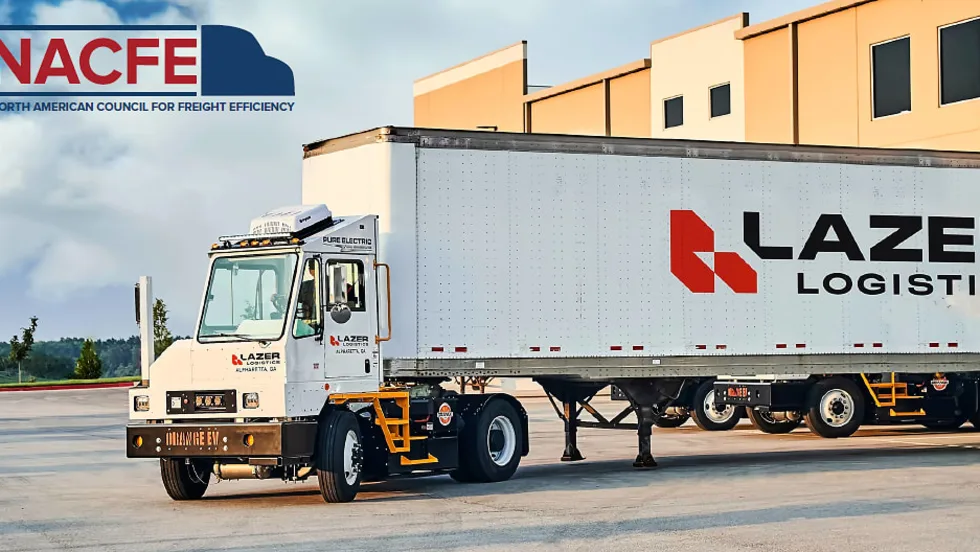
Electric Yard Tractors Move Beyond Pilots
Operating-cost savings have overtaken sustainability goals as the leading reason surveyed fleets are adopting battery-electric terminal tractors, according to new NACFE research.
Read More →
Geotab Links Fleet Card to Vehicle Data
The new card combines fuel discounts with telematics-based purchase controls. Geotab’s analysis also points to potential savings from choosing lower-priced fuel stops.
Read More →
Fleet Economics Shape Electric Truck Outlook
ACT Research expects costs, charging infrastructure, and technology improvements to drive zero-emission commercial vehicle adoption as federal regulations and incentives retreat.
Read More →
Wex Adds Cardless Fuel Payments for Over-the-Road Customers
A new fuel card feature for Wex customers offers convenience and security.
Read More →
New California Law Could Shed Light on Electric Truck Prices
Why do battery-electric Class 8 trucks remain so expensive? A California bill signed by Gov. Gavin Newsom would give fleets and state agencies more visibility into what manufacturers charge.
Read More →
How Volvo Updated Its D13 for EPA 2027 [Watch]
Volvo’s updated D13 promises lower emissions without sacrificing performance or fuel economy. Take a closer look at what changed inside the engine in this HDT Spotlight video.
Read More →
Diesel Price Spike Shortens Payback for Natural Gas Trucks, Report Says
Energy Vision estimates fleets could recover the higher purchase price of an RNG-fueled Class 8 tractor in 1.3 to 2.8 years under current fuel-price scenarios.
Read More →
Calstart Becomes Catalyst Mobility, Reflecting Broader Focus
Calstart is now Catalyst Mobility, reflecting the nonprofit’s growing national role in clean transportation, including zero-emission trucks, infrastructure and incentive programs.
Read More →