





The Road to Zero Emissions is Paved with More Than Batteries [Commentary]
Where Do Electric Trucks Fit In?
The trucking industry is still in the early adoption phase of electric vehicles. Where does it make the most sense to deploy right now?
October 2, 2022

The North American Council for Freight Efficiency considers 70% of the Class 8 regional haul segment to be electrifiable in the U.S. and Canada.
Photo: Vesna Brajkovic
4 min to read
While battery-electric heavy-duty trucks are being used and tested as an option for the industry, some argue that this zero-emission solution may never be realistic or suitable for widespread adoption in long-haul trucking. But even with the challenges regarding range, lack of charging infrastructure, and battery sourcing, BEVs seem to have found a place outside long haul.
The low-emissions, quiet operation and reliability of these vehicles are best suited for operations in those segments of the industry where range isn’t as big a challenge compared to long-haul operations, according to the North American Council for Freight Efficiency’s latest Run on Less report. NACFE tracked 13 fleets using battery-electric trucks in various applications to gauge how well early adoption is going.
Regional Haul
In return-to-base, single-shift operations, with many docks near residential neighborhoods, noise ordinances can limit the time of day a business can receive deliveries. Operating electric vehicles versus diesel trucks in these areas offers the benefit of being quiet, potentially mitigating the need for delivery restrictions in heavy-duty regional haul, explains NACFE.
Beverage delivery operations in particular are optimal for heavy-duty electric trucks. These type of fixed routes — typically less than 300 miles per day — lend themselves to centralized, overnight charging. Anheuser-Busch, for example, runs BYD 8TT electric trucks in the beverage delivery segment in Los Angeles, and one of the largest beer and beverage distributors in New York City, Manhattan Beer Distributors, runs Volvo VNR Electric trucks.
NACFE considers 70% of the Class 8 regional haul segment to be electrifiable in the U.S. and Canada.
But there are still some challenges in this application. For one, BEVs are heavy; about 3,000 to 5,000 pounds heavier than a traditional diesel truck. This could force fleets to sacrifice freight weight per trip to meet GVWR limits. Second, power accessories, such as lift gates, required in this application can cycle up and down 10 to 12 times per day, and that must be factored into battery capacity, NACFE wrote in its report.
Terminal Tractors
Perhaps the perfect scenario to go electric is an application confined to a single facility, with close access to a charging station, running less than 150 miles a day. That’s where fully electric terminal tractors come in.
Operating an electric yard tractor at warehouses, ports, and truck terminals eliminates “range anxiety.” The Class 8 vehicles accrue low mileage while they run trailers over thousands of hours of operations per year. On one charge, these tractors can operate up to 24 hours, says yard tractor manufacturer OrangeEV.
One fleet running an electric yard tractor told NACFE they had yet to see the battery state of charge lower than 70%.

Fully electric yard tractors make sense because they operate in confided facilities with a designated charging space and can operate up to 24 hours on one charge.
Photo: OrangeEV
“Charging cabinets are ideally installed in a location that fits with driver routines, encouraging charging at lunch, breaks, shift changes, and whenever the truck isn’t in use, so there is no lost productivity from driving to and waiting at a fueling station,” says OrangeEV’s Vice President of Sales and Marketing Zack Ruderman.
The start-stop nature of yard tractor duties makes them one of the biggest culprits of diesel pollution, and therefore a popular candidate for zero-emission technology. NACFE says this segment is 100% electrifiable.
In a 2021 report, ACT Research also identified yard tractors as one of the highest potential applications for rapid adoption of battery-electric technology.
Since 2015, Ruderman says OrangeEV has seen a steady increase in electric yard tractor adoption. Now, this company alone has more than 450 trucks operating more than 6.1 million miles combined, and it’s planning for its fourth manufacturing facility to meet the demand.
Box Trucks
The medium-duty box truck segment, operating in pickup and delivery applications, are also 100% electrifiable, according to NACFE.
The segment runs less than 100 miles a day, with some outliers that have routes that extend beyond the 150-mile average. The great thing about these trucks is that there is a potential to charge them at public charging stations, which would alleviate some of the biggest challenges Class 8 electric regional haul trucks have in regards to infrastructure.
Roush Fenway Racing — one of the Run on Less participants that operates a Rousch CleanTech Ford F-560 in North Carolina — found the size of their truck made it difficult to access public chargers.
“Designing public charging to accommodate small to medium-duty commercial electric vehicles will be an important step in accelerating adoption of these vehicles,” NACFE officials wrote.
As of the end of 2021, 1,215 zero-emission vans and trucks had been deployed in U.S., and another 140,000 are on order, according to Calstart, a national nonprofit working to increase the number of green vehicles.
And that number is likely to increase as states push for adoption and incentives. Recently, 17 states which represent 36% of the nation’s medium- and heavy-duty vehicles unveiled an Action Plan of more than 65 strategies and recommendations for accelerating the transition to zero-emission trucks, vans, and buses.
This article first appeared in the September 2022 issue of Heavy Duty Trucking.
Subscribe to Our Newsletter
More Fuel Smarts

Trucking’s Diesel Squeeze Isn’t Letting Up
With diesel topping $6 a gallon nationally, ATA's Bob Costello explains why fleets should prepare for continued pressure at the pump.
Read More →
FlowBelow Redesigns Trailer AeroSlider to Cut Fuel Use
The lighter trailer aerodynamic system installs in less than 45 minutes, according to the company, with potential payback in under a year depending on fuel prices and trailer mileage.
Read More →
Why Diesel Price Relief Efforts May Fall Short
Diesel prices have eased from September’s record high, but doubts about additional Russian supply and limits on dyed-diesel tax relief mean trucking fleets still face expensive fuel. And prices could go higher.
Read More →
Why Small Fuel Savings Matter in Trucking
Can better fuel economy help pay for driver raises? In this podcast, GP Transco explains how small efficiency gains create room to reinvest in its people.
Read More →
How GP Transco Cuts Trucking Fuel Costs, a Tenth of a Gallon at a Time
What’s another tenth of a mile per gallon worth? GP Transco shares how equipment upgrades and driver coaching turn small gains into meaningful fuel savings.
Read More →
Electric Yard Tractors Move Beyond Pilots
Operating-cost savings have overtaken sustainability goals as the leading reason surveyed fleets are adopting battery-electric terminal tractors, according to new NACFE research.
Read More →
Geotab Links Fleet Card to Vehicle Data
The new card combines fuel discounts with telematics-based purchase controls. Geotab’s analysis also points to potential savings from choosing lower-priced fuel stops.
Read More →
Fleet Economics Shape Electric Truck Outlook
ACT Research expects costs, charging infrastructure, and technology improvements to drive zero-emission commercial vehicle adoption as federal regulations and incentives retreat.
Read More →
Wex Adds Cardless Fuel Payments for Over-the-Road Customers
A new fuel card feature for Wex customers offers convenience and security.
Read More →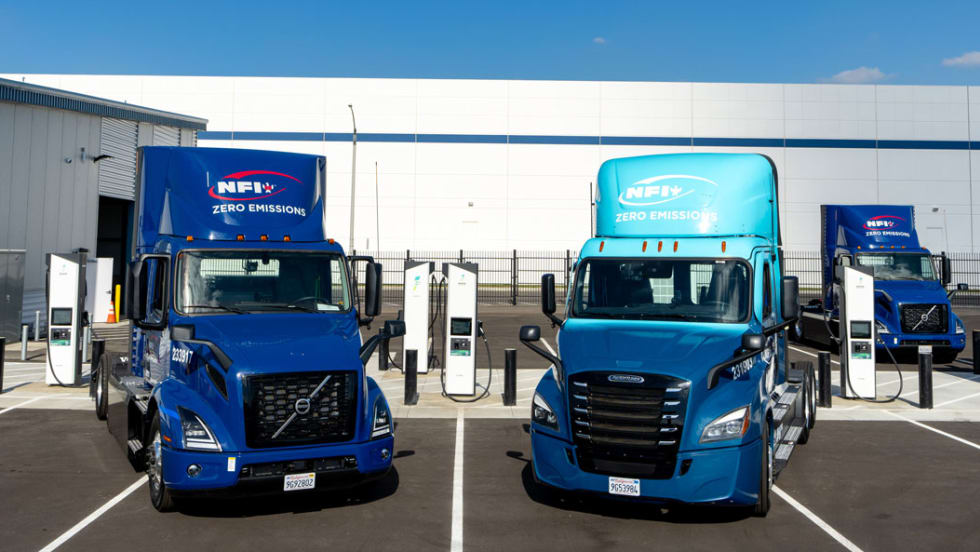
New California Law Could Shed Light on Electric Truck Prices
Why do battery-electric Class 8 trucks remain so expensive? A California bill signed by Gov. Gavin Newsom would give fleets and state agencies more visibility into what manufacturers charge.
Read More →