




What's up with biodiesel?
Bet you didn't celebrate National Biodiesel Day, did you? March 18 if you were wondering
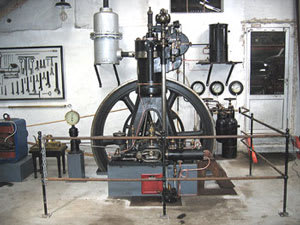
Bet you didn't celebrate National Biodiesel Day, did you? March 18 if you were wondering.
That is actually a significant date, namely Rudolf Diesel's birthday. Born in 1858, the poor guy expired in 1913 after apparently falling into the English Channel while traveling by boat from France to Jolly Old. Conspiracy theorists figure the French did it, but I suspect they were all stuffing their little Gallic faces with croissants at the time.
Before he met his maker he built the first diesel engine in 1906, a single-cylinder job turning a quick 180 rpm and producing 12-horsepower in the process. A stationary engine, it helped produce 110-volt electricity in a Danish sanatorium for tuberculosis sufferers. The beast was in service until 1936.
I mention all this, almost two months after the blessed day, because I've spent much of the last week delving even further into the realm of biodiesel fuel than I've already done over the last few years. And of course I came across the Rudolf Diesel connection because the biodiesel industry claims him as its own. His groundbreaking engine ran on peanut oil, after all, and folks at the U.S. National Biodiesel Board are given to loud praise of his foresight.
In a 1912 speech, the NBB reports that Diesel said, "...the use of vegetable oils for engine fuels may seem insignificant today, but such oils may become, in the course of time, as important as petroleum and the coal tar products of the present time."
The thing is, that first diesel was designed to run on just about anything from road kill on up. Powdered coal was one fuel option, but there were many others, though peanuts weren't a bad choice because their oil is energy-rich and the oil yield per acre is relatively high (unlike soybeans, for example.)
Old Rudy and his quasi-vegetarian engine aside, I've been skulking around the biodiesel world because I wondered how things were there these days. With the incredible hype surrounding natural gas and its sudden savior-like status, I had to ask if biodiesel still has a place in the transportation world. The shine seems to have gone off hybrids too, and I'll be looking at that situation next.
Biodiesel has indeed had setbacks recently, apart from being simply overshadowed by natural gas in the public pysche. The NBB is still bemoaning the fact that the U.S. Senate voted down two amendments that would have extended the biodiesel tax incentive through the end of the year.
Congress allowed the $1-per-gallon biodiesel incentive to expire on Dec. 31, 2011, despite the fact that it had helped the biodiesel industry achieve record production last year of nearly 1.1 billion gal. That easily beat the 800-million-gallon target required under the EPA's Renewable Fuel Standard, and it compares to a paltry 15 million gallons just 10 years ago. The NBB is still pressing for an extension to prevent a drop in production and potential layoffs amongst the 39,000 people said to be employed in the industry.
Read more about biodiesel and other alternative fuels in the June issue of HDT.
More Equipment

How Volvo Updated Its D13 for EPA 2027 [Watch]
Volvo’s updated D13 promises lower emissions without sacrificing performance or fuel economy. Take a closer look at what changed inside the engine in this HDT Spotlight video.
Read More →
Michelin Tire Improves Efficiency and Durability for Regional Fleets
The Michelin X Multi Energy D2 is a regional haul drive tire engineered to help fleets improve fuel efficiency, durability and traction in demanding stop-and-go operations.
Read More →
ZF Expands Commercial Vehicle Push in North America
ZF is expanding its North American commercial-vehicle presence with new transmission applications, electrification, trailer technology and autonomous-driving systems.
Read More →
Tesla Wants a Self-Driving Semi. Are Cameras Enough?
Could Tesla’s camera-only autonomous driving technology work on an 80,000-pound Semi? In this commentary, HDT's Deborah Lockridge takes a look at Tesla, Cybercab, and how autonomous trucks see the road.
Read More →
Kodiak: Driverless Long-Haul Truck Launch on Track for 2026
Kodiak AI says its driverless long-haul safety case is 93% complete and it remains on track to begin commercial operations by year-end 2026.
Read More →
What DOT’s Automated Vehicle Strategy Means for Trucking
The U.S. Department of Transportation issued a new automated-vehicle strategy that outlines plans for driverless-truck regulations, cross-state freight corridors, and federal safety standards.
Read More →
East Coast Port Launches $45M Electric Truck Push
The Port Authority of New York and New Jersey announced millions in incentives for zero-emission drayage trucks, yard tractors, and new charging hubs near the port.
Read More →
PlusAI Going Public to Fund Autonomous Truck Launch
A SPAC deal could provide PlusAI with up to $300 million as it works toward a 2027 commercial launch of factory-built autonomous trucks.
Read More →
NHTSA Moves to Rewrite Truck Fuel-Economy Rules
The National Highway Traffic Safety Administration says it lacks authority to regulate medium- and heavy-duty truck engines separately from complete vehicles, but the existing standards have not yet been eliminated.
Read More →
Detroit Opens Orders for EPA 2027 Engines
Detroit isn’t starting from scratch to meet EPA 2027 diesel emissions standards. Its Gen 6 DD13 and DD15 engines keep much of today’s platform while updating the fuel and aftertreatment systems.
Read More →