





Related: Waymo Outlines Plans to Integrate Autonomous Trucking in Fleets
Waymo: Lessons from Light-Duty Shaping Class 8 Autonomous Project
Before the industry began eyeing the possibility of driverless semis, there was a little car secretly driving around the country with no one at the wheel. This has now evolved into a new project, Waymo Via, which is looking to make autonomous trucking and local delivery a reality.
October 17, 2020
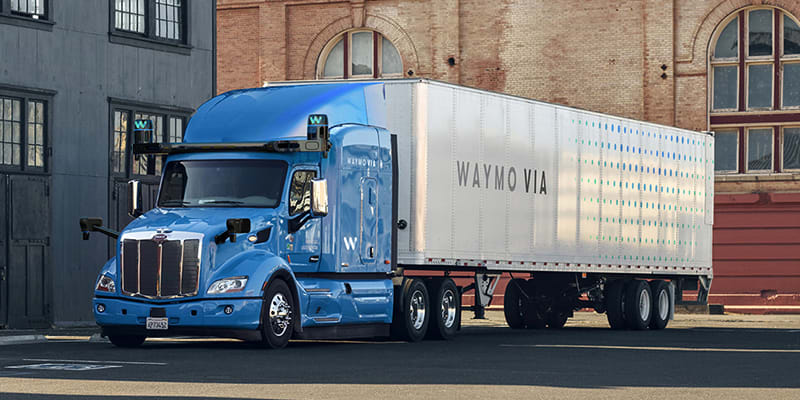
Photo: Waymo
5 min to read
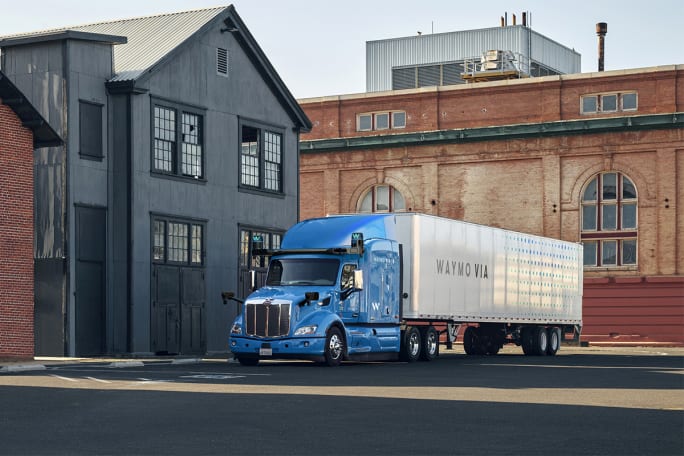
Waymo is taking lessons from its light-duty autononous vehicle project and using them to create a viable driverless Class 8 truck that is already working in the real world.
Photo: Waymo
Before the industry began eyeing the possibility of driverless semis, there was a little car secretly driving around the country with no one at the wheel. This has now evolved into a new project, Waymo Via, which is looking to make autonomous trucking and local delivery a reality.
Google started Project Chauffer in 2008 — seven self-driving cars that made their way around the country without causing too many people to notice. Fast-forward a dozen years, and that initial project has evolved into an entire company — Waymo. After a recent blog post was shared with HDT about how trucks help advance Waymo's self-driving technology, we reached out to the autonomous tech company for some detail on its current semi project and the future of autonomy in the trucking industry.
“Our solution is being designed with fleets and other industry stakeholders to ensure we’re meeting their needs and will offer a service that not only addresses the challenges that exist in the industry today, but significantly moves the needle on these issues — whether that’s some of the driver recruitment challenges that persist in trucking or solving for efficiency gaps,” a Waymo representative recently told HDT. “We’re here to help make a tangible impact for our partners and help improve safety and the movement of goods at scale, with a reliable and dependable autonomous solution.”
For example, the company has been involved with market and operational studies with industry stakeholders — a way for both sides to understand how Waymo would successfully deploy autonomous vehicles in different industries. These opportunities have allowed Waymo to get ahead of some of the questions that can’t be tested at the current scale of pilots: How will these trucks be maintained? What happens if an AV truck gets a flat tire? Which parts of the partner’s business have the strongest business case? What volumes can be supported on which lanes?
While there is some time before autonomous trucks hit the open highways in force, the company is working with its partners on a timeline for the paced adoption of this technology.
“It’s not going to be a flip-the-switch moment,” according to Waymo. “As the first and only company that has a fleet of fully driverless cars on the road and serves riders, we know that achieving fully driverless happens gradually and needs to be guided by a safe and responsible approach.”
And this approach will be incremental, introducing the technology in a responsible manner and heeding the opinion of both public and industry partners, according to Waymo. Some of those involved include a group of veteran truck drivers with more than two decades of driving experience under each of their belts, with knowledge and expertise that Waymo has found invaluable.
“We continue to grow our partnerships with drivers and continue to build on their existing skillset in our self-driving roles," Waymo said.
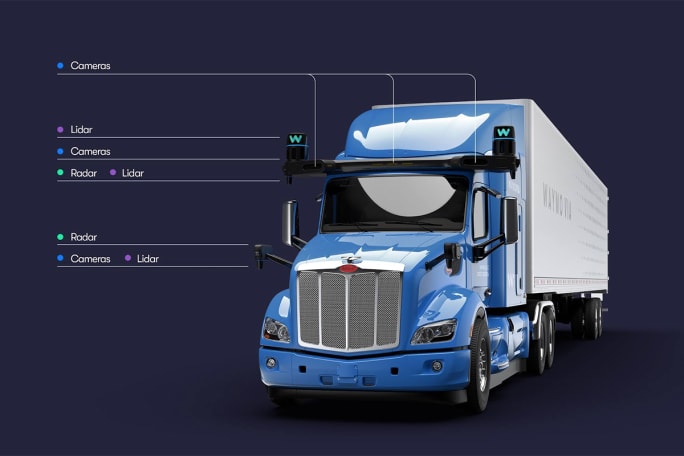
Waymo has worked closely with OEMs to find the best way to integrate Waymo Driver into their trucks. The self-driving system is comprised of radar, lidar, and cameras that are adapted for each new truck to ensure they meet certain requirements, such covering potential blind spots.
Image: Waymo
Lessons Learned with Self-Driving Cars and How They Apply to Trucks
Currently, the Waymo fleet consists of Peterbilt Class 8 trucks that were purchased from the OEM and had the Waymo Driver technology added to the platform. Going forward, however, the company plans on working directly with OEMs to build custom vehicles for the Waymo Driver.
With 10 years of experience in light-duty autonomous technology, Waymo is able to transfer much of what they have learned into the heavy-duty world. It has seen success on the passenger car side, with its AVs serving real riders every day, including fully driverless rides.
“We have thousands of riders in the Metro Phoenix area using our service to get around," said the Waymo rep. "We are learning so much from a product perspective on how you take the technology we’ve been developing for over 10 years and turn it into a commercial service."
This experience has also allowed the company to understand the technical challenges involved and the best places to focus its efforts.
“By pursuing both Waymo One (our ride-hailing service) and Waymo Via (trucking and local delivery) in parallel, what we learn with one area directly helps improve the other area, and that relationship goes both ways. We aren’t just taking what we’ve learned from cars and applying it to trucks. We are taking what we learn with our trucks and the business use case and applying that back to ride-hailing and the car platform.”
Waymo Via local delivery is currently operational in the Phoenix, Arizona, area. The company is exploring how the Waymo Driver can provide both customer and operational benefits, making deliveries on behalf of clients safely, efficiently, and, eventually, at scale. One such local delivery partnership involves AutoNation, a retailer that provides new and pre-owned vehicles, as well as associated services. The AVs are delivering car parts to and from dealerships. Waymo Via trucks are also working for UPS, shuttling packages between UPS Store locations and its Tempe hub.
And while there are obvious differences between light- and heavy-duty vehicles, Waymo has been able to take the experiences from the passenger AVs and transition that knowledge into the Class 8 template.
“We’ve solved a lot of core challenges on the passenger car side that have given us an advantage in trucking, but there are still areas we need to focus on specifically for trucking," Waymo said, "whether it’s the longer response time needed (which affects perception and planning) or the way maneuvers become more challenging with a larger and heavier vehicle," and things that cut across both, like driving in inclement weather.
Waymo has had to optimize its self-driving system, comprised of radar, lidar, cameras, and adapt it to the new vehicle, optimizing it for how truck driving is different from cars, such as blind spots. For instance, the company increased the number of sensors on the trucks. The most noticeable difference is that the trucks feature two perception domes versus the single perception dome on passenger cars.
Simulation allows the company to test and prepare our system to handle many trucking-specific challenges. "In a simulated environment, we can recreate any scene — experienced or new — including other drivers’ behavior," notes the blog post.
Learn more about Waymo's Via self-driving trucks program in this HDT Talks Trucking Podcast interview with Waymo's Vijaysai (Vijay) Patnaik, as he explains some of the intricacies of the autonomy that controls the trucks and how it interacts with other road users. He talks about how the autonomy handles some unique situations, and how public perceptions of the technology are changing for the better.
Subscribe to Our Newsletter
More Safety & Compliance

FMCSA Pauses Biennial-Update Enforcement Amid Motus Transition
Carriers whose updates were due on or after June 1 have more time, while FMCSA works to stabilize its new registration system and warns of phishing sites impersonating its new carrier registration system, Motus.
Read More →
ZF Expands Commercial Vehicle Push in North America
ZF is expanding its North American commercial-vehicle presence with new transmission applications, electrification, trailer technology and autonomous-driving systems.
Read More →
Truck Drivers Need More Than Another Alert
Fleets have more visibility into truck health, safety events, and driver activity than ever. The next challenge is turning all that information into useful guidance for the person who has to decide what to do next.
Read More →
Tesla Wants a Self-Driving Semi. Are Cameras Enough?
Could Tesla’s camera-only autonomous driving technology work on an 80,000-pound Semi? In this commentary, HDT's Deborah Lockridge takes a look at Tesla, Cybercab, and how autonomous trucks see the road.
Read More →
What DOT’s Automated Vehicle Strategy Means for Trucking
The U.S. Department of Transportation issued a new automated-vehicle strategy that outlines plans for driverless-truck regulations, cross-state freight corridors, and federal safety standards.
Read More →
NYC Expands Speed, Pedestrian Safety Tech Across Fleet
New York City is expanding intelligent speed assistance and pedestrian-alert systems across its municipal fleet, moving the technologies from pilot programs into vehicle procurement and retrofit requirements.
Read More →
FMCSA Removes 110 Truck Driver Training Schools from Certified ELDT List
Federal regulators also are targeting more than 160 additional training providers and launching a nationwide audit of third-party CDL skills testers as part of a broader crackdown on trucking fraud.
Read More →
Beyond DOT Compliance: What Makes a Trucking Fleet Truly Safe?
A trucking fleet can follow every rule and still make unsafe decisions. The real test comes when safety conflicts with freight, productivity, or cost.
Read More →
Hours of Service Pilot Programs: FMCSA Readies for 2027 Rollout
Two pilot programs could eventually reshape hours-of-service rules, giving truck drivers options to pause their 14-hour clock or use longer split sleeper rest periods.
Read More →
New Guide Offers Pet Safety Tips for Truck Drivers
Hundreds of thousands of pets travel in truck cabs. A new safety guide from Volvo Trucks and the Center for Pet Safety offers practical advice for truck drivers who bring dogs and cats along for the ride.
Read More →