




Volvo VHD 430 Sleeper
The point of Volvo Trucks' latest model, the VHD 430, is its sleeper compartment. While previous VHDs have daycabs and work as dumpers, concrete mixer chassis and equipment haulers, the 42-inch-cab addition, with its 36-inch-wide by 79-inch-long bunk, provides a comfortable place for a driver to rest and to legally overnight no matter where he and his rig are.

New model allows camping in the woods, while a new engine and improved shifting quality are truly impressive.
The point of Volvo Trucks' latest model, the VHD 430, is its sleeper compartment. While previous VHDs have daycabs and work as dumpers, concrete mixer chassis and equipment haulers, the 42-inch-cab addition, with its 36-inch-wide by 79-inch-long bunk, provides a comfortable place for a driver to rest and to legally overnight no matter where he and his rig are.
Sometimes that's far off road, deep in the woods of Canada. Loggers there are one type of VHD customer who sometimes need to camp out. This test tractor was built for service up there.
This day we were in the U.S., specifically about 40 miles northwest of Columbus, Ohio, near the sprawling Transportation Research Center. The tractor and a test load were waiting for us at the shops operated by Bendix Commercial Vehicle Systems, whose technicians were using the tractor to calibrate software in their electronic Roll Stability Control. RSC is standard on some Volvo models, including mixer-chassis versions of the VHD.
I didn't test the RSC, because I'm usually a cautious driver, and I didn't lie in the sleeper because it was too early for a nap. Besides, I was enjoying the drive too much to let my host, Frank Bio, a Volvo product engineer, take the wheel. Aside from the bright-red tractor's ruggedly handsome looks, I was impressed with its smooth, quiet ride and the power of its new 13-liter engine. Most of all, though, I liked how its gearshift worked.
Turning to Bio shortly after we left the Bendix premises, I asked, "What have they done to this truck? I can shift it!" He had an answer - which I'll repeat after explaining why easy shifting should be remarkable at all. Volvos are among the most comfortable trucks out there, but in my opinion, they have not been renowned for easy gearshifting. "Rubber lever" is among the expressions a Volvo driver might use in describing his regular ride. And the last two or three Volvos I've driven were difficult for me to shift.
So here I am in this VHD with its Eaton Fuller 18-speed, going through all of the nine main gears smoothly, float shifting without the clutch once in a while and splitting gears for the fun of it. "What's the deal with this gearshift?" I asked Bio later in the run.
"They made a change in the shift linkage, but it actually was done to get the shift lever further to the center - to get it out of the driver's way when he heads for the sleeper," he said. The lever's base is now in the center of the wide cab instead of offset to the left; it's now bent to put the knob close to the driver, but has a solid feel. "Moving the lever required a change in the linkage, and a side benefit is the easier shifting. I don't know exactly what they did to the linkage, but it works better."
It sure does. And being able to shift easily and smoothly helps a driver be confident in other areas of operating the truck - for instance, turning through tight intersections without worrying about whacking cars in other lanes. I made several such maneuvers in small cities in central Ohio, for we followed state and U.S. highways much more than Interstates. Never once did I feel stressed while driving this rig, not even when a lady motorist had to back up a bit to let me finish a hard right turn in a really tight corner. I waved a thank-you and went merrily on my way.
This VHD tractor's forward-set steer axle doesn't provide enough room for a tight wheelcut, so its turning radius is a little wide. The Meritor axle was rated for 20,000 pounds, while the suspension is made for 16,600 pounds - an old tactic that pits beefy parts against off-road battering while a lesser-rated spring system deals with actual weights. A setback axle is optional on the VHD, if state or provincial weight laws make it feasible.
Strong power and torque were always on tap from the new D13 diesel, the only one available on the VHD. Its displacement is 12.8 liters (about 782 cubic inches) and this one had the highest rating of 485 horsepower and 1,650 pounds-feet. It provided brisk (for a big rig) acceleration, but one feature central Ohio lacks is mountains or even big hills, so I can't say anything about how the engine pulls long, steep upgrades. I suspect, however, that it does so with some authority.
The D13-485 makes its peak torque from 1,025 to 1,500 rpm, and power meanwhile ramps up toward its maximum; that begins at 1,600 rpm and continues to 1,900 rpm. The driver feels it as a steady outpouring of oomph, from lugging almost to redline. But it's best to upshift at 1,600 to 1,700 or even lower to get better economy, according to Volvo's powertrain guru, Ed Saxman. The combination engine and exhaust brake didn't get much of a workout, either, but did do some of the service brakes' work as I approached traffic lights and stop signs.
Of course the D13 was an EPA '07-spec diesel, with an advanced, electronically controlled combustion system that burns fuel so cleanly you can't see any smoke or smell any odor. There is a diesel particulate filter that grabs any soot that gets out of the cylinders. The "compact" filter, looking somewhat like a big coffee urn, is tucked under the cab behind the passenger steps, and from there the tailpipe runs up the cab's rear wall near the corner. The end of the stack is perforated for about a foot and a half, which dissipates high heat during DPF regeneration.
The driver learns of a "regen" through the LCD information display above the steering wheel on the instrument panel. An active regeneration began as we approached a country intersection, and I pulled off to photograph it.
Otherwise, there's no indication performance-wise, and an indifferent driver can just motor along without worrying about it, unless he parks where the hot gas (up to 1,200 degrees, engineers say) could light a tree afire if a logger happened to be parked under a leafy limb.
That Driver Information Display, as it's properly called, can show a bookful of other info, as well, starting with time and date, outside temperature (in Celsius or Fahrenheit), engine and axle temps, distance to destination - you name it.
And you do, via switches on the windshield wiper stalk, mounted on the right side of the steering column. You scroll through menus and digital gauges, and when you're tired of all the numbers you can just push the stalk's Esc button and go back to basic displays. A manual explains the DID's functions, and to get maximum benefit from them, the driver of any Volvo with the display should read it.
On this truck the DID included a new feature that coaches any driver toward economical operation. It shows one or more dollar signs, which mean the same thing in the U.S. or Canada - the more shown, the more money you'll be getting, assuming your company has a program to reward you for saving fuel. If you're an owner-operator, you know that $$$ means money in your pocket for sure in the form of less paid out for fuel. Software behind the coaching feature encourages a driver to stay in the engine's "sweet spot," at 1,400 to 1,600 rpm, Bio said. Indeed, when I did this I saw more $ indicators.
The electronic controls know that the driver can't always use a light foot and didn't necessarily take away all the money when I had to press down on the accelerator. The program is a world away in sophistication from an old-fashioned vacuum gauge, which arbitrarily sent its arrow into the red whenever there was a grade to be climbed. Ed Saxman, the engine guru, spent many months working on this, and showed me an early version several years ago, during another Volvo test drive. Now it's ready for prime time, and seems to be a useful tool.
Because this truck was built for Canada, the analog speedometer's primary numbers showed kilometers per hour while miles per hour were in smaller yellow numbers. That way the driver can watch his speed no matter which side of the border he's on or how the limits are posted, and can see that when the speedo's needle rests on 100 kph it really means 62 mph. Furthermore, a Canadian football field's length is still 110 yards, not metric meters.
Some things endure.
As should this VHD. It appeared stout and tight and was certainly quiet, smooth riding and comfortable, and was enjoyable to drive. Its interior was a combination of simple design and nice fabrics and well fitted plastic panels. Most drivers would appreciate working in a place like this, and I sure did, if even for just a few hours. Next time I might not give it back.
More Fleet Management

Trucking Fleets Faced Record Operating Costs During Third Year of Freight Recession
ATRI's annual operational cost report shows carriers trimmed fleets, delayed equipment purchases, and ran older trucks as expenses continued to outpace freight rates.
Read More →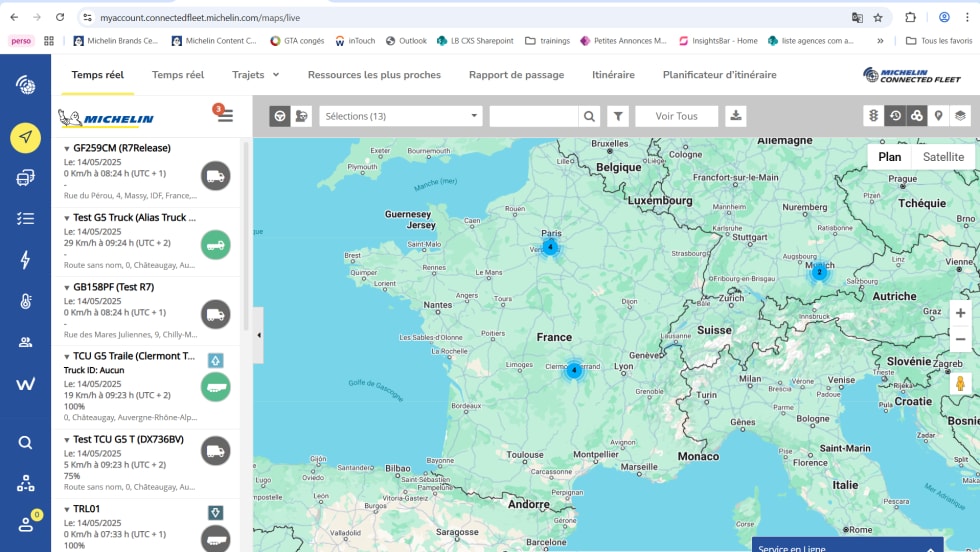
Michelin Adds AI Assistant to MyConnectedFleet Platform
Michelin’s new generative AI tool delivers instant fleet insights, helping managers analyze fuel use, tire maintenance, vehicle status, and operational performance without manually creating reports.
Read More →
LytxOne Platform Now Features AI, Compliance, and Asset Tracking Tools
New enhancements add AI-powered insights, asset tracking, compliance automation, and configurable privacy controls to Lytx's all-in-one fleet management platform.
Read More →

July Imports Poised to Set Container Record
The National Retail Federation projects July container imports will surpass the pandemic-era record as shippers frontload freight ahead of expected August tariff increases.
Read More →
HDT Announces 2026 Truck Fleet Innovator Finalists
From AI and fleet electrification to safety, operations, and leadership, these HDT Truck Fleet Innovator finalists are changing how trucking gets done.
Read More →
Van Spot Rates Top Contract Rates for First Time Since 2022
There’s more good economic news for the North American trucking industry according to the latest Truckload Volume Index report from DAT.
Read More →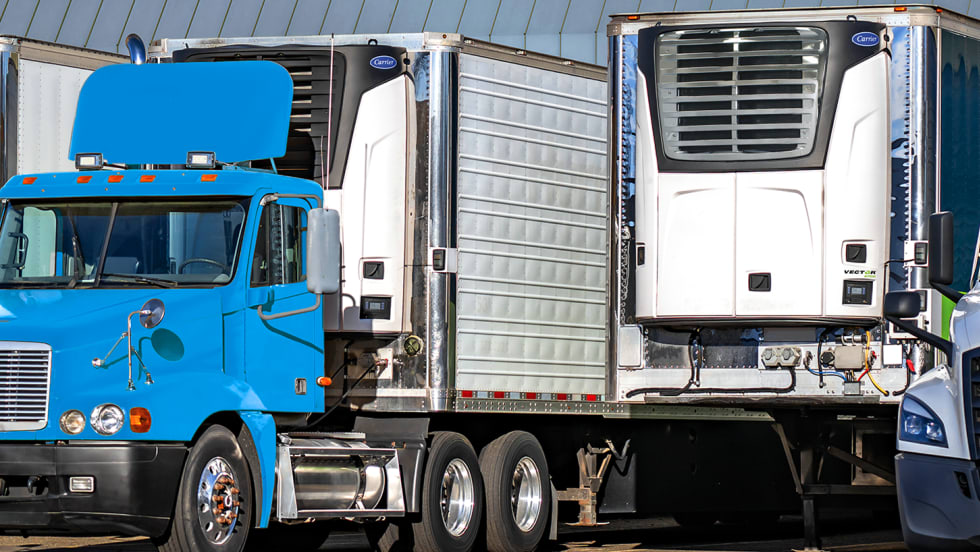
Carrier Transicold Extends Refrigerated Trailer Life
Fleet Refresh enables refrigerated fleets to replace aging transport refrigeration units instead of entire trailers, while adding Lynx Fleet telematics and BluEdge service coverage.
Read More →
FTR Says Freight Rates Surged in May
FTR's Trucking Conditions Index surged to a record high in May, the analytics firm reports.
Read More →
Meet HDT's Truck Fleet Innovators at Heavy Duty Trucking Exchange
Heavy Duty Trucking Exchange brings fleet managers and suppliers together for the deeper conversations that lead to ideas, partnerships, and solutions. Time is running out to apply for HDTX, September 23-25.
Read More →
Enhance Fleet Performance with High-Efficiency Auxiliary Power Units
Drive sustainable cost savings while increasing driver comfort during short- and long-haul logistics operations.
Read More →