




Volvo Launching MethaneDiesel Truck in Europe
Volvo Trucks in Sweden is about to be the first to market a methane-powered truck for long-haul operations in Europe
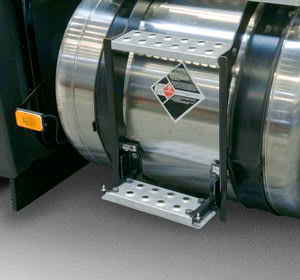
Volvo Trucks in Sweden is about to be the first to market a methane-powered truck for long-haul operations in Europe.
Volvo's new FM MethaneDiesel truck is actually powered by up to 75% methane gas. The idea of a dual-fuel truck is rather interesting, I thought, and of course it generates something like 10% lower CO2 emissions than a diesel engine does.
"If things go as planned," the Swedish outfit said, "we expect sales to take off in six to eight European countries within the next two years, with about 400 Volvo FM MethaneDiesel trucks sold a year. Future sales will naturally depend largely on expansion of liquefied gas filling stations for commercial vehicles."
So I may sound a bit dumb here, but is methane the same as natural gas? Volvo, after all, used the two terms interchangeably here. Adding biogas as a third equivalent.<!break>
Well, in a word, they're not all the same. Methane is the major component of natural gas, about 87% by volume (the rest being things like ethane and butane), and it's the simplest hydrocarbon we've got. Lighter than air, it's also a nasty greenhouse gas.
Most methane is extracted from natural gas fields, but it's also produced -- without being called natural gas -- during the decomposition of plant or organic matter, and from wetlands and marshes. My favorite source is the digestive processes of some insects like termites and beasts like sheep and cattle. Burps and the like, if you must know.
Methane is also released from garbage decomposition in landfills (and then it can be called biogas, I believe) and from the incomplete combustion of fossil fuels.
As I understand things, natural gas is mostly methane, and biogas is all methane.
Somebody's going to write me a letter and call me an idiot, I just know it.
Anyway, like a lot of folks over here, Volvo is pretty high on methane or biogas or natural gas or whatever we want to call it.
Compared with conventional spark-ignited gas engines, Volvo claims its technology offers 30 to 40% higher efficiency, which is an awful lot. They say it drops fuel consumption by 25%.
The Volvo FM MethaneDiesel sports a 460-hp 13-liter engine, a conventional diesel equipped with gas injectors, a special Thermos-like fuel tank that keeps the gas liquefied and chilled, and a specially modified catalytic converter. In a truck with a gross weight of 40 tonnes, the tank is good for a range of up to 500 km or 300 miles in normal driving. Not much, but this FM still has an ordinary diesel tank so if the gas runs out, a switchover is automatic.
The new Volvo will initially be sold in the Netherlands, Great Britain and Sweden, where gas infrastructure is best established. Other parts of Europe and the rest of the world will follow. Series production will get under way in August.
And my big question: we won't see the FM truck here, but will this dual-fuel technology cross the pond?
Read more on Volvo's website.
More Equipment

ZF Expands Commercial Vehicle Push in North America
ZF is expanding its North American commercial-vehicle presence with new transmission applications, electrification, trailer technology and autonomous-driving systems.
Read More →
Tesla Wants a Self-Driving Semi. Are Cameras Enough?
Could Tesla’s camera-only autonomous driving technology work on an 80,000-pound Semi? In this commentary, HDT's Deborah Lockridge takes a look at Tesla, Cybercab, and how autonomous trucks see the road.
Read More →
Kodiak: Driverless Long-Haul Truck Launch on Track for 2026
Kodiak AI says its driverless long-haul safety case is 93% complete and it remains on track to begin commercial operations by year-end 2026.
Read More →
What DOT’s Automated Vehicle Strategy Means for Trucking
The U.S. Department of Transportation issued a new automated-vehicle strategy that outlines plans for driverless-truck regulations, cross-state freight corridors, and federal safety standards.
Read More →
East Coast Port Launches $45M Electric Truck Push
The Port Authority of New York and New Jersey announced millions in incentives for zero-emission drayage trucks, yard tractors, and new charging hubs near the port.
Read More →
PlusAI Going Public to Fund Autonomous Truck Launch
A SPAC deal could provide PlusAI with up to $300 million as it works toward a 2027 commercial launch of factory-built autonomous trucks.
Read More →
NHTSA Moves to Rewrite Truck Fuel-Economy Rules
The National Highway Traffic Safety Administration says it lacks authority to regulate medium- and heavy-duty truck engines separately from complete vehicles, but the existing standards have not yet been eliminated.
Read More →
Detroit Opens Orders for EPA 2027 Engines
Detroit isn’t starting from scratch to meet EPA 2027 diesel emissions standards. Its Gen 6 DD13 and DD15 engines keep much of today’s platform while updating the fuel and aftertreatment systems.
Read More →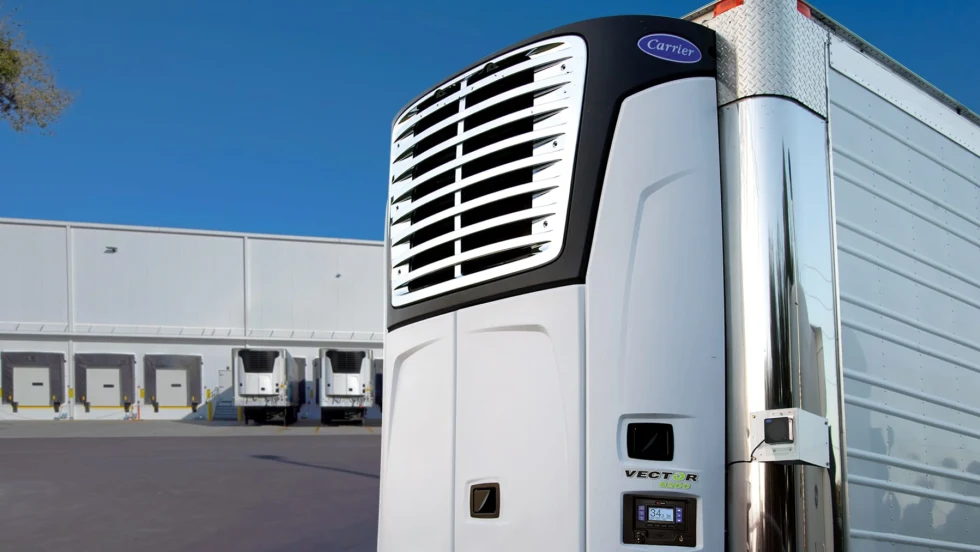
Carrier Transicold Adds All-Electric TRU for Stationary Cold Storage
Carrier Transicold’s new Vector 8200 all-electric transport refrigeration unit gives fleets a diesel-free option for temporary refrigerated and frozen trailer storage.
Read More →
A Closer Look at Kenworth’s Electric T880E Vocational Truck [Video]
Learn more about Kenworth's T880E battery-electric vocational truck at the Paccar Technical Center, including its range, applications, upfitting considerations, and PTO options, in this HDT Spotlight video.
Read More →