




Vertical Integration Yields More Profits, Navistar Executives Tell Stock Analysts
Does it make sense for a truck builder to limit customers' engine choices to just one line of products? It does if the engines are its own, because it makes more money. That is among the assertions made by Navistar International Corp.'s top executives to stock market researchers during the company's annual Analysts Day Feb. 1 at its shining and sprawling new headquarters in Lisle, Ill., west of Chicago.
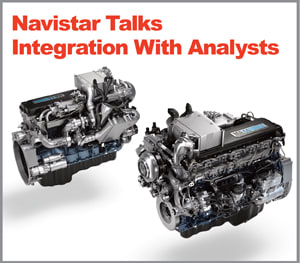
Does it make sense for a truck builder to limit customers' engine choices to just one line of products? It does if the engines are its own, because it makes more money.
That is among the assertions made by Navistar International Corp.'s top executives to stock market researchers during the company's annual Analysts Day Feb. 1 at its shining and sprawling new headquarters in Lisle, Ill., west of Chicago.
Integration was the meeting's theme, and integration goes beyond engines to chassis and body combinations and development efforts, they said.
"Integration equals profit," said the Truck Group's president, Dee Kapur, in opening remarks. "Vertical integration allows us to control our destiny," declared the corporation's chairman, Daniel Ustian.
Destiny includes not only profits but also survival - something that analysts have openly doubted in recent years, as Navistar's stock price has remained low in comparison to some competitors' and as it struggled to contain "legacy" costs associated with its long history.
Some analysts have doubted that its engine emissions strategy is wise and that it will have trouble meeting government limits without previously earned credits.
At its height, the company employed 100,000 people, and Navistar still must pay for pensions and health care for 42,000 retirees, Ustian acknowledged. It's a "challenge" that executives continue to struggle with and intend to solve, he said.
Furthermore, Navistar has been profitable all through the recent downturn, he emphasized. Its annual revenues have reached $15 billion and the goal is now $20 billion.
Much of recent earnings came from building military vehicles, particularly the MaxxPro armored trucks sent to Iraq and Afghanistan. A basic troop carrier has expended into wrecker, ambulance, cargo and other variants.
The Navistar Defense LLC arm brought in $2 billion in business last year, most of it based on an existing civilian model, the WorkStar vocational truck, and a MaxxForce engine. Military business is winding down but will still be worth about $1.5 billion this year, said Defense's president, Archie Massicotte. He and his team are proposing several vehicles for future needs of the U.S. Army and other services.
One proposed model is the Saratoga Joint Light Tactical Vehicle, which would replace the U.S. military's ubiquitous Humvee 4x4 with its General Motors-designed V-8 diesel. A Saratoga's unit price is $250,000, Massicotte said, but for that the military services would get a utility truck that's more fuel efficient, transportable by helicopter, and blast survivability comparable to mine-resistant, ambush-protected (MRAP) trucks like the MaxxPro.
The Saratoga is no "jeep," as its blast-resistant armor contributes to a tare weight of about 18,000 pounds, said a representative at a vehicle display. It's powered by a high-output MaxxForce 7 V-8 diesel.
One current operation is the conversion of early MaxxPro MRAPs with conventional solid axles and leaf springs to Navistar's own independent coil-spring suspension system in a contract worth $990 million. Solid axles worked fine in Iraq's flat plains, but Afghanistan's rugged, mountainous terrain requires greater dexterity that the independent suspension delivers.
A proposed MRAP project is to take bodies off of worn-out chassis and put them on new and improved chassis. They of course would have Navistar diesel power.
Navistar Defense is selling trucks to Great Britain and is bidding on an order for Canada, Massicotte said. This mirrors what Navistar International is doing worldwide with commercial trucks, said Ustian and other executives.
The corporation has established operations in China, India and Brazil, all markets that are rapidly expanding. Working with partners, it has developed trucks specifically for those markets. Many use MaxxForce engines.
The NC2 joint venture with Caterpillar involves exporting International trucks to other countries. Those vehicles use MaxxForce and Cummins diesels, and Cummins remains a strong partner, albeit only for foreign business.
Navistar is steadfast in its MaxxForce-only strategy for the U.S. and Canada, as its Advanced Exhaust-Gas Recirculation system keeps the burden of exhaust emissions compliance away from customers, said the president of its North American Truck Group, Jack Allen.
It continues to avoid using urea injection (selective catalytic reduction) employed by all its competitors. It has submitted specifications for a MaxxForce 13 diesel that will meet the Environmental Protection Agency's limit of 0.2 gram per horsepower-hour for nitrogen oxide. (Thus far the engines have been meeting EPA-2010 regs with the help of credits earned previously.) More engines will follow, Allen said.
The company is expanding its self-sufficiency in engines by producing its own metal castings. It recently reopened its foundry in Indianapolis after gaining wage and benefit concessions from union members. There is no better way to control the cost of parts than by making them yourself, executives said.
Except for construction, the commercial truck business is rapidly recovering and Navistar is well positioned to participate, and is, executives told the analysts. Last year in the U.S., it was number 1 in sales of medium-duty and severe-service trucks, and number 2 in heavies, after Daimler Trucks North America.
Using integration, joint ventures and leveraging of models and components, it has multiplied the number of products for all world markets from six vehicle and five engine products in 2007 to 22 vehicles and seven engines now.
These products, and continued development of more, will enhance Navistar's competitiveness, executives said. Actual development is being integrated in the huge, airy campus in Lisle, as engineers and product specialists are moving from the old technical center in Fort Wayne and from the engine plant in Melrose Park.
Putting all engineers in the same complex will ease the scheduling of meetings, and having them all use the same computer language will greatly increase efficiency, Kapur said. Eliminating travel to Fort Wayne will save him and other execs much time, including many days formerly lost to flight cancellations and other delays.
Engine testing and production will remain at Melrose Park, and some vehicle testing will continue at Fort Wayne, the site of the company's test track.
As a technology company, Navistar has many similarities with Apple, one of America's most successful companies, Kapur said. Apple leveraged hardware with software, and did partnerships with other companies, as Navistar is doing. And it has a campus, as Navistar now does.
Navistar got the ex-Lucent Technologies facility at a bargain price, Kapur said. And "when the board (of directors) saw it, they thought it was wild."
Did analysts think the Navistar presentations were wild? Watch the advice they dispense to investors, and the company's stock price.
More Equipment

EPA Proposal Could Ease 2027 Truck Costs and Buying Uncertainty
The proposal doesn't change the tougher NOx standard, but it would revise key implementation requirements that manufacturers say have driven up costs and complicated fleet purchasing decisions.
Read More →
Cummins, Paccar Ease DEF Derates After EPA Guidance
Updated diesel engine software gives truck operators more time to address emissions-system issues while staying compliant with EPA emissions standards.
Read More →
America at 250: How the Truck Helped Connect a Continent
America was founded on revolutionary ideas, but it was built by movement. For 250 years, the nation has depended on ever-better ways to move people, products, and prosperity across a vast continent. No machine has carried that mission further — or more faithfully — than the truck.
Read More →
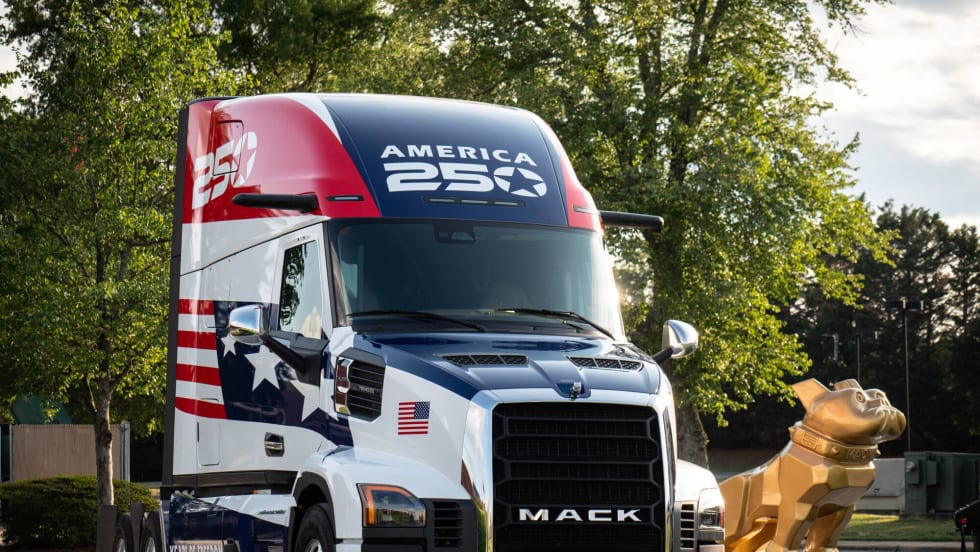
Mack Unveils America 250 Tribute Truck to Celebrate Nation's Semiquincentennial
Just in time for the Fourth of July! Mack unveils a brand-new patriotic, limited-edition, red, white, and blue truck wrap.
Read More →
Enhance Fleet Performance with High-Efficiency Auxiliary Power Units
Drive sustainable cost savings while increasing driver comfort during short- and long-haul logistics operations.
Read More →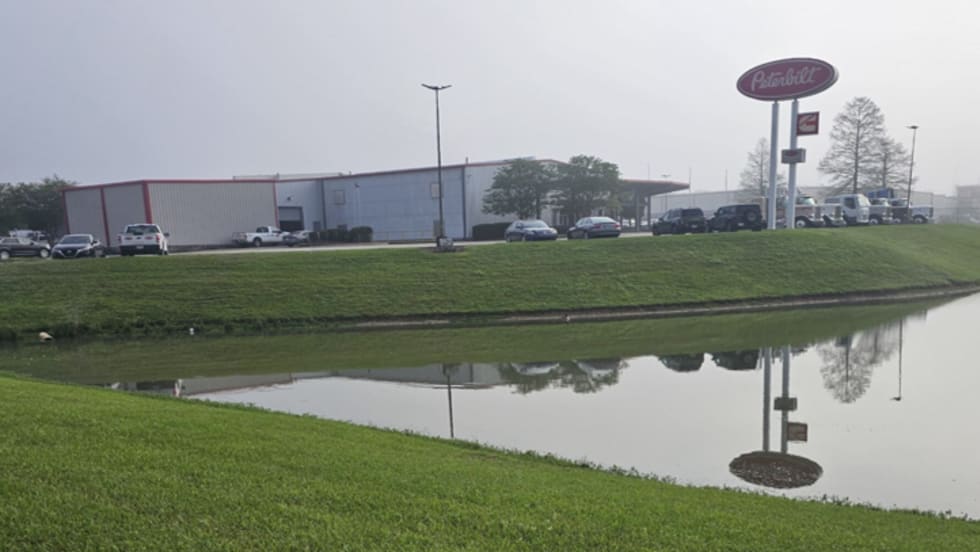
Rush Expands Gulf Coast Peterbilt Network With Louisiana Acquisition
The expanded Rush network gives fleets additional sales, service, leasing and collision repair support across Louisiana's major trucking markets.
Read More →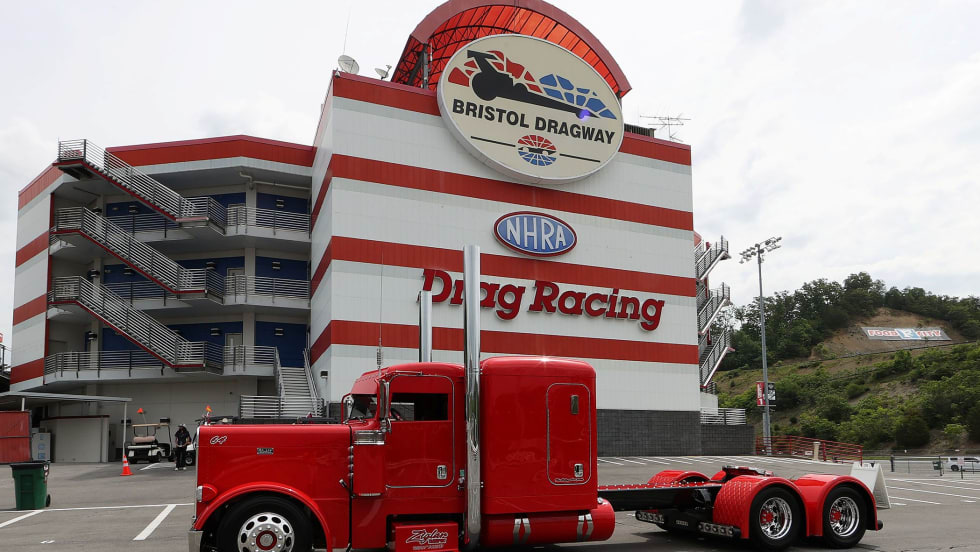
Photos: Shell SuperRigs Light Up Bristol Tennessee
Kenny Ziglar II of Rawlins, Wyo., captured Best of Show honors for the second consecutive year with his 2007 Peterbilt 379, nicknamed “Scrapin By,” at the 44th Annual Shell Rotella SuperRigs competition held June 25-27 at Bristol Motor Speedway in Bristol, Tenn.
Read More →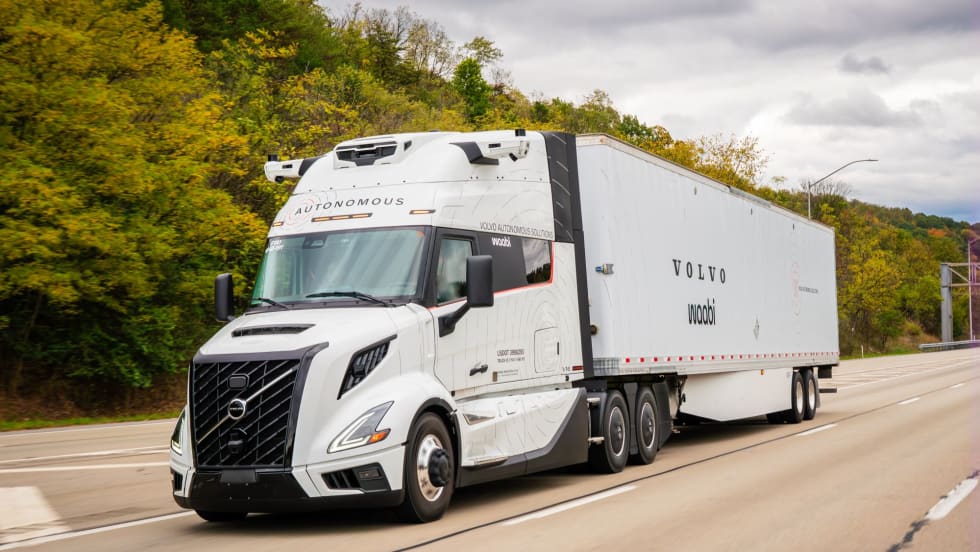
Waabi, Volvo Claim Breakthrough in Scaling Autonomous Trucking
Waabi says its AI-powered virtual driver successfully transferred to Volvo Autonomous Solutions' Volvo VNL Autonomous platform without retraining or additional data, a milestone the companies say could dramatically accelerate commercialization of autonomous trucks.
Read More →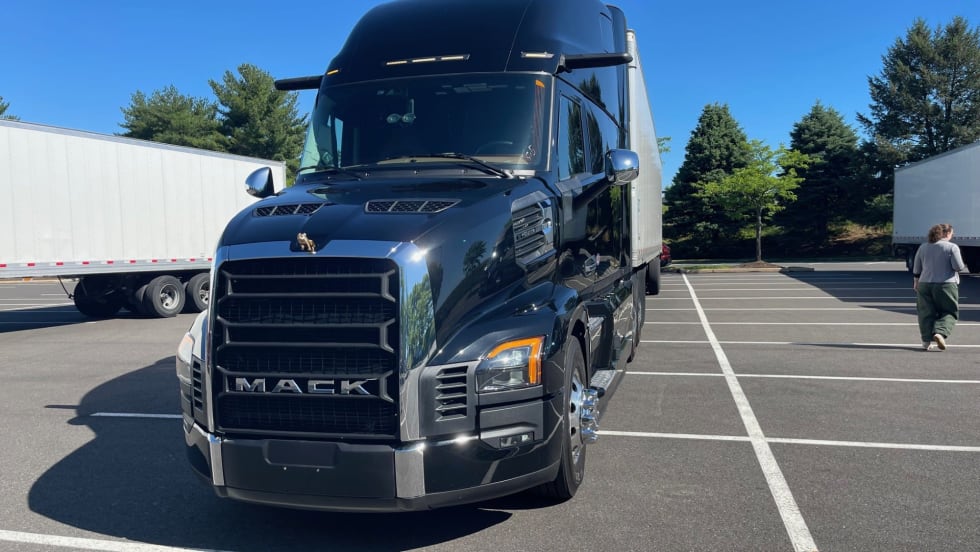
Why the Mack Pioneer Signals a New Era in Class 8 Truck Design
After a public-road drive through eastern Pennsylvania, one thing became clear: Mack's new Pioneer isn't simply packed with technology -- it's been engineered around the driver in ways that could redefine long-haul trucking.
Read More →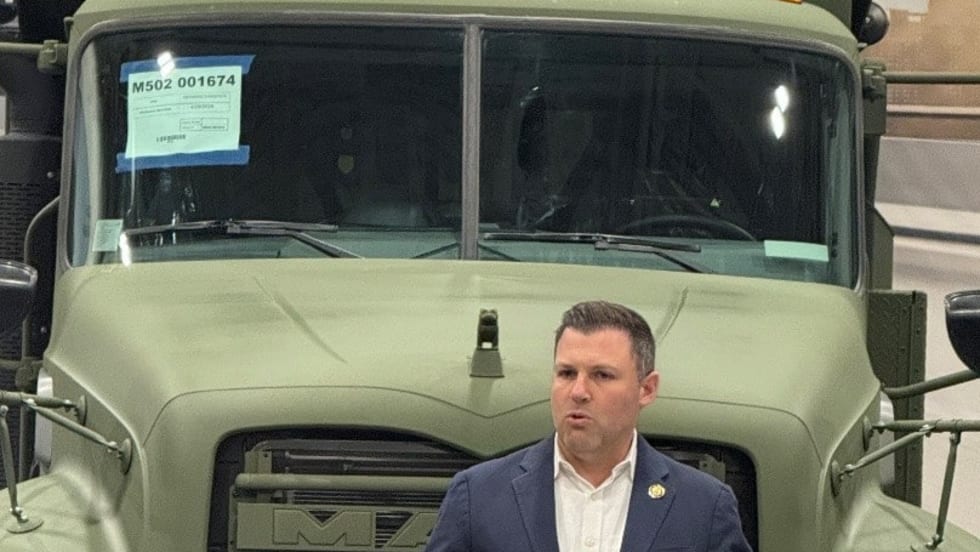
Mack Defense Secures $47 Million to Continue Military Dump Truck Production
President Trump visited Mack Defense’s Macungie, Pennsylvania, facility on June 23 to tout a $47 million Heavy Dump Truck order.
Read More →