




Under Pressure: Fuel Filtration
A perennial topic at any meeting of the Technology and Maintenance Council of ATA is fuel filter plugging
A perennial topic at any meeting of the Technology and Maintenance Council of ATA is fuel filter plugging.
More than a few in the audience typically say the answer is to user a wider screen filter that won't plug as quickly. But that's entirely the wrong answer, given the extreme pressure and tight tolerances in today's sophisticated fuel injection systems.
Opening up from, say, a 5-micron secondary filter to a 15-micron filter may mean less frequent filter changes and less loss of performance associated with plugging and low fuel pressure, but it is punishing the fuel injection equipment with particles in the most damaging sizes - those around 7 microns.
The most susceptible components are the injectors. Today, injectors have tiny, electro-discharge-machined and even laser-drilled holes in the 60- to 145-micron range. (To help you visualize this, a human hair is about 100 microns wide.) These work with the extreme pressure to almost atomize the fuel, even when it is presented at the injector in as many as five individual injection events. For the most complete combustion, it is essential to present as much fuel surface area as possible to the combustion process to minimize the production of unburned carbon or particulate matter. This aids fuel economy and minimizes PM in the exhaust that has otherwise to be extracted in the diesel particulate filter.
For 2010, injectors may well have holes shot-laser-drilled half this size in the never-ending drive to get finer and finer droplets of fuel. Shoveling fine dirt particles through these holes along with the fuel doesn't block them, since we're talking maybe 5- to 15-micron particles. But it does erode these finely drilled holes over time. This leads to a loss of control over the spray pattern, poor combustion and emissions control and degrading fuel economy. In the worst case, the injector may actually slobber and the wet fuel can jet-hose the cylinder wall, get into the lube oil and cause extensive wear elsewhere than just the injector.
This all takes time, and the process is so gradual the resulting degradation of performance and economy is not noticeable unless the injectors are changed through some failure, such as water in the fuel actually blowing off an injector tip.
In a higher-mileage engine this may be a good excuse to turn over all the injectors. On the Series 60, for instance, Detroit Diesel says if one injector is being replaced, it only takes two more hours to replace all six injectors to restore "as new performance." That's when you'd notice the degradation that had accumulated through injector wear.
But you'll also see the cost. The new injectors are significantly more expensive than the lower-pressure units of yesteryear.
Fuel Filters
It may seem obvious, but with fuel injection equipment so sensitive - and expensive - it pays to follow the engine manufacturers' recommendations on filtration. That may be difficult in a mixed fleet where technicians are working on different engines, because different engines may call for very different filters.
Yet it's critical that you put on a filter that's designed for that application, say engine manufacturers and filter makers. If you don't, the filter can plug faster or allow damaging particles to get past the filter and damage the injectors.
After the warranty period is up, some truck owners are tempted to save money and fuel filter changes by going to an alternative, less-expensive filter. Or sometimes a fleet may want to consolidate two parts numbers for filters that appear very similar. But you have to be very careful in making those types of decisions.
Swift Transportation likes to extend the service intervals out as far as the engine manufacturer will allow, using oil analysis to ensure that lube-oil protection is still okay, says Vice President Michele Calbi. But she finds that the determining factor today is the life of the fuel filters. Using the recommended filter screen sizes, she says they have to pull a truck in mid-interval just to change out the fuel filters. "That's an enormous lost-opportunity cost," she says, as well as a huge inconvenience for the driver, dispatcher and the shop. Such concerns must be weighed against the potential damage to the engine.
In looking for less-expensive alternatives, also watch out where you get the parts. At the last TMC meeting, during a discussion about parts counterfeiting, retired Caterpillar field service manager Bob Wessels pointed out that you can get what look to be genuine Cat filters at deep discounts on eBay. Beware, said Wessels: They are cheap knock-offs that simply won't perform.
Also keep in mind that water in the fuel can be just as damaging to fuel injection systems. Many truck owners go beyond the standard filter setup, opting for additional filtration or fuel/water separation.
Fuel/water separators are optional on many engines today. If yours doesn't have one, add-on fuel filters/water separators on the suction side of the fuel system can add additional fuel filtration capacity, potentially longer fuel system maintenance intervals, easy access, and heating options for cold-weather operations.
Whether you decide to add fuel/water separators or other filters may depend on your duty cycle. If you're trading in your trucks every three years while they're still under warranty, sticking with the OEM's recommendations is probably fine. But if you're keeping your trucks longer, the more you've done to minimize component wear, the better you're going to be from a fuel system maintenance cost standpoint after the warranty runs out.
And keep in mind that in order to work properly, water separators must be drained regularly.
Configuration
On-engine fuel filtration most often involves a primary filter with a relatively large screen on the suction side and a fine filter on the pressure side of the lift pump. The reasons are obvious: You want to get the biggest particles filtered with the minimum pressure drop as you pull the fuel from the tank, but with the positive pressure from the pump, you can afford to filter down finely to protect the injection system.
The new systems for 2010 will require even more attention to detail. According to David Siler, director of marketing for Detroit Diesel, there's a three-step filtration process to protect the pumps and injectors in the new Detroit Diesel HDE platform engines. "The DD15 (and DD13) engine fuel filtration system is comprised of three basic elements including a prescreen, a water coalescer and a final filter," he said. Together, "they form an integrated, unitized package that handles particle removal, water separation, air purging, fuel cooling, filling and priming, as well as precise management of flows and pressures throughout the low- and high-pressure portions of the fuel system."
In this case, filtration is in three stages, with the first at 100 micron, the second at 10 with the water removal at the same time, and the pressure side filter is 3 to 5 microns.
This partly explains the very long 50,000-mile filter change interval for the new Daimler heavy truck engines. As Siler says, this keeps drivers on the road longer instead of in the shop waiting while the technicians perform routine maintenance.
No matter how many filters you have, OEM or add-on, make sure you change them regularly. It's probably best to err on the side of caution - and make sure drivers have extras in the truck, especially as winter is here.
From the January 2009 issue of Heavy Duty Trucking.
More Fuel Smarts
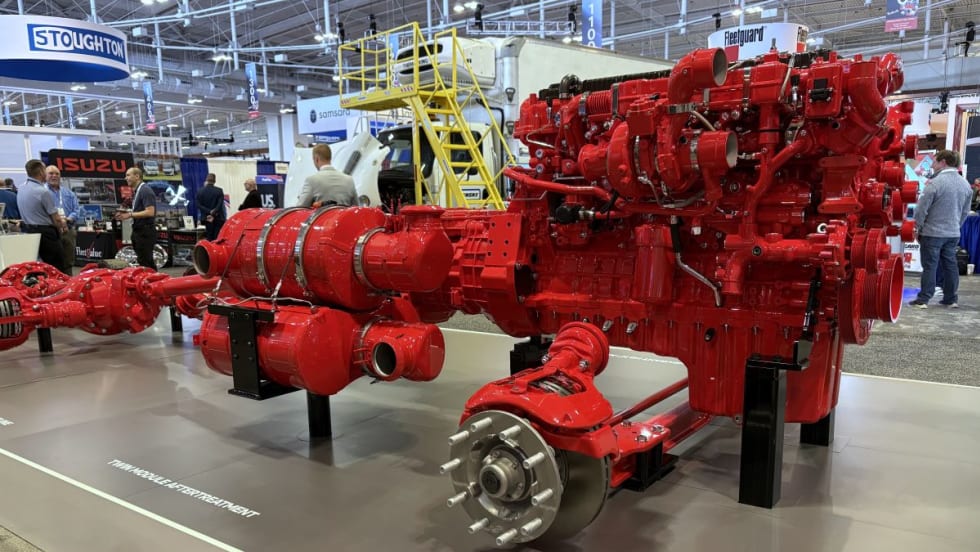
Cummins Adjusts 2027 Engine Rollout After EPA Proposal
The engine maker will gradually introduce its new Model Year 2027 diesel engines while continuing to offer current models during the transition, citing the EPA's proposed emissions rule changes.
Read More →
EPA Proposal Could Ease 2027 Truck Costs and Buying Uncertainty
The proposal doesn't change the tougher NOx standard, but it would revise key implementation requirements that manufacturers say have driven up costs and complicated fleet purchasing decisions.
Read More →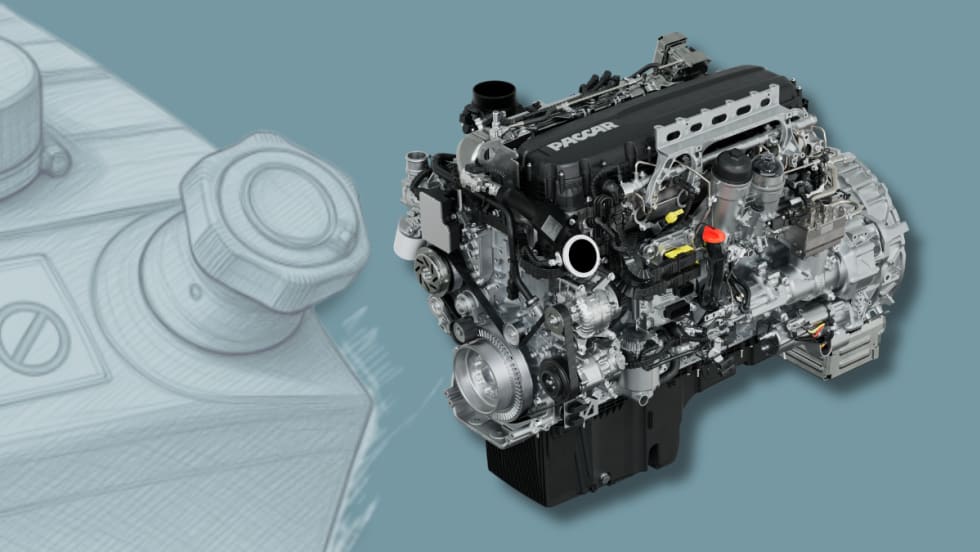
Cummins, Paccar Ease DEF Derates After EPA Guidance
Updated diesel engine software gives truck operators more time to address emissions-system issues while staying compliant with EPA emissions standards.
Read More →
Maintenance in the Messy Middle Part 3: Biodiesel
Biodiesel can reduce emissions, improve fuel-system lubricity and use existing diesel infrastructure. But NACFE’s Messy Middle maintenance report says fleets must actively manage storage, cold-weather operation, filters and oil drain intervals to avoid problems.
Read More →
Enhance Fleet Performance with High-Efficiency Auxiliary Power Units
Drive sustainable cost savings while increasing driver comfort during short- and long-haul logistics operations.
Read More →
Maintenance in the ‘Messy Middle’ Part 2: Renewable Diesel Fuel
NACFE's latest Messy Middle Powertrain Service & Maintenance report says renewable diesel gives fleets an opportunity to reduce carbon emissions without changing trucks, fueling infrastructure or maintenance practices. But technicians still need to understand several important operational differences.
Read More →
The Diesel Engine Enters NACFE’s ‘Messy Middle’
NACFE’s new Messy Middle Powertrain Service & Maintenance report says keeping modern diesel engines running now depends as much on software, diagnostics and data as traditional mechanical service.
Read More →
DTNA Software Update Gives Truckers More Time Before DEF Derates Take Effect
The changes reflect EPA guidance aimed at reducing downtime caused by emissions-system faults while maintaining compliance requirements.
Read More →
New Agentic Predictive Maintenance Report Demonstrates How Degraded Aftertreatment Systems Waste Fuel
Questar analyzed a large mixed-class fleet and discovered it was wasting as much as $30 in fuel per vehicle, per day, because of mechanically degraded aftertreatment systems.
Read More →
New York City's Microhub Project is Delivering Results
Trucking, last-mile delivery companies, and environmental advocates like what they are seeing so far with New York's microhub program.
Read More →