




Trailer Report: Controlling Corrosion
What deteriorates on trailers? Almost everything that's not specially built or treated to resist the ravages of road salts, flying grime and everyday weather elements

What deteriorates on trailers? Almost everything that's not specially built or treated to resist the ravages of road salts, flying grime and everyday weather elements.
The older the trailer, the more likely it's got some rust damage, seen or hidden. There are hundreds, even thousands, of parts on a trailer, each made of various materials that are adversely affected in different ways.
In the last decade this subject has gotten increased scrutiny from members of the Technology and Maintenance Council of the American Trucking Associations. TMC has a standing Corrosion Control Action Committee that discusses the problem as it affects all types of vehicles. More recently, some members banded together in a Trailer Corrosion Control Task Force, and they are writing a formal recommended practice to help truck operators better arm their vehicles against this expensive assault.
The effort is being done with the understanding that fleet managers want long life from trailers - 20 years for vans in less-than-truckload service, 15 years in truckload operations, eight for refrigerated vans and eight to 10 for flatbeds, said Al Anderson, the task force's chairman and director of special accounts for Jost International. He showed a preliminary RP during TMC's Fall Meeting in Raleigh, N.C.
Participants in the session agreed that regular washing is one way to fight corrosion. It also keeps the trailer looking good and worth more at selling time. And controlling splash and spray keeps road salts and debris confined to the lower areas of the trailer, where materials are sometimes stout enough to withstand the blasts. Aerodynamic fairings that are coming into use to save fuel can serve a dual purpose here.
Some corrosion comes from electrolytic reaction between dissimilar metals, typically steel and aluminum in trailers. Those two metals need to be separated and almost always are during manufacturing. Mylar was once a sufficient barrier, but stronger materials are needed. One is called ETK, which includes zinc, a metal that's friendly to both steel and aluminum, a builder's representative said.
Insidious de-icers
It's well known that corrosion has become a more serious problem since public highway departments moved beyond sodium chloride (what we've called rock salt) to de-ice highways and began using calcium chloride and magnesium chloride solutions. These newer salts work better to prevent snow from sticking to pavement and thawing snow and ice at lower temperatures. But the newer salts also cling tenaciously to vehicle parts and are difficult to remove by pressure spraying (they have to be brushed off). They continue to corrode metals and other materials for longer periods, and grab moisture right out of the air to aid their evil work. The salts work their way into nooks and crannies where they can't be reached and insidiously eat away at metals and other materials, much more so than dissolved rock salt.
Highway department officials are aware of salt-caused damage - their own vehicles suffer from it - but are not likely to discontinue their use of the stuff. The products are cheap and effective. There are few alternatives, although some municipalities have been adding corrosion inhibitors and using beet brine that is said to be benign.
What might cause a change are complaints that ground water is being polluted by salt runoff from treated highways. Since the start of the environmental movement 40 years ago, concern over damage to water, flora and fauna have often trumped economics or even safety. But any changes to snow- and ice-removal chemicals may be long in coming, so the task force will continue its work.
Trailers vulnerable
Trailers need special attention because many of their components are not found on truck-tractors, though truck bodies have some of the same parts. Sides, bulkheads, doors and door frames, and hinges and latches are used on van, reefer and other box-type trailers. Frames, crossmembers, rear underride guards, landing gear, suspensions, axles, brakes, upper coupler and kingpin, and air lines are used on all trailers, though their designs vary among specific types.
Electrical components are historically big magnets for corrosion, though manufacturers have made big strides in sealing wiring and connectors from outside forces. The RP will consider each component and suggest approaches to protect them from corrosion.
Hardwood floors are rotting where they didn't before, one fleet-manager member noted. There are ways to protect materials from road salts, but most are relatively expensive and fleet executives are often reluctant to spend the extra money, manufacturer-members have said. Special treatments and undercoatings for wood floors are now available, and so are other materials. One is a recently introduced plastic floor. Its maker claims it's impervious to salts and is recyclable, to boot.
Mild steel suffers worst from the effects of road salts, which hasten steel's oxidation - the process we call rust. But even stainless steel and aluminum are affected, a preliminary draft of the RP says. These are oft-used alternatives to mild steel, and it's discouraging to see them fail to meet expectations.
Stainless steel, by definition an alloy containing at least 11 percent chromium and other metals, can shrug off salts and retain a shiny appearance. But there are many kinds of stainless steel, and some are more rust-resistant than others. They're all expensive, but can be cost-effective if used for components such as rear door frames and sills.
Aluminum stands up well because a protective oxide coating forms on its surface, and the oxide renews itself when exposed to oxygen. But the oxide breaks down in the absence of oxygen or if acidity becomes high. Sheet aluminum panels in bulkheads and sidewalls can corrode at their bases, and cast aluminum can pit and crack. This can be countered by anodizing aluminum parts, the draft RP says, which also adds cost.
FRP panels, whose fiberglass-reinforced plastic skin is impervious to salts, were popular for a time in van sidewalls and in other trailer types. But FRP panels are heavy, and salt-laden moisture can penetrate through cracks and punctures, rotting their plywood cores.
Special coatings can prevent corrosive salts from reaching and rusting steel components, the draft RP says. Several types are available from different manufacturers, and add some cost. Galvanized steel holds up well to salt spray as the zinc coating is not affected by salt, and galvanizing adds only 57 pounds to a typical van trailer, one manufacturer-member said during the session last fall.
Preventing corrosion during manufacturing
In sessions during previous TMC meetings, members have discussed things can be done during manufacturing that can reduce maintenance and extend life, and make a trailer worth more at trade-in time. For instance, pre-painted aluminum is commonly used for van panels and posts, and fasteners can be torqued and then coated with special materials to keep salts away.
Aluminum frames and bodies employed on flatbed and dump trailers are light in weight, which is the primary reason operators pay premium prices for such vehicles. But some also like their looks, especially if they're polished, and at least one wheel maker offers a factory finish that stays bright and makes washing up easy.
As noted above, certain kinds of stainless steel are virtually impervious to salt-induced corrosion, and can be employed on rear sills, gussets, door headers and the doors themselves, if buyers are willing to spend hundreds more per vehicle. Many refrigerated trailers are built with stainless steel, which looks good and stays strong for years, while lesser steel loses its paint and rusts, making the trailer and its owner look cheap.
A more recent and less costly alternative for trailers is galvanized steel, which has a zinc
More Maintenance

Color Match Smarter: Tools That Restore & Perform
For fleet managers and collision repair professionals keeping heavy-duty trucks on the road, getting the color right the first time isn't just about appearance — it's about efficiency, turnaround time, and bottom-line results. Discover how today's digital color tools are transforming the repair process from guesswork to precision.
Read More →
Wrong Repair Prompts Recall of Freightliner, Western Star 4x2 Trucks
DTNA is recalling more than 2,400 trucks that received an incompatible software fix instead of the hardware repair required to address brake valve corrosion.
Read More →
Truck Drivers Need More Than Another Alert
Fleets have more visibility into truck health, safety events, and driver activity than ever. The next challenge is turning all that information into useful guidance for the person who has to decide what to do next.
Read More →
The Maintenance Checks Trucking Fleets Should Prioritize Before Fall Freight Picks Up
Making it through August isn’t the same as being ready for the next several months of operation. Find out what systems may have suffered from summer heat and need to be checked out before fall.
Read More →
What Three Fleets Are Doing Differently When Buying Truck Parts in 2026
With freight improving but costs still climbing, fleet maintenance executives explain how they're balancing price, quality, and supplier relationships.
Read More →
Paccar Recalls 2027 Trucks Built This Summer for Possible Electrical Problem
The nearly 6,000 Kenworth and Peterbilt trucks in the recall could potentially lose engine power, among other things.
Read More →
Could New Engine Oils Mean Longer Drain Intervals?
New CL-4 and FB-4 engine oils are coming in 2027. Foodliner wants to know whether they could support longer oil drains, but it won’t change its maintenance schedule without data from its own trucks.
Read More →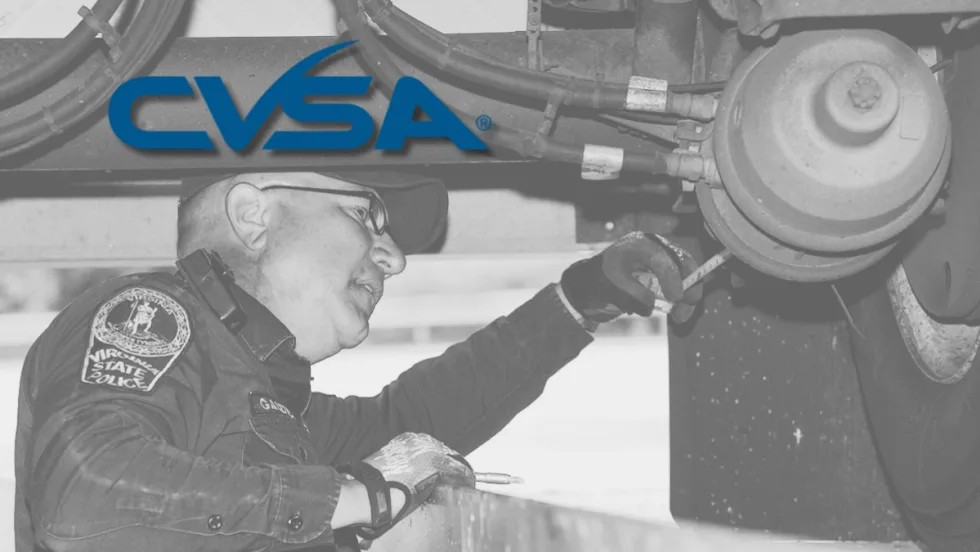
Brake Safety Week to Focus on Drums and Rotors
Commercial vehicle inspectors are focusing on truck brakes during CVSA's Brake Safety Week, August 23-29.
Read More →
Possible Battery-Cable Fires Prompt Recall of 15,000+ International MV and HV Trucks
On the recalled vehicles, manufacturing variations can cause the battery interconnect cable to contact the auxiliary stud and hold down the bracket.
Read More →
Rush, MCT Team Up to Grow Refrigeration Service Network
The joint venture will operate MCT's network of Carrier Transicold dealerships and mobile service locations, with the companies promising greater service capacity and uptime for refrigerated fleets.
Read More →