




Tracking For Smaller Fleets
Once upon a time, vehicle tracking and communications meant expensive satellite equipmen

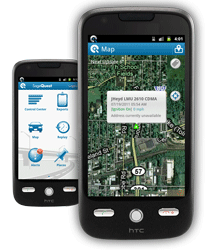
Some tracking systems are developing smartphone apps that offer tracking information on the go, such as this one from FleetMatics.
Once upon a time, vehicle tracking and communications meant expensive satellite equipment
, used mostly by long-haul, irregular route carriers who needed to know where their drivers (and loads) were.
Today there's an almost overwhelming array of lower-cost options for all sizes and types of fleets and for every budget. And simply being able to keep up with where your trucks are is just the beginning of what they can do.
"Small- to medium-sized businesses usually need a GPS fleet tracking solution to gain greater transparency into their fleet operations," says Ashley Jones, marketing manager at tracking/fleet management provider NexTraq (formerly Discrete Wireless). "The most profound impact for smaller fleets is the ability to reduce overhead costs - fuel, maintenance and insurance premiums - that can save small businesses on a tight budget hundreds of thousands of dollars while growing their business."
While fleet tracking originally started out as a satellite communications technology, today, most tracking systems use the same type of global positioning systems and cellular data networks you may use on your cell phone. Advances in technology have allowed device makers to pack a lot more power into a smaller, less expensive platform.
Perhaps even more important for smaller fleets is the advent of software as a service, or SAAS, an aspect of "cloud computing." Instead of needing a big mainframe computer, an IT staff to keep it running, and a data guru to translate the data, today you can simply log on to a website and see data presented in easy-to-use "dashboard" format with reports, charts and graphs, and the like.
"Hosting the data takes a lot of the IT burden off of the fleets," says Jim Sassen, senior product marketing manager for Qualcomm, which recently introduced the MCP 50 platform aimed at smaller fleets. "And the user interfaces are so much more intuitive these days, everyone across the fleet can use it - not just that one smart financial analyst. The learning curve is short, and they can get a lot of data out of it quite quickly."
Or as Brendan Sullivan, vice president of global marketing for FleetMatics, puts it, "the most advanced technology that the big enterprise fleets were using 20 years ago can be used for a fleet of five to 50 vehicles for the same level of efficiency."
These systems also aren't just limited to your desktop. "Exception reporting" can send alerts to your email or cell phone if, for example, a driver strays too far out of a preset route or "geofenced" area. With the increasing use of smartphones, some companies offer apps to allow access to even more data via cell phone.
Yet many fleets are reluctant to embrace this technology, says Ken Weinberg, vice president of Carrier Logistics, which works with small pickup and delivery companies on technology needs. "They opt not to use it because they feel they can get away with manual procedures," he says. "If two small carriers are competing, and one has technology that makes them equal to a big carrier, the other small carrier has nothing."
There's a lot to be said for simply knowing - really knowing - where your trucks are. For one thing, many customers today want to be able to easily find out where their loads are. "Being able to have this tracking allows smaller fleets to compete on the same playing field and be able to have this visibility as to where the trucks are," says Qualcomm's Sassen.
But perhaps even more important is how this information helps you manage your business better.
"You've got a fleet of vehicles out there that are a valuable asset," says Craig Whitney, vice president of marketing for NetworkFleet. "Are they being used properly? Not on nights or weekends, for taking the boat to Mexico or side jobs?"
Bill Ashburn, vice president/general manager at Prophesy, explains how this works with Prophesy Tracker, a low-cost solution for very small fleets that uses GPS-enabled cell phones. (The process is similar for other systems, as well.) A dispatcher or small fleet owner can go to an Internet browser, type in a user name and password, and see on a map the current location of his fleet or of a single truck, as well as a "breadcrumb path" showing where vehicles have been.
"Say he sees Joe Smith, who is supposed to be in St. Louis but is actually in Pittsburgh," Ashburn says. "He can hone in on one truck unit and find out he's been stopped for 16 hours at 123 Main Street."
Ken Kainer, owner of Kainer Electrical Services in Houston, Texas, says he thought long and hard about the additional monthly costs before installing FleetMatics on his fleet of six service trucks. But it started paying for itself the very first month.
Kainer was able to monitor when service technicians arrived at and left the jobs and make sure time sheets were filled out correctly.
"Since our techs drive the trucks home each day, we were able to cut out all the little after-work-hours stops and errands that they felt was OK to burn my gas to do," he says. "Not to mention, since the guys know they are being monitored, I see more of an effort from them to get to the job on time each morning, instead of running 10 to 15 minutes late or leaving 10 to 15 minutes before quitting time to beat the traffic."
Accardi Foods, a specialty foods and beverage company in Medford, Mass., with 17 trucks, slashed overtime hours by 50% after implementing the NexTraq Fleet Tracking solution. Within the first few days of implementing it, fleet director Joe Russo was able to identify drivers who were padding their hours. It saved the company more than $80,000 a year.
Tracking systems can be much more than a big-brother time card. The data can help exonerate drivers, as well. For instance, Joe Christianson, president of Plumbing Plus and Remodel Works Bath & Kitchen in Poway, Calif., explains that if a client disputes the bill and says the employee was only there for a short period of time, with his GPS Fleet Solutions system, "I can verify this and turn around and say he was there for two hours and 15 minutes. This allows us to be on the same side as our guy now because we have proof."
It also can be very helpful to know where your vehicle was not. More than one business owner has been contacted about a truck that was allegedly speeding through a neighborhood, or that something fall off the back of a truck and damage someone's car. With a tracking system, you often can prove it wasn't your truck at all.
And knowing the location of your trucks makes dispatch much more efficient. When a customer calls with an emergency load or you've picked up a great backhaul opportunity, you can know right away which truck is the best choice.
Moreover, once you have a GPS function, there's the potential to add in-cab routing and navigation. With some systems, it's part of the in-cab computer unit, as is the case with Qualcomm and PeopleNet. With others, the tracking unit may integrate with a third-party nav unit such as Garmin. Some systems also offer automatic arrival and departure notification to the home office and/or to customers.
"Today's tracking technologies are highly integrated and delivered via the Web," says Drew Hamilton, executive vice president of Teletrac. "Thus, for example, dispatchers can see every vehicle's position mapped on any PC screen along with each truck's prescribed route and even familiar landmarks such as customer sites, supply houses, fueling stations, lunch stops, any location your dispatchers and technicians consider useful."
Drivers can have similar map displays in-vehicle on a full color touchscreen that provides verbal turn-by-turn driving directions.
"We offer turn-by-turn navigation integrated with our products; it gets the driver to the job or delivery quicker, faster, safer," Hamilton says.
Some syst
More Fleet Management

How Telematics Improves Visibility, Control, and Performance in Refrigerated Fleets
Explore how telematics help refrigerated fleets improve visibility, uptime, efficiency, compliance, and cargo protection across connected cold chain operations.
Read More →
What the U.S.-Canada Trade War Means for Trucking
Escalating U.S.-Canada tariffs could disrupt cross-border freight, reduce truck volumes, raise costs, and create new uncertainty for carriers on both sides of the border.
Read More →
What Are Trucking’s Top Concerns for 2026?
The American Transportation Research Institute wants to know what's worrying trucking fleet managers, drivers, and other stakeholders in its annual Industry Issues survey.
Read More →

American Trucking Associations Looks for a New Leader
ATA President and CEO Chris Spear abruptly left his job at the association on August 21, at a pivotal time for the trucking industry.
Read More →
Public Wi-Fi Cybersecurity Risks: How Truck Drivers and Fleets Can Protect Their Data
Public Wi-Fi can expose truck drivers and fleets to credential theft, malware, and other cyber threats. Here’s how to reduce the risk on the road.
Read More →
For Nicky Cupp, Fleet Innovation Starts With Frustration
HDT Truck Fleet Innovator Nicky Cupp turns everyday pain points at Fraley & Schilling into opportunities for better technology and smarter processes.
Read More →
Adam Buttgenbach’s Approach to Electric Trucks: Start With Where They Fit
HDT Truck Fleet Innovator Adam Buttgenbach helped PepsiCo build one of North America’s largest EV fleets by focusing on where electric trucks make operational sense.
Read More →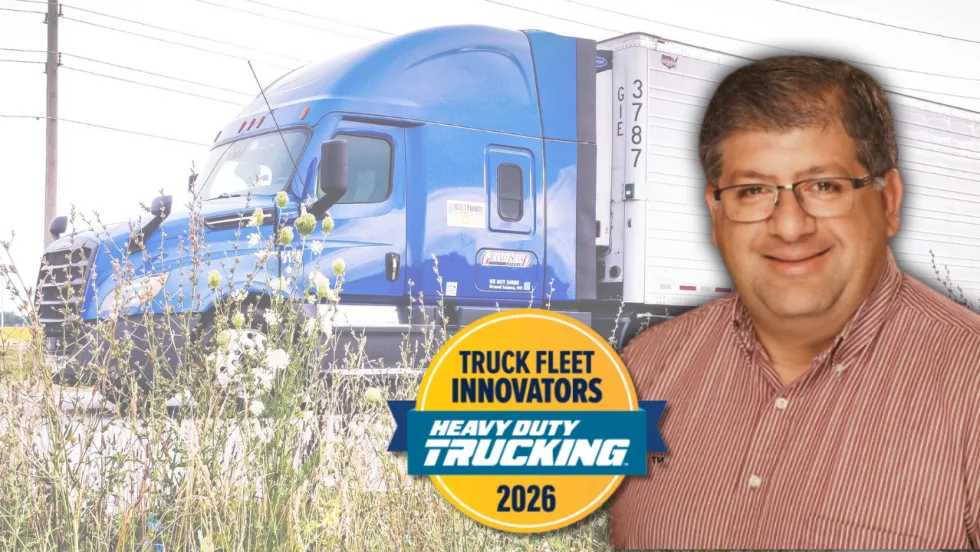
Deen Albert: Let Automation Do the Math, People Make the Decisions
HDT Truck Fleet Innovator Deen Albert makes sure people are still at the heart of operations at Grand Island Express, even while adopting artificial intelligence tools. AI-assisted dispatch helped boost revenue 25% with the same number of trucks.
Read More →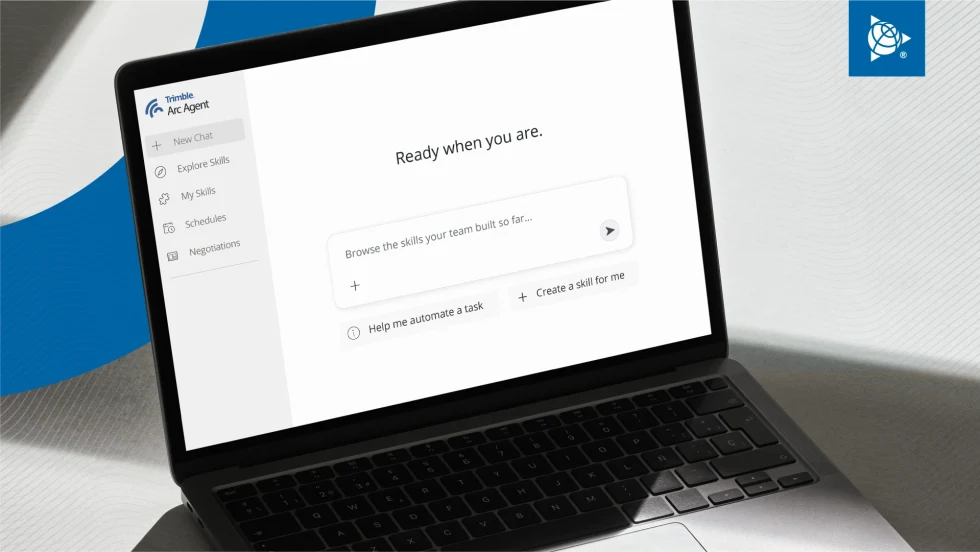
Trimble’s New AI Agent Takes Aim at Fleet Back-Office Busywork
Arc Agent works across Trimble TMS products to automate repetitive tasks such as freight orders, maintenance, invoices, fuel costs and more.
Read More →
How HDT’s 2026 Truck Fleet Innovators Are Rethinking Fleet Operations
Meet five trucking leaders who are challenging assumptions, solving operational problems, and putting innovative ideas to work.
Read More →