





Related – Electric Trucks: Zap in the Pan?
TMC Panel Educates Fleets on Real-World Electric Truck Operation
Calculating recharging times, driver training and overcoming “range anxiety” were just a few of the topics covered at an electric truck panel discussion at TMC’s Fall Meeting.
September 20, 2017
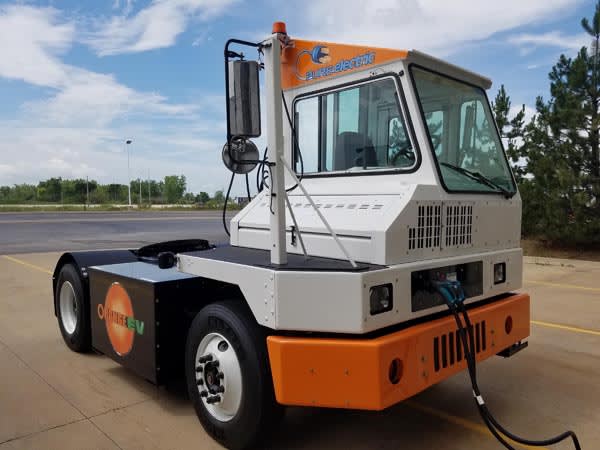
A policy of “opportunity charging” that has drivers putting trucks on charging devices during lunch, breaks and other downtimes is a key component in keeping the trucks’ state of charge high for longer periods of time. Photo: Orange EV
4 min to read
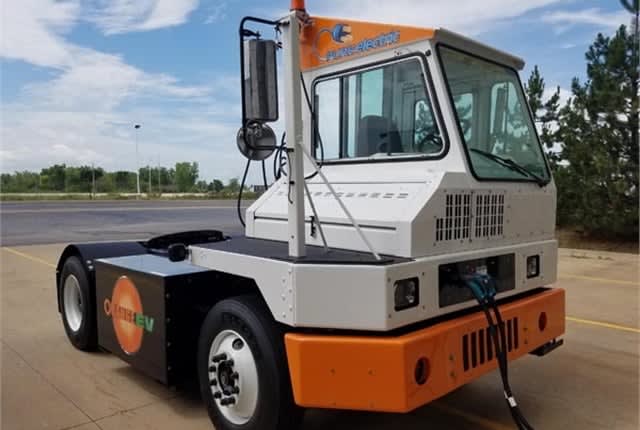
A policy of “opportunity charging” that has drivers putting trucks on charging devices during lunch, breaks and other downtimes is a key component in keeping the trucks’ state of charge high for longer periods of time. Photo: Orange EV
ORLANDO, FL – Electric trucks are much simpler to maintain and operate than diesel units. But that doesn’t mean there aren’t challenges for fleets that elect to evaluate and/or operate them. A session this week at the Technology & Maintenance Council Fall Meeting offered advice and answers for fleets considering electric trucks for their applications.
Opening presenter Mike Saxton, chief commerical officer for electric truck manufacturer OrangeEV, said that “range anxiety” concerns aside, his company has all-electric yard trucks operating for more than 24 hours on a single charge. However, he added that a policy of “opportunity charging” — a policy that has drivers putting trucks on charging devices during lunch, breaks and other downtimes — is a key component in keeping the trucks’ state of charge high for longer periods of time. Furthermore, Saxton added, most fleet facilities today, as well as existing structures that could be converted into a fleet facility, already have the necessary electrical capacity to handle charging electric trucks.
Saxton said all-electric truck drivetrains last significantly longer than comparable diesel drivetrains, and that a truck’s battery pack should last as long as the life of the truck itself in most operating conditions.
“Lithium-ion batteries do degrade over time with repeated charges,” he explained. “However, it takes about 2,000 charges before your battery capacity degrades — usually about 20%. You won’t notice this as a drop-off in performance. But you will notice you’re having to charge the truck more often.” But, he added, it generally takes between 7 and 10 years before this become an issue and noted that by that time, drivers are typically using older trucks "less preferentially," and therefore not getting as low on the battery before plugging in anyway, so may not even notice a change."
One potential limiting factor that can affect operations is cold temperatures. However, Saxton also noted that diesel trucks in have block heaters, chemical additives and other thing to try and keep them functional in cold weather, adding that "We’ve built systems into our electric trucks that maintain all elements of the truck ready to function and ensure the truck is operable in both hot and cold weather. In cold weather these systems consume more energy and are thus from the perspective of energy consumption, the worst case design consideration for temperature. Our trucks are being stored outside, in the dead of winter, just as their predecessors."
Next, Dave Williams, operations director for DHL Supply Chain, outlined his experiences using two all-electric yard tractors during evaluation testing, noting that his trucks are in operation approximately 21 hours a day. “We have had no issues with the operation of our electric trucks at all,” he added.
Williams said one pleasant surprise at the beginning of DHL’s electric truck initiative was the grant process to secure government subsidies. “When we sought grant money to test CNG-powered trucks, the application process was complicated and lengthy,” he said. “Getting getting EV grant money application process together much easier. In fact, it took less than a week.”
Williams said driver training was a key component in putting the electric trucks in service, but added that that overall the operation of the trucks is “very straightforward” with few unfamiliar procedures. “For us, training was more about overcoming the ‘fear factor’ drivers had with the new vehicles,” he said. “The bulk of the training focused on understanding charge-state indicators as well as vehicle recharging features.”
DHL Supply Chain’s electric truck evaluation is still ongoing. But Williams said he was confident that a “conservative" estimate has the two electric yard tractors saving $40,584 per year compared to diesel units. "All in all, this has been an extremely positive experience for us,” he added.
Duane Hughes, president of Workhorse Commercial Trucks, expanded on the themes presented by Williams and Saxton by looking electric truck operations in last-mile delivery applications. Hughes said typical cost-per-mile for electric trucks in those applications were typically 40 cents a mile, compared to $1.00 a mile for diesel units in daily routes totaling 46 miles with 73 stops and starts.
The final presenter, Chris Nordh, director of global fuel products for Ryder System, said it was crucial for fleet managers to understand the excess load capacity of any facilities being considered for electric truck use, with the key component knowing how many chargers can be installed and how fast they’ll be able to do their jobs.
Nordh said there are three levels of charging outlets available to fleets today:
Level 1: 110-volt 1 phase “regular” outlets capable of fully recharging a truck in 15 hours
Level 2: 220-volt 1 phase “dryer” outlets capable of fully recharging a truck in 7-8 hours
Level 3: 480-volt 3 phase “Tesla” outlets capable of fully recharging a truck in 1-2 hours
Nordh also recommended “smart” vehicle charging systems that allow fleets to regulate and time vehicle recharges as well as deal with other issues. “Drivers can forget to plug trucks in at night when their shifts are done,” he noted. “Smart charging systems can alert you if this happens and keep you from having an unusable truck on your hands the next morning.”
Subscribe to Our Newsletter
More Fuel Smarts

Trucking’s Diesel Squeeze Isn’t Letting Up
With diesel topping $6 a gallon nationally, ATA's Bob Costello explains why fleets should prepare for continued pressure at the pump.
Read More →
FlowBelow Redesigns Trailer AeroSlider to Cut Fuel Use
The lighter trailer aerodynamic system installs in less than 45 minutes, according to the company, with potential payback in under a year depending on fuel prices and trailer mileage.
Read More →
Why Diesel Price Relief Efforts May Fall Short
Diesel prices have eased from September’s record high, but doubts about additional Russian supply and limits on dyed-diesel tax relief mean trucking fleets still face expensive fuel. And prices could go higher.
Read More →
Why Small Fuel Savings Matter in Trucking
Can better fuel economy help pay for driver raises? In this podcast, GP Transco explains how small efficiency gains create room to reinvest in its people.
Read More →
How GP Transco Cuts Trucking Fuel Costs, a Tenth of a Gallon at a Time
What’s another tenth of a mile per gallon worth? GP Transco shares how equipment upgrades and driver coaching turn small gains into meaningful fuel savings.
Read More →
Electric Yard Tractors Move Beyond Pilots
Operating-cost savings have overtaken sustainability goals as the leading reason surveyed fleets are adopting battery-electric terminal tractors, according to new NACFE research.
Read More →
Geotab Links Fleet Card to Vehicle Data
The new card combines fuel discounts with telematics-based purchase controls. Geotab’s analysis also points to potential savings from choosing lower-priced fuel stops.
Read More →
Fleet Economics Shape Electric Truck Outlook
ACT Research expects costs, charging infrastructure, and technology improvements to drive zero-emission commercial vehicle adoption as federal regulations and incentives retreat.
Read More →
Wex Adds Cardless Fuel Payments for Over-the-Road Customers
A new fuel card feature for Wex customers offers convenience and security.
Read More →
New California Law Could Shed Light on Electric Truck Prices
Why do battery-electric Class 8 trucks remain so expensive? A California bill signed by Gov. Gavin Newsom would give fleets and state agencies more visibility into what manufacturers charge.
Read More →